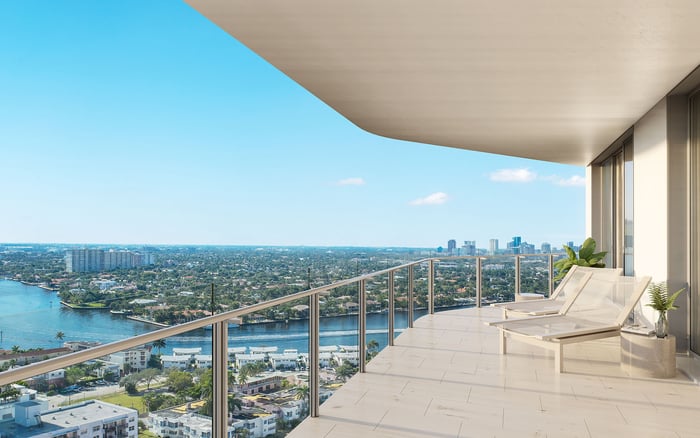
A Fort Lauderdale buyer’s guide to two property leads and three service configurations, with a focus on verifying moisture prevention, owner-accessible humidity data, emergency response, and documented restoration.

For a Fort Lauderdale buyer who spends significant time elsewhere, the most consequential service may be the one that operates while the residence is empty. Elegant arrivals and attentive hospitality do not answer the practical questions: who notices excess moisture, who enters the home, and who remains responsible until restoration is complete?
Florida humidity can create mold-supporting conditions without a visible leak. A serious purchase brief should distinguish four requirements: preventive moisture control, remotely accessible humidity data, an actionable leak-response plan, and documented restoration procedures. None should be inferred from a luxury designation.
When considering Four Seasons Hotel & Private Residences Fort Lauderdale, apply the same standard: request the operating documents rather than assuming the name establishes these protections. That discipline belongs in every comparison, regardless of address or service positioning.
These entries are diligence priorities, not certifications of comprehensive moisture protection. Evaluate property-specific details and proposed service arrangements separately. Require written confirmation of all four requirements before placing a residence on the final shortlist.
1. Viceroy Residences Fort Lauderdale: Downtown property lead
Viceroy Residences Fort Lauderdale is listed at 201 N. Federal Highway, Fort Lauderdale, FL 33301. It is a specific property lead for buyers seeking a luxury residence, but its remote humidity access, leak-response commitments, mold-prevention standards, and restoration protocols remain unverified.
Request a written operating schedule covering each requirement. Establish whether monitoring extends inside the individual residence, whether owners receive readings directly, and whether any promised response is included in building services or requires a separate agreement.
2. South Point Condominium: Documented remediation response
A remediation project at South Point Condominium, a Fort Lauderdale-area property, included air machines in affected units to improve air quality and limit mold-spore spread to other units. This is a specific incident-response detail, not evidence of continuous monitoring or a standing building-wide prevention program.
Use it as a reason to examine restoration documentation, not to infer present conditions. Full-service operations, ongoing remote monitoring, and standing leak-response commitments remain unverified. Request current procedures separately from historical project records.
3. Waterfront condominium with contracted 24/7 restoration coverage: Service configuration
Emergency disaster restoration is advertised around the clock across Broward County. Locally available services include inspection, containment, contamination removal, and attention to moisture issues. A contracted-response arrangement is therefore worth evaluating, but contractor availability does not establish a particular condominium’s coverage.
No residence-specific contract or guaranteed response time is established for this entry. Ask whether the association has an active agreement, who can authorize dispatch, and what commitment governs on-site attendance-not merely the answering of an emergency call.
4. Condominium using professional moisture assessment and drying: Service configuration
Locally advertised restoration capabilities include structural drying, infrared thermal imaging, and monitoring moisture within concealed building materials. These capabilities matter when visible cleanup alone cannot establish whether affected materials have been adequately assessed.
They are contractor services, not verified condominium amenities. Restoration-stage moisture readings also differ from a continuous, owner-accessible humidity feed. Request the proposed assessment scope, drying records, and closeout requirements before treating this arrangement as comprehensive protection.
5. Residence with an owner-arranged remote-monitoring plan: Service configuration
Real-time moisture or humidity monitoring, dehumidification, inspections, and remote oversight are recommended preventive measures, particularly for owners away during hurricane season. An owner-arranged plan is therefore worth investigating when assessing a residence’s operating needs.
A residence-specific monitoring, response, and restoration package is not established here. Before relying on one, connect the sensor arrangement to named responders, emergency-entry authorization, and a written restoration process. A dashboard is not an intervention commitment.
The essential distinction is between a description of service and an enforceable scope of work. Ask management which functions belong to the association, which are handled by outside contractors, and which remain the owner’s responsibility. Require unresolved items to be identified explicitly rather than folded into a general assurance.
For a buyer evaluating Auberge Beach Residences & Spa Fort Lauderdale, these questions are a diligence agenda, not a statement about its installed systems. Apply them with equal care to any branded or independently managed property.
Prevention deserves its own written section. Request vacant-unit inspection policies, humidity-management procedures, and the steps required when an owner leaves for an extended period. Ask who records inspections and how exceptions reach the owner. Understand the routine before an incident makes the division of responsibilities urgent.
Distinguish continuous monitoring from occasional contractor readings. The latter may support a restoration project without providing ongoing visibility into an unoccupied residence.
Request sensor specifications, locations, alert thresholds, and a demonstration of owner access. Ask whether historical readings can be reviewed, who receives alerts, and what happens when the owner cannot respond. Clarify how interruptions in monitoring are communicated; do not assume silence means normal conditions.
Then connect information to authority. Identify the primary responder, the backup contact, and the person empowered to authorize entry and work. Remote data is most useful when the response process is understood before departure.
The final stage deserves as much attention as the emergency call. Request available water-loss histories, drying logs, restoration closeout documents, and any post-remediation testing requirements. A past remediation project establishes that a response occurred; it does not, by itself, establish current conditions or continuing prevention standards.
For buyers also considering Sixth & Rio Fort Lauderdale, use the same document-led review without presuming any particular monitoring or restoration amenity. Ask how moisture-source correction, drying, repairs, and final signoff would be documented for the individual residence.
The strongest purchase decision rests not on reassuring service language, but on a defined scope and an accountable party for prevention, visibility, response, and restoration. Treat unanswered questions as unresolved purchase conditions, not implied benefits.
For a discreet Fort Lauderdale property search guided by your ownership requirements, connect with MILLION.
If branded residences are on your mind — as a home or as an allocation — we would be glad to share what we are seeing, privately.
Begin a quiet conversationNo. Buyers should separately verify preventive moisture control, remote humidity access, leak-response commitments, and restoration procedures.
It is listed at 201 N. Federal Highway, Fort Lauderdale, FL 33301. The four requested moisture-protection capabilities remain unverified.
It documents air machines installed in affected units to improve air quality and limit mold-spore spread. It does not establish continuous monitoring, current conditions, or a standing prevention program.
Yes. Florida humidity can create mold-supporting conditions even without a visible leak, making moisture control important alongside leak repairs.
No. Readings collected during restoration do not establish a continuous, owner-accessible humidity feed.
Request sensor specifications, locations, owner-data access, alert thresholds, and named alert recipients. Clarify who acts when the owner is unavailable.
No. Local contractor availability does not establish an active condominium agreement or a residence-specific response-time commitment.
A monitoring alert needs an actionable response pathway. Buyers should establish who may enter the residence and who can authorize work when the owner is away.
Request available water-loss histories, drying logs, restoration closeout documents, and any post-remediation testing requirements. Review current procedures separately from past project records.
No such packages are established here. The linked projects are contexts for applying the same diligence questions, not endorsements of specific monitoring or restoration capabilities.