A parcel-by-parcel framework for evaluating how adjacent land, development rules, recorded protections and future construction could affect a premium Boca Raton view.
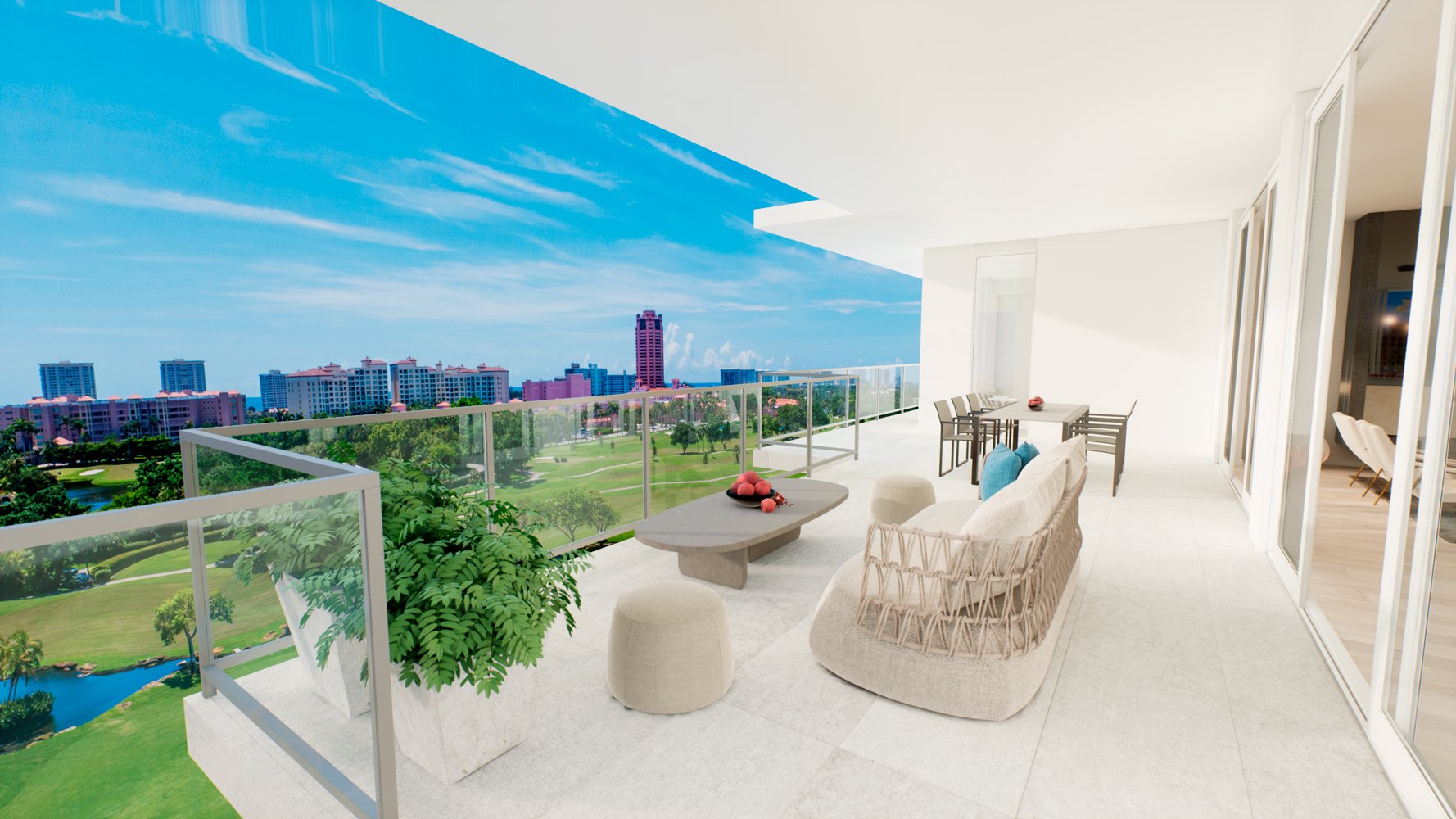
In Boca Raton, an ocean horizon, lake panorama or long outlook across landscaped grounds can strongly influence how a residence is experienced and valued. Yet the scene visible during a showing is not automatically protected from future change. The more useful question is what could happen on every parcel that enters the sightline.
A neighboring low-rise building, parking area or open tract may reflect only the property’s current use. It does not, by itself, establish that the parcel must remain unchanged. Buyers should examine the legal and physical context before assigning a durable premium to an open exposure.
A premium view should be priced against the legal future of the sightline, not its present appearance.
This is an important consideration when comparing established and newer addresses, including Alina Residences Boca Raton. The analysis should be specific to the selected residence because elevation, orientation and surrounding parcels can produce materially different risks within the same building.
Start with the parcel directly in front of the windows or terrace, then trace the sightline outward. Include properties that affect diagonal, side-angle and layered views. A site that is not immediately adjacent may still interrupt a horizon or become prominent from a primary seating area.
For each consequential parcel, note its existing use and obtain current public records relevant to development potential. Ask qualified professionals to review zoning, applicable land-use designations, recorded restrictions and any pending applications that could affect the site. Do not rely on the apparent age, scale or condition of the existing improvements as evidence that redevelopment is unlikely or prohibited.
Photographs from the residence can help document the analysis. Mark the parcels visible from the living room, principal bedroom and important outdoor areas, then compare those images with a parcel map. This creates a practical record of which properties deserve closer review.
The same process applies to an urban outlook from The Residences at Mandarin Oriental Boca Raton. Rather than making a broad assumption about the surrounding area, evaluate the particular view cone associated with the residence under consideration.
A zoning label alone does not show what future construction might look like from inside a home. Ask a land-use professional, architect or planner to translate applicable rules into a conceptual building envelope for each parcel that could affect the view.
The review should consider the dimensions and constraints confirmed for that property, including height, setbacks, lot coverage and permitted rooftop elements where relevant. The resulting envelope should then be aligned with the residence’s floor level, windows, terraces and principal lines of sight.
This is not a prediction that a particular building will be constructed. It is a way to test exposure to a legally plausible outcome based on information verified during diligence. Several scenarios may be useful when parcel conditions, approvals or interpretations remain uncertain.
Orientation matters as much as distance. A narrow structure can interrupt a central focal point, while a larger structure outside the principal view cone may have less effect. Seasonal landscaping, mature trees and current screening should also be distinguished from permanent legal restrictions.
For a residence at Glass House Boca Raton, the inquiry should therefore focus on the selected home’s elevation and orientation, together with the parcels between its interior spaces and the desired outlook.
Due diligence should address both the rules in effect during the purchase and the possibility that those rules or site entitlements could change. Ask whether any relevant applications, variances, rezonings, plan amendments or other public processes are pending for parcels in the view cone. A local land-use professional can identify the records and review procedures applicable to the property.
Large holdings deserve careful attention because future work may occur in phases or within a broader plan. Waterfront sites, marinas, commercial properties and other underbuilt parcels may also warrant closer investigation when they occupy a critical portion of the view. Their present appearance does not answer what can legally occur later.
Association documents add another layer. They may regulate improvements within the residential property, but buyers should not assume those rules control unrelated neighboring land. Counsel should identify which documents bind which parcels and whether their restrictions can be amended.
The objective is not to label every view as safe or vulnerable. It is to identify the legal dependencies behind the outlook and to understand which of them are fixed, which are conditional and which remain uncertain.
For an oceanfront or near-coastal purchase, determine whether additional coastal review applies to any parcel under investigation. Environmental and construction approvals can influence whether and how work proceeds, but buyers should not treat a permitting burden as a private guarantee that an ocean view will remain open.
Local development controls, coastal requirements, title restrictions and private covenants address different questions. Each should be reviewed on its own terms by an appropriate professional. A project may face meaningful review and still retain a path to lawful development.
This distinction is equally relevant when considering Mr. C Residences Boca Raton. The buyer’s team should separate environmental oversight from local development rights and from any recorded instrument that expressly protects a sightline.
If a seller, representative or marketing document describes a view as permanent, protected or unobstructable, request the legal basis for that statement. A title professional and real estate attorney can search for recorded easements, restrictive covenants, conservation restrictions or other enforceable instruments affecting the relevant parcels.
The review should confirm the document’s scope, duration, amendment provisions and enforceability. A restriction that applies to one property may not protect the entire view cone, while a private agreement may offer less protection than its informal description suggests.
Public ownership, open space or low-scale surroundings should also be verified rather than assumed. The key question is not simply who owns a parcel today, but what restrictions bind the land and whether those restrictions can change.
Once the parcel review is complete, separate the residence’s intrinsic value from the amount attributable to the view. Consider a current-condition case, a plausible obstruction case and, when supported by professional review, a case reflecting potential changes in development authority.
This approach does not require predicting an exact project. It allows the buyer to test whether the proposed premium remains reasonable if part of the outlook changes. The exercise can also inform unit selection because a different elevation or orientation may offer a more resilient view cone.
Before the contractual diligence period ends, request written findings from the professionals responsible for zoning, planning, title and survey matters. Preserve parcel maps, photographs, relevant records and the assumptions used in any envelope study. A compelling view may justify a premium, but only after its dependencies and uncertainties have been understood.
For discreet guidance on Boca Raton luxury real estate and view-sensitive acquisitions, connect with MILLION.
If branded residences are on your mind — as a home or as an allocation — we would be glad to share what we are seeing, privately.
Begin a quiet conversationNo. A current view should not be treated as permanent without an enforceable legal basis confirmed through parcel-specific review.
Review every parcel that intersects the direct, diagonal or layered sightlines from the residence’s important interior and outdoor spaces.
Its current scale may not represent the full development potential allowed for the parcel. Applicable rules and recorded restrictions require separate verification.
It should reflect the dimensions and constraints verified for the parcel and align the resulting mass with the residence’s elevation, windows and terraces.
Pending applications may indicate potential changes to a parcel’s use or development envelope. A local professional can identify relevant public records.
No. Coastal oversight and private view protection address different issues, and a permitting requirement is not a guarantee that land will remain undeveloped.
Recorded easements, restrictive covenants, conservation restrictions or other enforceable instruments may provide protection, depending on their terms and scope.
Not necessarily. Counsel should verify which properties are bound by the association documents and whether the relevant restrictions can be amended.
Separate the home’s intrinsic value from the view premium, then compare the current condition with plausible obstruction scenarios supported by professional review.
A land-use attorney, planner, architect, surveyor and title professional can address the legal, physical and recorded aspects of parcel-specific risk.