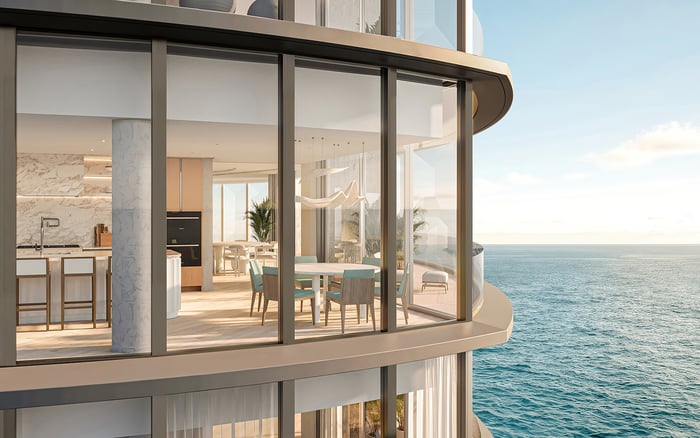
In Bal Harbour, the purchase price is only one component of the ownership equation. A disciplined buyer should review wind coverage, flood exposure, deductible structure, association insurance, and reserve planning before treating any residence as financially comparable to another.

Bal Harbour rewards buyers with a rare combination of privacy, architecture, ocean proximity, and an exceptionally refined residential setting. Yet the financial character of a coastal home cannot be assessed through acquisition price and association fees alone. Wind insurance, flood considerations, deductibles, and the condominium association’s coverage can reshape both carrying costs and the capital an owner may need after a covered event.
That distinction matters across the market, whether evaluating a residence at Oceana Bal Harbour or considering a newer offering such as Rivage Bal Harbour. Insurance is not merely a closing requirement; it is part of the asset’s operating profile and deserves the same scrutiny as views, floor plan, privacy, and building governance.
For a primary residence, pied-à-terre, or second-home purchase, the objective is straightforward: determine what is covered, what is excluded, when each deductible applies, and how the building’s policy interacts with the owner’s policy.
A premium is an annual price, not a complete description of risk transfer. Two quotations can appear similar while carrying materially different deductibles, limits, valuation terms, exclusions, or requirements. A meaningful comparison places the full policy structures side by side.
Ask the insurance adviser to identify the forms of wind-related coverage under consideration and explain how the policy responds to damage involving interiors, personal property, improvements, and temporary living arrangements. Buyers should also clarify whether a deductible is a fixed dollar amount or a percentage, which value that percentage uses, and what event activates it.
Translate the resulting figure into dollars. A percentage can look modest on a summary page yet represent a meaningful liquidity obligation. For an investment property, the analysis should also consider whether a disruption could affect occupancy or income-and whether the desired protection is actually included.
The guiding principle is simple: never compare premiums until the coverage assumptions have been normalized.
Wind and flood should not be collapsed into a single concept of storm coverage. A buyer should ask which policy addresses each type of loss and where gaps may remain. The residence’s elevation within a building, the location of insured contents, and the treatment of owner-installed finishes may all inform the discussion, but none should be assumed to eliminate exposure.
Flood-zone information can shape insurance and financing discussions, yet a zone designation alone does not capture every practical vulnerability. Request the property-specific documentation used by the insurance and lending professionals, then ask them to explain its implications in writing. If financing is involved, confirm lender requirements early enough to avoid restructuring the transaction immediately before closing.
The same discipline applies when comparing Bal Harbour with nearby Surfside. A buyer touring Arte Surfside or The Delmore Surfside should obtain property-specific guidance rather than carry assumptions from one building, municipality, or unit to another.
In a condominium, the association and the individual owner generally insure different interests. The essential task is to identify the boundary. Buyers should review the association’s current insurance materials, governing documents, and any available explanation of owner responsibilities with qualified advisers.
Questions should address interior finishes, cabinetry, flooring, appliances, glazing, terraces, personal property, and alterations. Because the answer may depend on policy language and condominium documents, informal descriptions are insufficient. If a residence has been extensively customized, confirm that the proposed owner policy reflects those improvements rather than a generic interior.
An oceanfront address may offer an incomparable lifestyle, but it also demands disciplined coordination among the buyer’s attorney, insurance adviser, lender, and condominium specialists. Waterfront ownership is most elegant when the operational details are resolved before closing.
A deductible is not an abstract clause; it is a potential cash requirement. Buyers should calculate each applicable deductible in dollars and determine whether that amount belongs in a dedicated liquidity reserve. The model can include the owner-policy deductible, possible uninsured items, temporary relocation costs, and potential association-level obligations not absorbed by existing reserves or coverage.
This does not suggest that every expense will arise simultaneously. It means the acquisition should be evaluated against more than an ordinary-year budget. A polished ownership plan accounts for both recurring costs and event-driven capital needs.
The right question is not simply, “What does insurance cost?” It is, “What could ownership require from me in a difficult year, and how quickly would that capital need to be available?”
Insurance review is most effective when it begins before contractual deadlines compress. Request the documents needed to obtain indications, identify open questions, and understand the association’s coverage position. If the residence contains valuable art, bespoke millwork, collectible furnishings, or major renovations, disclose those priorities to the appropriate adviser so the proposed structure can be evaluated accordingly.
Before proceeding, a buyer’s file should ideally include:
Written insurance indications based on the specific residence and intended use
Dollar calculations for every quoted deductible
A clear explanation of wind and flood coverage boundaries
Association insurance materials reviewed with the relevant professionals
Confirmation of lender requirements, if financing is contemplated
A reserve scenario for uninsured or partially insured costs
No checklist can replace policy-specific advice. Its purpose is to expose uncertainty early, while the buyer still has time to compare options and make a measured decision.
Does a high-floor residence eliminate flood concerns? No. Unit elevation may be relevant, but buyers should still examine building-level exposure, access, common elements, and policy terms.
Is wind coverage automatically included in every condominium policy? Buyers should not assume so. Request a written explanation of the proposed coverage, exclusions, limits, and deductibles.
Why convert a percentage deductible into dollars? The calculation clarifies the potential cash obligation and supports realistic liquidity planning.
Does the association’s policy cover everything inside the residence? Not necessarily. The division of responsibility should be verified through the policies, condominium documents, and professional review.
Should cash buyers conduct the same insurance diligence as financed buyers? Yes. The absence of lender requirements does not eliminate the owner’s economic exposure.
Can two units in the same building have different insurance needs? Yes. Intended use, finishes, contents, alterations, and owner preferences can shape the appropriate coverage discussion.
When should a buyer request insurance indications? As early as practical, ideally while the findings can still inform contractual and financing decisions.
What should a second-home buyer discuss with an adviser? Discuss occupancy patterns, periods of vacancy, property management, contents, and any policy conditions tied to use.
Is the lowest premium usually the best option? Not by itself. Compare limits, deductibles, exclusions, valuation provisions, and the insurer’s proposed terms.
Who should participate in the review? The buyer’s insurance adviser, attorney, lender when applicable, and relevant condominium professionals should coordinate their respective analyses.
For a discreet conversation and a curated building-by-building shortlist, connect with MILLION.
If branded residences are on your mind — as a home or as an allocation — we would be glad to share what we are seeing, privately.
Begin a quiet conversation