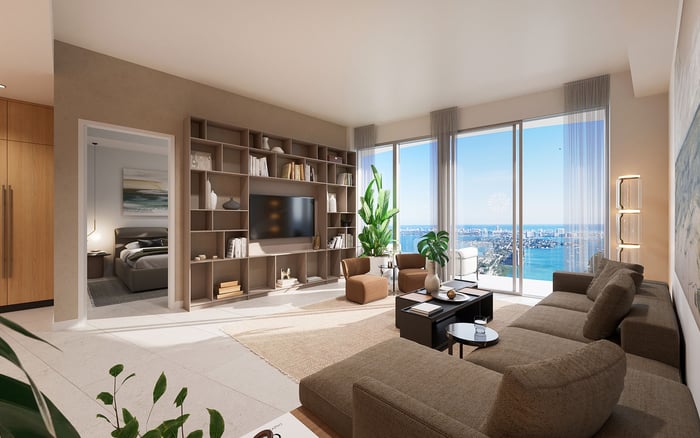
EDITION Edgewater buyers should treat published maintenance figures as projections, test higher stabilized costs, and seek written clarity on budgets, reserves, insurance, staffing, contracts, and any developer support before committing.
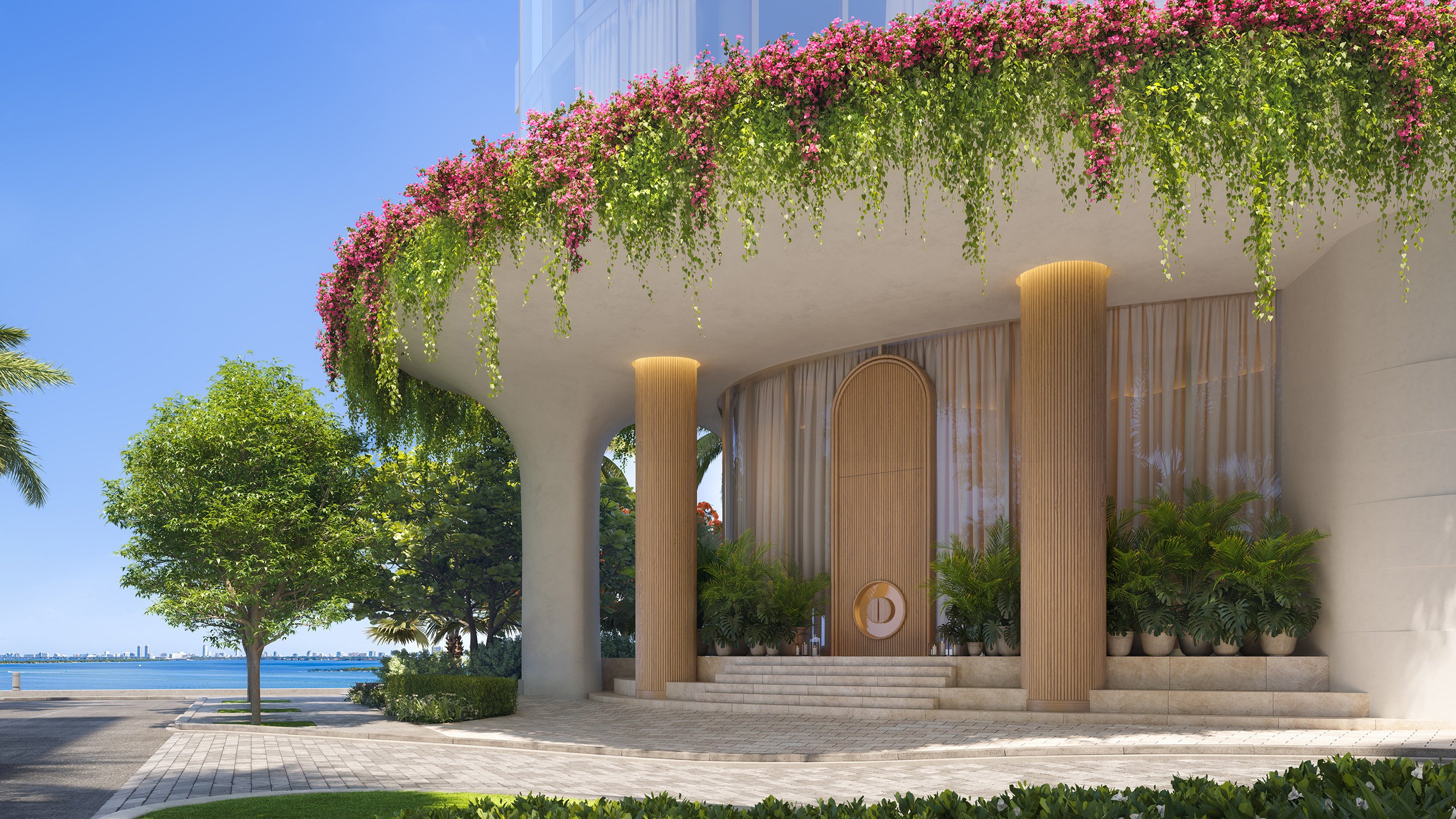
For buyers considering EDITION Edgewater, the most consequential figure may not be the purchase price. It may be the recurring cost of delivering the service, staffing, insurance, maintenance, reserves and amenity experience expected of a branded bayfront address.
Published maintenance figures currently fall within a narrow range, from $1.85 per square foot per month to an estimated $1.90. Those figures are useful starting points, not operating history. The building is not complete, so no stabilized record yet shows the cost of its full service model once occupancy, staffing and contracts settle into a normal rhythm.
The prudent question is not only where the HOA begins, but what full service may cost once the building stabilizes.
The available information does not confirm a developer subsidy at EDITION Edgewater. Buyers should therefore treat subsidy as a due-diligence question to investigate, not an established project feature.
In broad terms, early association charges can appear lower than the eventual cost of service if a developer contribution covers part of an operating shortfall, staffing is lighter during sellout, occupancy is partial, or initial vendor arrangements do not reflect the building’s longer-term operating structure. None of those conditions should be presumed here. Each should be addressed directly and in writing.
The central distinction is between a quoted opening figure and a stabilized budget. A polished opening period can involve fewer occupied residences and a service pattern still taking shape. Stabilization begins when the association must fund the intended experience on a durable basis, without temporary contributions or transitional assumptions obscuring the owner-funded cost.
This distinction is especially relevant within branded residences, where buyers are evaluating not simply shared facilities but a service proposition. The objective is not to minimize fees at any cost. It is to determine whether the projected charge can realistically sustain the standard being purchased.
A per-square-foot figure can sound abstract beside a luxury purchase. Converting it into monthly and annual dollars makes the exposure clear.
At $1.85 per square foot, a 1,000-square-foot residence would carry approximately $1,850 per month, or $22,200 annually. At the estimated $1.90 rate, a 1,500-square-foot home would carry approximately $2,850 per month, or $34,200 annually. A 2,000-square-foot residence at $1.90 would reach roughly $3,800 per month.
These calculations exclude property taxes, insurance and other ownership expenses. Nor do they predict the final association charge. Their purpose is to translate the published range into a visible carrying-cost line item.
A disciplined buyer should model beyond the $1.85-to-$1.90 range. Create several scenarios above the published figure and apply each to the exact chargeable area specified in the purchase documents. The exercise need not forecast a precise outcome. It should reveal the point at which the total carrying cost no longer feels proportionate to the residence’s intended use.
For a primary home, that analysis may focus on durable monthly cash flow. For a second-home buyer, the relevant question may be whether a high-service structure still feels sensible during long periods away. Investors may place greater weight on how recurring charges influence future buyer demand. These are distinct decisions, even when the quoted rate is identical.
Broader Edgewater pricing and fee trends may provide context, but they are no substitute for building-level analysis. Association costs can vary according to square footage, inclusions, staffing, reserves, insurance and amenities, so neighborhood figures are not forecasts for EDITION Edgewater.
Buyers often compare a projected fee with charges at nearby properties such as Aria Reserve Miami, Villa Miami or The Cove Residences Edgewater. Such comparisons can help frame the local market, but only after normalization.
Ask what each fee includes, which residence area is used in the calculation, how extensive the staffing model is, which amenities require ongoing operation, what insurance assumptions apply and how reserves are treated. A lower total may reflect a smaller home or leaner service package. A higher total may reflect more space, broader inclusions or a different reserve posture.
This is why buyer guidance focused only on a single monthly number can miss the essential issue. The more revealing metric is the relationship between cost and delivered service, tested over a realistic ownership period.
Request the proposed association budget, reserve assumptions, insurance projections, service contracts and any written developer-contribution commitments. Ask whether the presented fee assumes partial occupancy, reduced staffing during sellout, discounted vendor contracts or developer-paid operating shortfalls.
If a contribution exists, the documentation should identify its amount, duration, conditions and scheduled end. Buyers should also clarify what happens if actual costs exceed projections, how any shortfall would be handled and whether potential special assessments are contemplated. Verbal reassurance is not equivalent to a budget line, contract term or written commitment.
The review should connect the financial assumptions to the promised residential experience. If the intended service level requires more labor, security, upkeep or amenity operation than the opening budget appears to support, the buyer should understand how that gap is expected to close.
The strongest purchase decision is not built around the lowest plausible opening fee. It rests on a service model the owner understands and can comfortably carry after transitional conditions fall away.
At EDITION Edgewater, the published range provides a practical baseline. The next step is to test it, obtain the underlying documents and separate temporary assumptions from durable obligations. For a luxury buyer, clarity about stabilized cost is not a concession to caution. It is integral to evaluating whether the residence, brand and long-term ownership experience are properly aligned.
For discreet guidance on South Florida luxury real estate, connect with MILLION.
If branded residences are on your mind — as a home or as an allocation — we would be glad to share what we are seeing, privately.
Begin a quiet conversationThe published maintenance range discussed is $1.85 to an estimated $1.90 per square foot per month.
No. The supplied information does not confirm a subsidy, so buyers should investigate the issue rather than assume one exists.
The project remains in pre-construction and therefore lacks a completed building’s stabilized operating history.
The calculation is approximately $1,850 monthly, or $22,200 annually, before taxes, insurance and other ownership costs.
The calculation is approximately $2,850 monthly, or $34,200 annually, before other ownership expenses.
Request the proposed budget, reserve assumptions, insurance projections, service contracts and any written developer-contribution commitments.
Confirm the contribution’s amount, duration, conditions, scheduled end and the treatment of any later operating shortfall.
Model several rates above the published $1.85-to-$1.90 range and compare each result with the full carrying-cost budget.
No. Comparisons require adjustment for residence size, inclusions, staffing, amenities, insurance and reserves.
It helps show whether the recurring owner-funded budget can sustainably support the intended service standard after transitional conditions end.