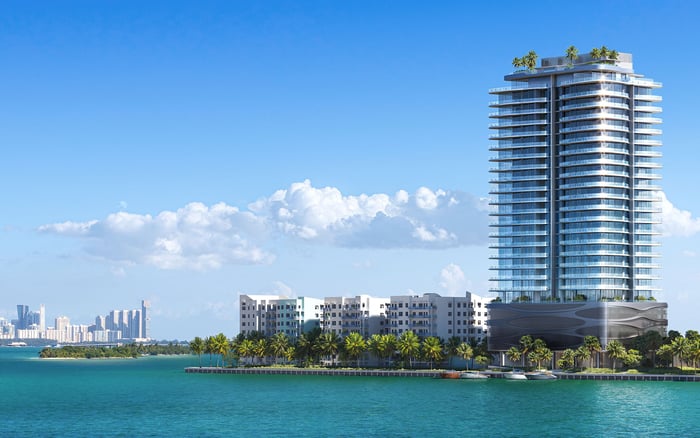
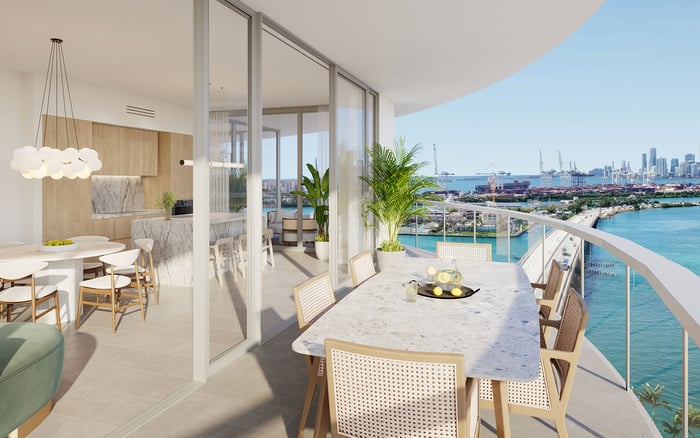
Shoma Bay’s advertised association fees are a starting point for diligence, not proof of stabilized ownership costs. Buyers should examine budget assumptions, mixed-use allocations and service contracts before relying on a monthly estimate.
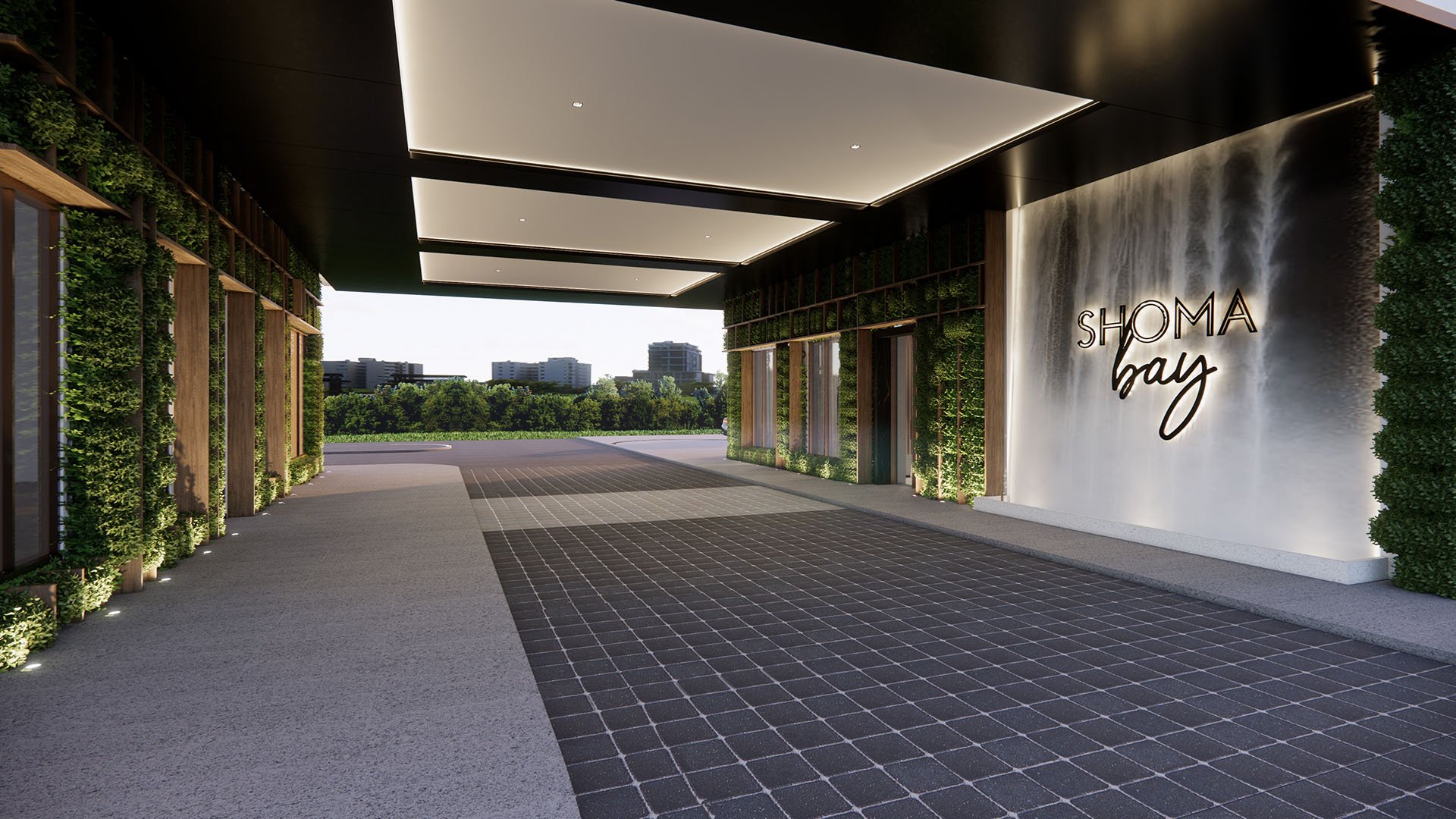
The appeal of Shoma Bay North Bay Village is straightforward: a waterfront condominium development by Shoma Group, with 333 residences advertised at 1850 John F. Kennedy Causeway. Its resort-style amenities and mixed-use setting invite buyers to consider both the home and the conveniences around it.
The ownership budget warrants a separate evaluation. A developer’s pro forma is a forecast built on assumptions. Stabilized operating costs, by contrast, reflect the recurring expense of running a building under established service levels. The forecast can inform a purchase decision without proving what those costs will be.
For buyers, this distinction is not an argument against Shoma Bay. It is a reason to understand what a quoted monthly amount represents before incorporating it into a long-term ownership plan. Advertised figures establish neither stabilized expenses nor a deficiency in the project’s budget.
Groundbreaking has been announced for the planned 24-story condominium building. That is a construction-stage milestone, not evidence of an established operating history. It does not confirm that projected services have been delivered at projected costs over a representative operating period.
A useful budget review begins with dates. Ask which operating year the estimate covers, when each major service is expected to begin, and whether the assumptions describe an opening period or a fully functioning property. Request the latest budget version and an explanation of any revisions.
Distinguish a proposed budget from an adopted association budget, and both from actual expenditures. Adoption formalizes a spending plan; it does not turn that plan into operating history. Even after operations begin, consider whether the available financial record captures the full service program or only a partial opening.
The same discipline applies when evaluating Continuum Club & Residences North Bay Village: compare the status of the financial evidence, not simply the monthly figure. This is a diligence principle, not a claim that the developments have equivalent budgets or obligations.
Advertised association fees for Shoma Bay have ranged from approximately $1,208 to $2,323 per month. Treat that range as an estimate to examine, not as verified amounts owners are already paying or proof of post-turnover expenses. It also does not establish that an earlier developer estimate has increased.
Before using either endpoint, obtain the figure for the exact residence under consideration. Ask what it includes, what is billed separately, which budget version supports it, and how the residence’s share is calculated. A range spanning different residences cannot answer those questions.
Purchase-price metrics belong in a different column. An asking price per square foot measures the acquisition, not the cost of maintaining the building. Likewise, a lower advertised monthly fee is not automatically better value if it excludes costs included elsewhere.
For a buyer also considering Miami Beach and The Perigon Miami Beach, the appropriate comparison is a documented annual ownership schedule. Align included services and separately payable charges before drawing conclusions about relative carrying costs. No fee comparison between these projects is established here.
Shoma Bay’s planned mixed-use program includes a 36,068-square-foot ground-floor Publix supermarket and another 15,628 square feet of ground-floor retail. That commercial component makes expense allocation an important subject for review. It does not establish how any particular cost will be shared.
Ask counsel to identify the ownership boundaries and any shared-facility agreements in the governing documents. If residential and commercial uses share infrastructure or services, request the provisions governing responsibility, payment and decision-making authority. Do not infer those provisions from the presence of a supermarket.
Questions can address access, utilities, loading, waste handling, insurance and maintenance wherever shared arrangements exist. The objective is to distinguish exclusive obligations from common ones, not to assume that every category is shared.
Retail space alone does not prove a master-association structure, commercial subsidy or future residential assessment. Rely on the allocation language rather than assume either a financial benefit or an added burden.
Resort-style amenities describe an experience, not its operating cost. To evaluate the budget behind that experience, ask for the intended service hours, staffing plan and maintenance scope. Where relevant, distinguish contracted amounts from vendor quotations and preliminary allowances.
Insurance deserves the same attention. Ask what coverage assumptions support the budget, whether amounts are estimates or bound premiums, and how deductibles would be addressed. For utilities, request the basis for consumption assumptions and clarify which charges belong to the association and which to individual residences.
Reserve contributions and recurring operating expenses should also be clearly identified. Ask what replacement planning supports the proposed reserve funding and whether the monthly figure includes that contribution. These questions do not imply a particular reserve shortfall or insurance problem.
Finally, ask whether any developer support, guarantee or temporary arrangement affects the opening budget. If one exists, establish its scope, duration and treatment when it ends. This is a conditional inquiry: new development alone does not establish that such an arrangement exists.
Build the review around documents that allow an adviser to connect the advertised fee to its underlying assumptions:
The latest proposed or adopted association budget, with its effective period and explanatory schedules.
Governing documents identifying the residence’s expense share and any applicable shared-cost obligations.
Available service contracts, insurance terms and utility assumptions supporting major expense categories.
Reserve schedules and any documented temporary funding arrangements affecting the quoted amount.
Actual financial statements, when available, to compare budgeted spending with operating experience.
Ask the sales team, association representatives and advisers to reconcile discrepancies in writing. If the advertised amount and budget calculation differ, establish whether the reason is timing, unit allocation, inclusions or another documented factor before relying on either.
For personal planning, have an adviser model alternative expense assumptions using the actual budget categories. Treat those scenarios as affordability tests, not predictions of Shoma Bay’s future fees. There is no basis here for assigning a project-specific increase.
A sound purchase decision holds two ideas together: Shoma Bay’s waterfront setting and proposed conveniences may suit a buyer’s lifestyle, while its operating forecast still requires scrutiny. Neither proposition cancels the other.
A pro forma becomes more useful when its timing, service scope and allocations are clear. It does not become evidence of stabilized operating costs merely because a monthly figure appears in marketing. The goal is not certainty about every future dollar, but clarity about the commitments and assumptions behind the purchase.
For a discreet perspective on South Florida residential opportunities, connect with MILLION.
If branded residences are on your mind — as a home or as an allocation — we would be glad to share what we are seeing, privately.
Begin a quiet conversationShoma Bay is a waterfront condominium development by Shoma Group at 1850 John F. Kennedy Causeway in North Bay Village. Its advertised program includes 333 condominium residences.
A pro forma forecasts expenses using assumptions. Stabilized operating costs reflect recurring expenses under established service levels rather than an opening projection.
Advertised association fees have ranged from approximately $1,208 to $2,323 monthly. These are estimates, not verified post-turnover expenses or current unit-specific quotes.
No. The marketing figures establish neither a budget deficiency nor an increase from an earlier developer estimate.
No. Groundbreaking is a construction-stage milestone, not evidence that an association has delivered its full service program at projected costs.
The planned retail includes a 36,068-square-foot Publix and another 15,628 square feet of retail. Buyers should examine governing documents for any shared-cost obligations rather than assume a subsidy or burden.
Request the latest budget, governing documents and schedules explaining the residence’s expense share. Supporting contracts, insurance terms, reserve schedules and available financial statements can help test the assumptions.
No. Buyers should examine intended service hours, staffing and maintenance scope to understand the budget behind the advertised experience.
Compare equivalent services, reserve contributions, separately billed charges and budget periods. A lower headline fee alone does not establish lower total carrying costs.
No project-specific increase is established here. Alternative expense scenarios can test affordability, but they should not be presented as forecasts of Shoma Bay’s fees.