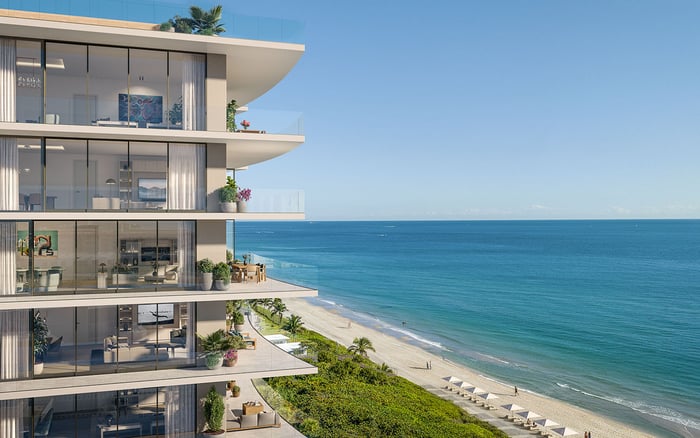
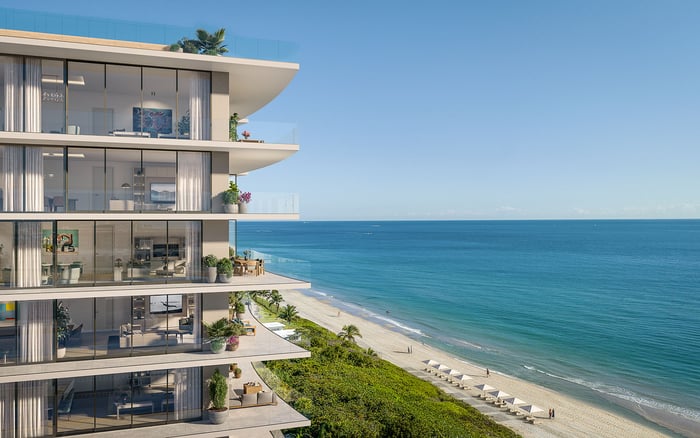
A buyer’s guide to evaluating how residence size, bedroom utility, view character, terrace usability, and total ownership considerations may affect the breadth of a future buyer pool at Casamar.

Before buying at Casamar, it is useful to separate personal appeal from future marketability. A residence can be ideal for one owner yet address a relatively narrow group of future purchasers. Buyer-pool depth is therefore best treated as a framework for comparing layouts, not as a prediction of selling speed or value.
The central question is how many plausible buyers could comfortably afford, occupy, and maintain a particular residence. Unit size, bedroom count, view line, outdoor space, privacy, and total ownership costs can all influence that answer. None should be considered in isolation.
The broadest potential audience often appears where practical utility, distinctive character, and financial comfort overlap.
This analysis does not establish future demand, resale timing, or pricing. Buyers should verify current residence details and financial information through the applicable offering materials, association documents, contracts, and professional advisers.
Interior square footage is an important comparison point, but the number alone does not explain how effectively a home functions. Circulation, room proportions, storage, furniture placement, and the relationship between indoor and outdoor areas can make two similarly sized residences feel materially different.
A more compact plan may appeal to purchasers who want a South Florida residence with fewer rooms to furnish and maintain. A larger plan may better suit full-time living, extended visits, or buyers who want separation between entertaining, work, and private spaces. The relevant issue is not whether bigger is universally better, but whether the added area serves recognizable daily needs.
Buyers should test each plan against real routines. Consider where luggage, sports equipment, seasonal belongings, and household supplies would go. Confirm whether major rooms accommodate the intended furniture and whether doors, hallways, and structural elements affect placement. Functional area is more meaningful than space that is difficult to use.
Bedroom count is often a search filter, but utility determines whether the label translates into buyer-pool depth. A flexible room may support guests, remote work, media use, or hobbies. Conversely, a nominal bedroom may contribute less value to a purchaser if its proportions, privacy, storage, or location do not fit the intended use.
A buyer focused on occasional occupancy may prioritize an efficient layout and adaptable secondary space. A household planning longer stays may place more weight on bedroom separation, bathrooms, closets, and common-area capacity. Buyers should also consider whether a den or multipurpose room can function credibly without assuming that every future purchaser will value it as a full bedroom.
The most resilient choice is often a plan whose room program is easy to understand. Unusual configurations can be highly appealing, but they may require a more specific future buyer. That does not make them inferior; it means the purchase should be supported by strong personal use rather than an assumption of universal resale appeal.
A view description cannot fully convey what a buyer experiences from inside a residence. The framing of the outlook from primary rooms, the amount and direction of natural light, privacy, neighboring structures, and the visual relationship between interior and terrace all deserve in-person review where possible.
Corner exposure can create a broader visual experience, while a more focused orientation may produce a stronger sense of composition from principal rooms. Neither approach is automatically more marketable. The better choice depends on the residence’s exact position and the preferences of the future audience likely to consider it.
Visit at different times if access permits, and examine the outlook while seated as well as standing. Review how glass, columns, railings, and terrace depth affect sightlines. Buyers should also investigate whether available project materials disclose conditions that could influence light, privacy, or views rather than relying on marketing imagery alone.
Outdoor area can differentiate a South Florida condominium, but stated size does not establish everyday usefulness. Depth, shape, access points, exposure, furniture zones, and the connection to living and bedroom areas all affect how a terrace functions.
Consider whether the outdoor space supports the activities that matter most, such as dining, lounging, or quiet morning use. A large but awkwardly shaped terrace may not satisfy the same buyer as a more efficient outdoor area. Maintenance responsibilities and applicable rules should also be verified before assigning value to any proposed use.
Future buyer-pool depth depends on more than the purchase price. Monthly assessments, insurance responsibilities, taxes, parking arrangements, financing conditions, reserve information, and potential capital obligations can influence affordability and buyer confidence. These items can change, so current documentation is essential.
Rather than assuming that a smaller residence always means a broader audience, compare the complete ownership profile. A lower acquisition price may be offset by other considerations, while a larger residence may attract a purchaser who places greater value on space and privacy. The goal is to understand the full commitment associated with the specific home.
A disciplined search can place Casamar alongside other Pompano Beach options while recognizing that each project has its own residence mix and ownership proposition. Buyers may review Armani Casa Residences Pompano Beach, The Ritz-Carlton Residences® Pompano Beach, and W Pompano Beach Hotel & Residences as separate reference points rather than direct substitutes.
Use the same checklist for every candidate: verify interior and exterior area, room functionality, view orientation, privacy, parking, assessments, included features, and applicable ownership documents. This approach helps reveal whether a price difference reflects features the buyer will actually use.
A future resale thesis should support, not override, the reasons for buying. The strongest decision aligns the residence with the owner’s expected use while avoiding features that depend on a highly specialized purchaser to appreciate them.
Before committing, identify the likely future audience in plain terms. Ask whether the plan would make sense for seasonal residents, full-time occupants, households needing work space, or buyers prioritizing outdoor living. Then stress-test that theory against the residence’s complete cost structure and exact physical characteristics.
For a private assessment of Casamar layouts and comparable South Florida opportunities, connect with MILLION.
If branded residences are on your mind — as a home or as an allocation — we would be glad to share what we are seeing, privately.
Begin a quiet conversationIt refers to the breadth of plausible future purchasers who may find a residence affordable, functional, and appealing. It is not a guarantee of resale speed or value.
No. Added space may attract some purchasers while increasing the overall ownership commitment for others.
Room proportions, circulation, storage, and furniture placement determine how effectively the interior supports daily life.
Bedroom count affects search criteria and household fit, but each room’s privacy, proportions, storage, and flexibility also matter.
Not automatically. Buyers should evaluate its actual function and verify how the space is identified in applicable documents.
Review the outlook from primary rooms, natural light, privacy, orientation, terrace relationship, and any disclosed surrounding conditions.
Corner exposure may create a broader visual experience and different light conditions. Its appeal still depends on the residence’s exact position and the buyer’s preferences.
Consider its depth, shape, access, exposure, furniture capacity, and connection to the interior rather than relying only on stated area.
Buyers should verify current assessments, taxes, insurance responsibilities, parking arrangements, financing conditions, reserves, and potential capital obligations.
No. It is a comparison framework, and future demand, timing, pricing, and market conditions cannot be guaranteed.