A yacht-owner shortlist spanning Bay Harbor Islands, Fort Lauderdale, West Palm Beach and Sunny Isles Beach, with a Pompano Beach screening alternative. The essential distinction: attractive boating amenities do not establish permanent berthing rights or financial readiness.
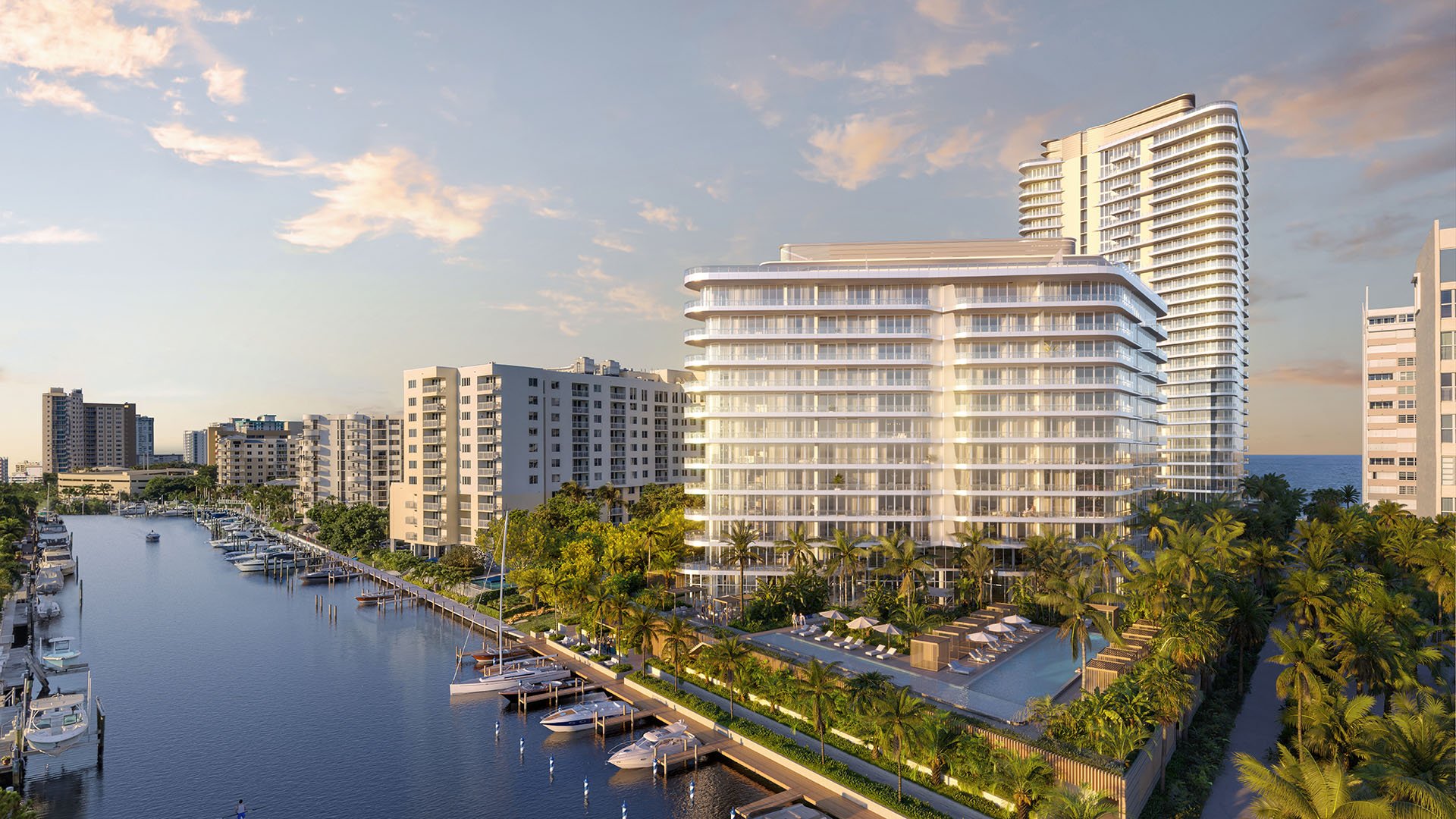
For a yacht owner, waterfront luxury is more than a terrace above the Intracoastal. It is the relationship between the residence, the vessel and the obligations that continue after closing. A small building may offer the desired intimacy, but neither its size nor its branding establishes adequate insurance or well-funded reserves.
This ranking prioritizes boating arrangements and residential scale-not insurance strength or reserve performance. Those financial qualities require a separate, building-specific review. Indian Creek offers the clearest boutique proposition; the other choices introduce trade-offs in marina capacity, day docking, off-site access or a more individualized search.
The objective is not to avoid every potential assessment. It is to understand the exposure before committing to the address.
1. Indian Creek Residences & Yacht Club - Bay Harbor Islands
At 9110 W Bay Harbor Drive, Indian Creek is marketed with nine condominium homes and six yacht slips-the strongest boutique fit in this comparison. Its yacht-club offering includes dockmaster concierge services and an owners’ outdoor lounge and bar, making boating part of the residential experience rather than an incidental amenity.
Six slips, however, do not establish guaranteed dockage for nine homes. Before valuing a residence as a yacht base, request the actual berth arrangement, allocation rules and vessel restrictions. Intimate scale should be a lifestyle advantage, not a substitute for reviewing insurance and reserves.
2. Pier Sixty-Six Residences - Fort Lauderdale
At 2301 SE 17th Street, Pier Sixty-Six offers the strongest large-yacht capability in this comparison. Its associated marina is described as providing 164 slips and 5,000 linear feet of dockage, with capacity for vessels up to 400 feet.
The compromise is residential scale: this is a multi-building resort-residential redevelopment, not a micro-scale condominium. For an owner whose vessel dictates the search, that trade-off may be worthwhile. Marina capacity, however, does not establish availability for a particular buyer. Confirm berth terms separately, and ask how residential, resort and marina expenses are allocated before evaluating the dues.
3. ALBA Palm Beach - Northwood waterfront, West Palm Beach
At 4714 N Flagler Drive, ALBA occupies an Intracoastal waterfront site in West Palm Beach’s Northwood neighborhood. Its advertised boating amenities include direct water access and day-dock slips.
That is a different proposition from permanent yacht moorage. ALBA is better suited for consideration by owners who intend to keep their yacht elsewhere while enjoying residential water access. Confirm permitted docking duration and vessel compatibility rather than assuming the day dock can serve as a home berth. Its place here rests on waterfront access, not an established permanent slip entitlement.
4. Turnberry Ocean Club - Sunny Isles Beach with Aventura marina access
At 18501 Collins Avenue, Turnberry Ocean Club offers an oceanfront alternative to living directly beside the yacht. Complimentary access to Turnberry Marina in Aventura was described as a resident benefit in February 2020.
That historical benefit does not establish current availability, free dockage or a permanent berth. The tower also departs from the boutique brief. Buyers drawn to its oceanfront setting should obtain current written access terms, dockage charges and availability before assigning practical value to the marina relationship.
5. Pompano Beach Intracoastal boutique waterfront condos - Individual-property screening
This fifth position is a search category, not a single development. It suits buyers who prefer to evaluate individual boutique waterfront condominiums against defined financial and boating requirements.
Start with the annual budget, recent financial statements, reserve study, year-to-date results and an itemized explanation of dues. Establish yacht compatibility independently. A candidate belongs on the final shortlist only when its residential scale, actual docking arrangement and financial documentation align with the buyer’s requirements.
This market offers three distinct benefits: marina access, day docking and permanent assigned or deeded berthing. They should not carry equal weight in a purchase decision.
For buyers considering Alba West Palm Beach, the practical question is whether day-dock access complements an existing yacht arrangement. At Turnberry Ocean Club Sunny Isles, it is whether the current off-site marina terms suit the owner’s routine and vessel.
In Bay Harbor Islands, buyers extending their comparison to Onda Bay Harbor should apply the same documentary test rather than assume equivalent docking rights. A comparison address is not evidence of equivalent yacht amenities or financial readiness.
For every candidate, request written confirmation of the right being offered, its duration, charges, restrictions and availability for the intended vessel. Keep the residential purchase and the berthing decision distinct until both are documented.
Waterfront insurance costs can exceed inland equivalents because of hurricane and flood exposure. Obtain estimates for the specific unit before purchasing; a general allowance cannot replace a tailored review.
At the association level, examine policy limits, hurricane deductibles, premium history and significant claims. Ask how a post-storm funding shortfall would be covered. The question is not simply whether insurance exists, but how the association would finance the portion of a loss that remains its responsibility.
Flood coverage requires separate examination because a standard property policy does not automatically include it. The insurance review should address that distinction explicitly, alongside the unit’s own coverage needs.
Strong reserves can improve an association’s ability to absorb large deductibles and repairs without emergency assessments. They do not eliminate assessment risk.
Read the reserve study alongside the annual budget, recent financial statements and year-to-date results. Request applicable milestone-inspection reports and structural reserve studies. Neither new construction nor statutory compliance establishes that every future obligation is adequately funded.
Review 12-24 months of board minutes, current or pending assessments and association restrictions. Look for a clear explanation of planned work, funding decisions and what dues actually cover. An assessment may fund structural compliance, restoration or higher insurance costs; its purpose and the association’s funding history matter more than its existence alone.
The strongest purchase makes both its pleasures and its obligations clear: the right scale, a usable boating arrangement and financial documentation that supports an informed decision.
Explore your next waterfront residence with MILLION.
If branded residences are on your mind — as a home or as an allocation — we would be glad to share what we are seeing, privately.
Begin a quiet conversationIndian Creek Residences & Yacht Club is marketed with nine condominium homes and six yacht slips, making it the strongest boutique fit in this comparison.
The six-slip offering does not establish guaranteed dockage for every home. Buyers should confirm allocation rules and the rights attached to the residence.
Pier Sixty-Six’s associated marina is described as accommodating vessels up to 400 feet, with 164 slips and 5,000 linear feet of dockage. Availability for a particular vessel requires confirmation.
Its advertised amenities include direct water access and day-dock slips. Those benefits do not establish permanent yacht berthing rights.
The February 2020 description of complimentary marina access does not establish free dockage. Current access terms, charges and slip availability require confirmation.
It is an individual-property screening category for boutique waterfront condominiums along the Pompano Beach Intracoastal, not a single development.
No. It prioritizes boating arrangements and residential scale; insurance adequacy and reserve funding require building-specific review.
Request the annual budget, recent financial statements, reserve study, year-to-date results and an itemized explanation of dues. Review applicable inspections, 12–24 months of board minutes and assessment information as well.
Examine policy limits, hurricane deductibles, premium history, significant claims and the plan for funding a post-storm shortfall. Review flood coverage separately and obtain unit-specific estimates.
Not necessarily: they may fund structural compliance, restoration or higher insurance costs. Their purpose and the association’s funding history matter more than their existence alone.