A discreet buyer’s guide to comparing Banyan Tree Residences West Palm Beach with Apogee South Beach through service expectations, privacy, resident traffic, and daily-use fit.
Banyan Tree Residences West Palm Beach vs Apogee South Beach is best understood as a service-and-privacy decision, not a simple contest between two desirable South Florida addresses. At this level, buyers are rarely choosing only a view, a floor plan, or a social calendar. They are choosing how much staff presence they want, how often they expect to engage with amenities, how visible they wish to be, and how a residence performs once life becomes routine.
Apogee South Beach occupies a highly specific lane. It is an established trophy condominium in Miami Beach’s South of Fifth neighborhood, with a reputation shaped by discretion, low density, large residences, private elevators, and a non-transient residential experience. Its appeal is less about producing a resort-like procession of activity and more about preserving privacy, calm, and control.
For a buyer evaluating Banyan Tree Residences West Palm Beach, the question is different: what kind of service culture, daily rhythm, and ownership experience does the buyer actually want from a contemporary luxury residence in West Palm Beach? The answer should not be inferred from branding alone. It should be tested against how the household lives every week.
In brokerage shorthand, labels such as Apogee South Beach, South of Fifth, Miami Beach, West-palm-beach, Second-home, and Resale are useful only as starting points. The more important filter is whether the building’s operating style matches the owner’s temperament.
At the top of the market, service is not automatically better because there is more of it. Some buyers want a building that feels managed, staffed, and choreographed. Others want a residence that intervenes as little as possible. The distinction is subtle, but it affects every arrival, guest visit, delivery, dinner reservation, and weekend morning.
Apogee’s service proposition is tied to its quiet, low-density identity. A building with fewer resident movements can create a different kind of luxury: less lobby friction, fewer incidental encounters, and more predictable access to the elements that matter. Private elevators reinforce that sense of separation. For the buyer who prizes discretion, the ability to move from car to residence with limited exposure can be more valuable than a long list of shared spaces.
That does not make a more hospitality-oriented environment inferior. It serves a different owner. Some households enjoy a stronger amenity culture and a more visible layer of service. Others associate luxury with not having to explain themselves, repeat preferences, or navigate a busy residential stage. Before comparing finishes or amenity decks, the buyer should ask: do I want service to feel theatrical, or nearly invisible?
Privacy in a condominium is often discussed as if it were a matter of etiquette. In reality, it is structural. Density, elevator design, building culture, residence size, guest flow, and the transient or non-transient nature of the property all matter.
Apogee South Beach is low-density and non-transient, placing it in a distinct category for high-net-worth buyers who value consistency. The non-transient character matters because it reduces the hotel-like churn that can change the emotional tone of a building. Residents are more likely to understand the etiquette of the place. Staff can know patterns without turning the property into a stage. The atmosphere becomes quieter, less performative, and more residential.
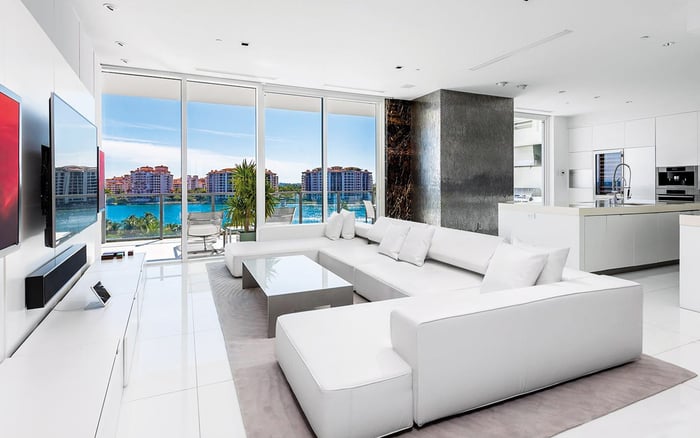
Large residences also change the privacy equation. When a home itself has scale, owners rely less on shared amenities for daily living. Entertaining, working, resting, and family routines can happen inside the residence with fewer compromises. Private elevators add another layer, making arrival feel personal rather than communal.
For some buyers, this is the central reason to consider Apogee. It does not need to compete by multiplying amenity categories. Its value is in restraint.
The first month in any trophy residence is seductive. Views feel new, staff names are learned, and the building’s rituals become part of the acquisition story. The better test begins later, when the residence is no longer a novelty.
Daily use asks practical questions. How many times do you use the lobby in a week? Do you host privately or rely on building spaces? Do you want neighbors to be familiar or mostly unseen? Does the amenity program support your actual routine, or merely photograph well? Do you prefer a building that feels quietly occupied, or one that offers more energy?
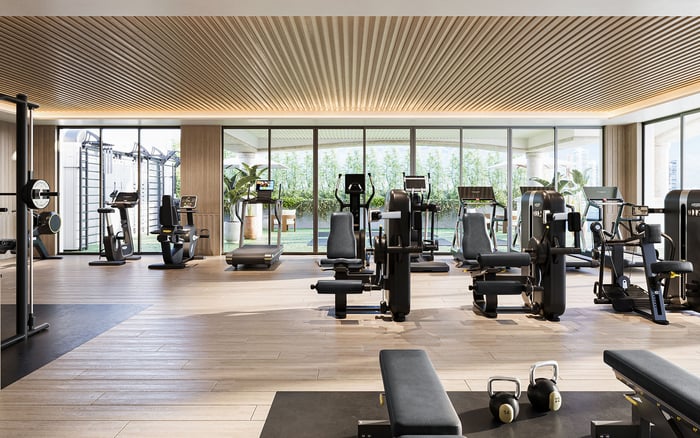
Apogee’s quieter amenity profile should be read in that context. For the right buyer, quiet is not a deficiency. It is the point. A calm amenity experience can mean less competition, less spectacle, and a more residential rhythm. For an owner who spends significant time in the home, privacy and reliability may matter more than a constantly activated environment.
The West Palm Beach side of the comparison deserves the same discipline. Buyers should not assume that a newer or more branded environment automatically solves daily life. They should walk through arrival sequences, staff touchpoints, guest logistics, pet routines, wellness habits, dining preferences, and the way the residence will be used in season and out of season.
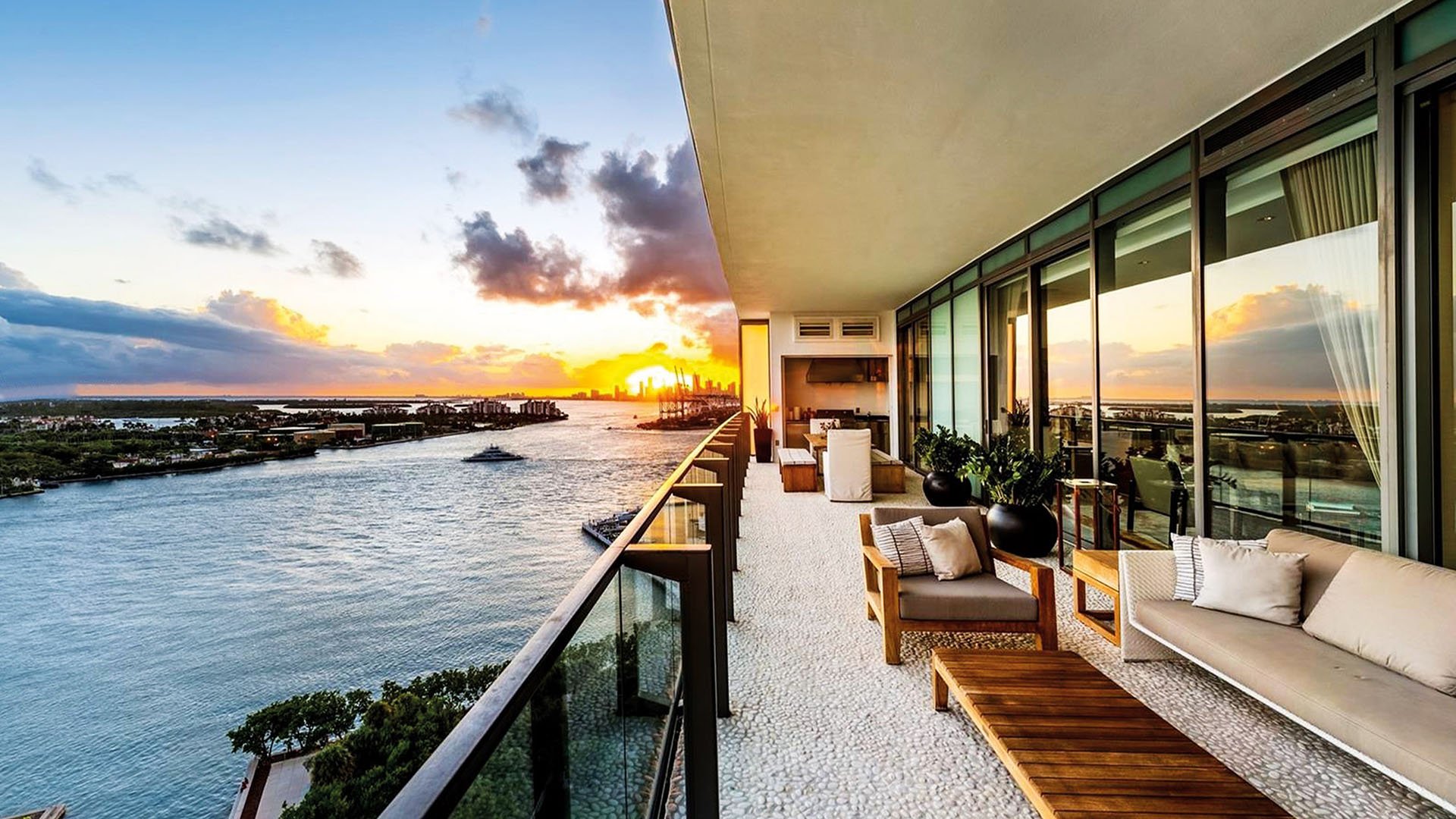
Location is not only geography. It is social rhythm. Apogee’s South of Fifth setting places it within one of Miami Beach’s most established luxury enclaves, where discretion and scarcity carry meaningful weight. The neighborhood context supports the building’s identity: residential, coveted, and oriented toward buyers who understand the value of a quieter address inside a globally recognized coastal market.
West Palm Beach speaks to a different set of buyer motivations. For some, it may represent a preference for Palm Beach adjacency, a calmer mainland routine, or a different relationship to dining, culture, family life, and travel patterns. The right choice depends less on which market is more prestigious and more on which market supports the owner’s actual calendar.
A Miami Beach buyer who wants the energy of South Florida nearby, but not inside the front door, may find Apogee compelling. A West Palm Beach buyer may be seeking a different pace altogether. The careful buyer should identify where life is already happening, then choose the residence that reduces friction rather than adds symbolic value.
The most revealing question is not, “Which building has more?” It is, “Which building asks less of me?” Ultra-prime buyers often have complex lives. They travel, host, manage family logistics, move between homes, and expect staff and architecture to make those transitions smoother.
For Apogee, the argument is privacy, discretion, scale, and a quieter daily experience. It is an established trophy condominium rather than a new branded-resort-style project, and that distinction should be taken seriously. Its strength is not novelty. Its strength is that the ownership proposition is already legible.
For Banyan Tree Residences West Palm Beach, the comparison should turn on the practical details that govern daily life: staffing model, reservation systems, guest access, amenity rules, delivery handling, parking routines, service charges, and the culture of the resident population. Those details will say more than any broad category label.
The best outcome is not the most dramatic purchase. It is the residence that preserves time, privacy, and ease without requiring the owner to adapt too much.
Is Apogee South Beach a newer branded-resort-style project? No. It is positioned as an established trophy condominium rather than a new branded-resort-style residential project.
Where is Apogee South Beach located? Apogee South Beach is located in Miami Beach’s South of Fifth neighborhood, one of the area’s most closely watched luxury enclaves.
Why does low density matter for luxury buyers? Low density can reduce resident traffic, elevator congestion, and incidental encounters, supporting a more private daily experience.
What does non-transient mean in this context? It points to a more stable residential environment, distinct from hospitality-driven or hotel-like ownership models with frequent turnover.
Are private elevators important at Apogee South Beach? Yes. Private elevators reinforce the building’s privacy-oriented model and make arrival feel more controlled.
Is Apogee’s amenity experience considered quiet? Yes. Its amenity experience is characterized as relatively quiet compared with newer branded-resort-style luxury residences.
Who is the natural Apogee South Beach buyer? The natural buyer prioritizes discretion, large residences, privacy, and a calm ownership experience over maximum amenity volume.
How should buyers compare Banyan Tree Residences West Palm Beach? They should focus on service structure, privacy, guest flow, amenity rules, and daily-use routines rather than branding alone.
Is this comparison mainly about Miami Beach versus West Palm Beach? Partly, but the deeper comparison is about lifestyle rhythm, building culture, and how each residence supports daily living.
Which building is better for a second-home owner? The better fit depends on how often the owner visits, how much service they want, and whether privacy or amenity energy matters more.
When you're ready to tour or underwrite the options, connect with MILLION.
If branded residences are on your mind — as a home or as an allocation — we would be glad to share what we are seeing, privately.
Begin a quiet conversation