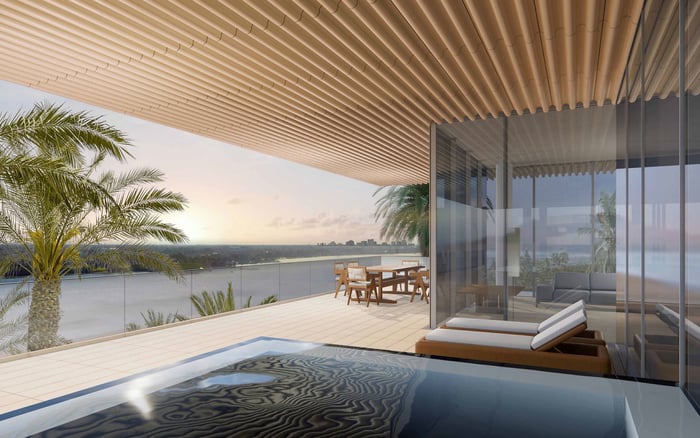
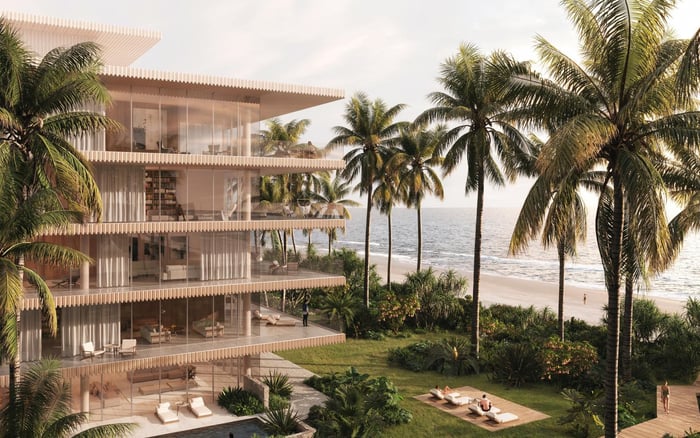
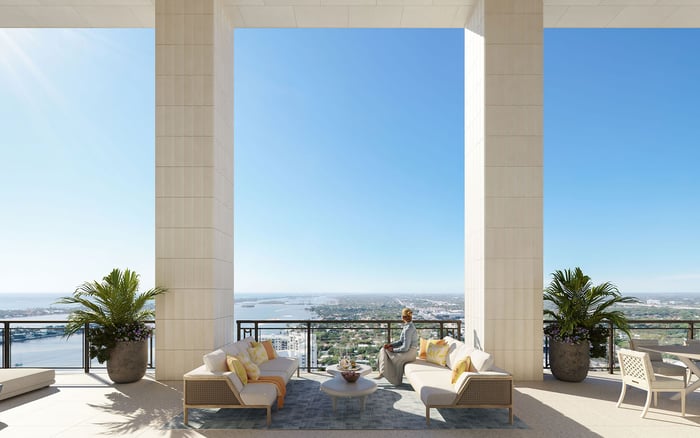
A buyer-focused guide to evaluating Banyan Tree’s wraparound terraces by morning light, dinner-hour comfort, acoustic privacy, and residence-specific views, rather than compass direction alone.
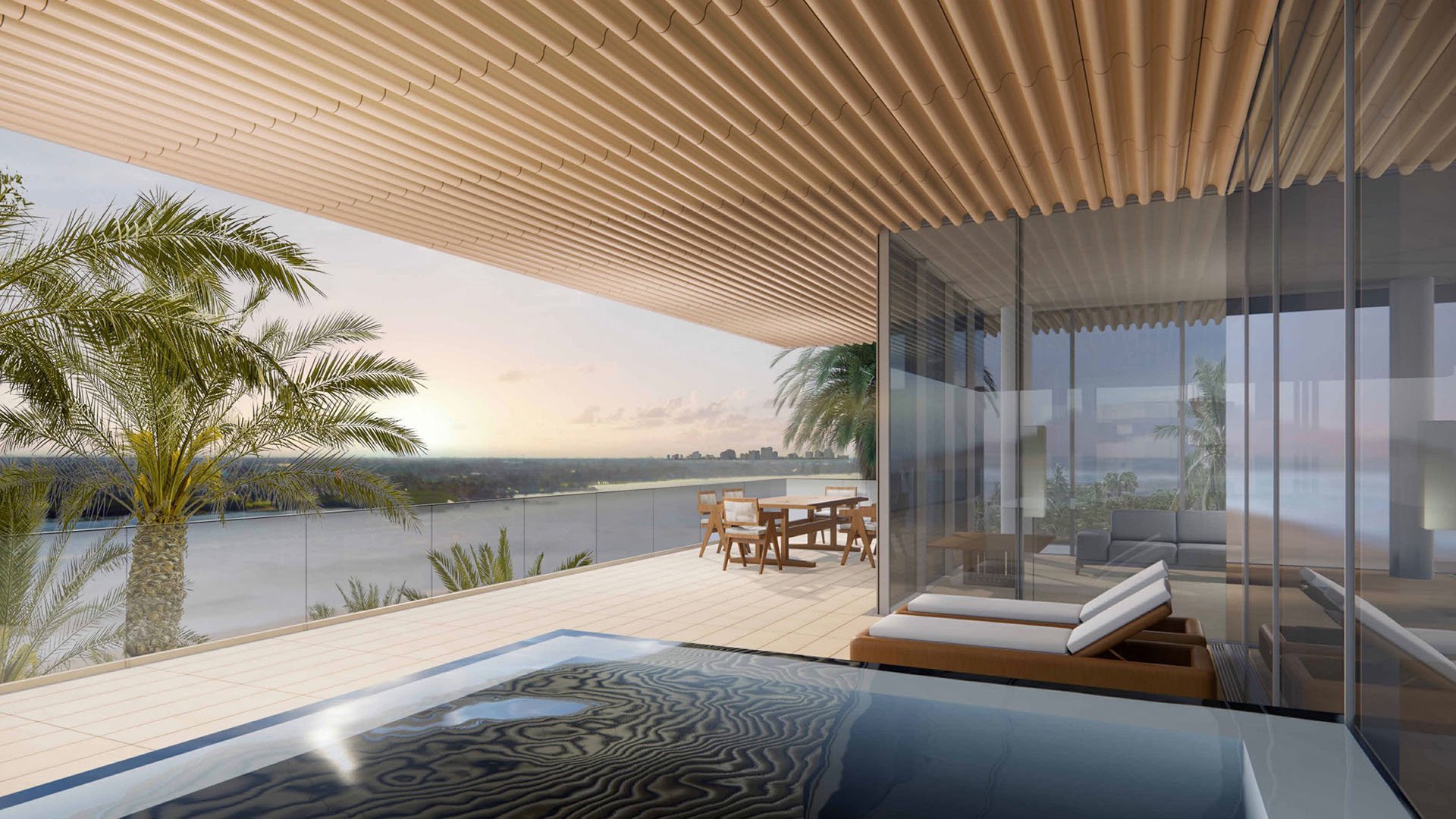
A terrace earns its place in a residence through ordinary rituals: coffee before the day begins, dinner as the light changes, an uninterrupted hour with a book. At Banyan Tree Residences West Palm Beach, choosing for those moments means looking beyond a single compass label. The development comprises 88 corner residences with one to four bedrooms, wraparound terraces, and two distinct orientations for every home.
That configuration makes each terrace segment the useful unit of comparison. One side might suit breakfast; another may become the preferred reading corner. The question is not which direction is universally best, but which combination supports the way you intend to live.
Begin with three appointments in your own calendar: your usual breakfast hour, dinner time, and preferred reading window. Evaluate each exposure against those hours rather than an abstract promise of sunlight or views.
East or southeast exposure is a reasonable starting point for buyers seeking morning light-not a project-specific assurance of breakfast comfort. The precise bearings, terrace geometry, neighboring structures, and seasonal sun position all require consideration for the actual residence. Do not assume a particular pairing of exposures is available simply because the homes occupy corners.
Request a compass-marked plan and a morning sun-and-shadow study for the home under consideration. Ask where direct light reaches the proposed table, whether an adjacent terrace segment remains shaded, and how those conditions change during the months you expect to be in residence.
Then place furniture on the plan. Evaluate a breakfast table with chairs pulled out and the route from the interior left clear. A broad outlook is less useful if the comfortable seating position conflicts with circulation. Test the wraparound arrangement as usable space, not a decorative outline.
West-facing exposure may appeal to buyers who enjoy evening light. It does not, by itself, establish a visible sunset or a comfortable dinner setting. Test the horizon from the intended seating position, distinguishing a sunset view from late-afternoon brightness across the terrace.
Ask for a second sun study covering the hours before dinner. Consider whether the table would face direct glare, whether part of the terrace offers shade, and whether seating can be repositioned without obstructing access. A beautiful outlook and an agreeable place to dine are related but separate qualities.
For buyers also considering Mr. C Residences West Palm Beach, the same dinner-hour questions provide a useful basis for comparison. Apply them to each exact home rather than assuming a project name or orientation determines the experience.
At Banyan Tree, confirm which screens, awnings, or other shading measures are permitted before incorporating them into a furniture scheme. An attractive solution on a design board is not necessarily an approved installation.
Reading calls for a different assessment from entertaining. North or northeast exposure can be a starting point when seeking gentler light, but it does not establish that a particular Banyan Tree terrace will be shaded or quiet at your preferred hour.
Evaluate the proposed chair position for page glare, shade, privacy, and sound. Ask about nearby mechanical equipment, neighboring outdoor activity, and the terrace's relationship to surrounding streets. If access is available, listen at the time you expect to read. A brief visit at another hour may reveal little about your intended routine.
The address is 400 Hibiscus Street in downtown West Palm Beach, one block from CityPlace and two blocks from the Intracoastal Waterway. Nearby dining, shopping, parks, and waterfront paths are part of its setting. They do not establish the acoustic conditions of an individual terrace.
Nor should a higher floor be treated as a shortcut to quiet. Compare both sides of the wraparound terrace and identify the seat that offers the best balance of light, outlook, and acoustic privacy.
The residential specifications include floor-to-ceiling, impact-resistant glass. Impact resistance is a meaningful specification, but it does not, on its own, answer questions about solar control, interior glare, or outdoor comfort. Request the detailed glazing specifications before drawing conclusions about performance.
Treat the terrace and interior plans as a single daily route. Check how breakfast service reaches the table, whether dining chairs interrupt access, and whether a reading chair can remain in place without becoming an obstacle. Confirm door locations and usable dimensions on the exact plan.
If Alba West Palm Beach is also on your shortlist, bring the same furniture-layout questions to that review. Comparable questions are more useful than assuming comparable terrace conditions. Ask about permitted outdoor furniture and shading at each property before committing to a design.
Banyan Tree is a 26-story, dual-form tower, but its downtown address should not be confused with a directly waterfront site. Water visibility and waterfront positioning are different attributes; neither substitutes for examining the exact outlook.
Unit 2403 is a four-bedroom corner residence with city, Intracoastal, and ocean views. That description applies to that home, not the entire building. Unit 1606 is northwest-facing-an orientation example, not a guide to every residence's paired exposures.
Actual views vary with location, floor level, and orientation. Final design, construction changes, and future development can also alter outlooks. Buildings, structures, vegetation, and infrastructure may obstruct them. A higher floor is no guarantee of permanent water views.
Request residence-specific view material and distinguish existing conditions from illustrations. Judge the view from a seated position as well as standing at the glass or terrace edge.
Give each shortlisted home three separate assessments: breakfast suitability, dinner suitability, and reading suitability. Record the strongest terrace segment for each activity, along with unresolved questions about shade, noise, permissions, or views. This keeps a dramatic outlook from overshadowing an everyday inconvenience.
The right choice need not win every category. It should perform convincingly during the hours you value most, with its compromises understood before commitment. That is the practical luxury of evaluating a wraparound terrace as more than one outdoor room.
For a discreet conversation about matching a West Palm Beach residence to your daily rituals, connect with MILLION.
If branded residences are on your mind — as a home or as an allocation — we would be glad to share what we are seeing, privately.
Begin a quiet conversationThe development is at 400 Hibiscus Street in downtown West Palm Beach, one block from CityPlace and two blocks from the Intracoastal Waterway.
The development comprises 88 corner residences with one to four bedrooms.
Every corner residence is described as opening to two distinct orientations, with wraparound terraces. Confirm the precise bearings for the home you are considering.
East or southeast exposure can be a starting point for morning light. Confirm actual conditions through the exact residence's compass bearings and morning sun-and-shadow study.
A west-facing terrace does not guarantee a sunset view because visibility depends on the specific outlook and obstructions. Dinner comfort also requires evaluating glare, shade, and seating placement.
No compass direction establishes quiet. Assess shade, street noise, neighboring activity, and nearby mechanical equipment at your preferred reading hour.
Banyan Tree is two blocks from the Intracoastal Waterway, not directly on the waterfront. Distinguish waterfront positioning from potential water views.
No building-wide guarantee is established. Unit 2403 has city, Intracoastal, and ocean views, but outlooks vary by residence location, floor, and orientation.
Impact resistance alone does not establish solar-control performance. Request detailed glazing specifications and evaluate glare separately.
Do not assume these additions are permitted. Confirm the rules for screens, awnings, other shading measures, and outdoor furniture before planning installations.