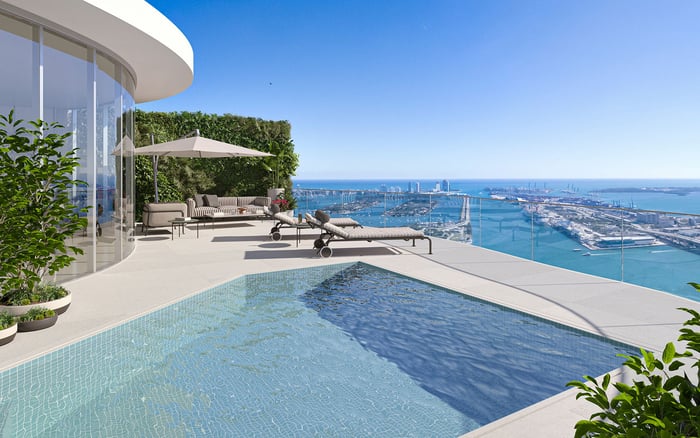
A buyer’s guide to evaluating balcony light, heat, and everyday comfort alongside the glazing, approvals, maintenance, and storm planning that deserve equal attention.

A Miami balcony should be evaluated as an outdoor room, not simply a frame for the view. Before choosing an exposure, decide what belongs there: a quiet breakfast, an afternoon reading chair, or dinner after the interior lights come on. Sunrise, sunset, and heat matter most in relation to the hours you intend to spend outside.
The essential distinction is between everyday comfort and storm protection. A balcony can suit your daily routine without revealing anything about the performance of its doors, windows, or railings. Equally, approved protective glazing does not establish how comfortable the terrace will feel at your preferred hours.
For a luxury buyer, each question deserves a separate assessment. Begin with the experience, then verify the assemblies and the building’s maintenance record.
Treat an orientation label as the start of the viewing process, not its conclusion. Ask for a plan identifying the balcony’s direction, then visit at the times that matter to you. If breakfast outdoors is essential, a late-afternoon showing cannot answer that question. If sunset entertaining is the priority, assess the view from the actual seating position rather than relying on a photograph of the horizon.
During each visit, note where direct light reaches, where you would place a dining table, and whether glare interferes with the experience. Record the date and time to keep those observations specific, rather than allowing them to become a general promise about year-round conditions. If seasonal exposure is decisive, request a qualified, residence-specific assessment.
In Miami Beach, a buyer considering The Perigon Miami Beach should apply the same discipline to the individual residence. The project name alone cannot establish a balcony’s usable light or shade.
For heat, rely on observation rather than an assumed ranking of compass directions. Sit where you expect to spend time. Assess your comfort in the proposed furniture location and the transition between indoors and outdoors. Do not infer cooling costs or thermal performance from orientation alone.
A balcony tour should include time inside with the doors closed. Examine the view from the living room, the position of the door opening, and how your preferred furniture arrangement would work on either side. This is also the moment to separate aesthetic preferences from technical assurances.
For a Brickell comparison involving The Residences at 1428 Brickell, request the exact residence plan and documentation for the relevant openings. A project-level presentation is not a substitute. Make the same request for every competing apartment.
Ask which shading or furnishing changes would require association approval. If your intended use depends on an umbrella or another movable accessory, include its storm-storage arrangements in the purchase decision. Loose outdoor objects require attention before severe weather, not after a warning has interrupted travel plans.
Miami-Dade and Broward counties form Florida’s High-Velocity Hurricane Zone, or HVHZ, with stringent wind and windborne-debris requirements. Exterior openings subject to hurricane-impact protection requirements generally need approved impact-resistant systems or approved protective shutters.
The operative word is “systems.” A description such as “impact glass” is not a complete account of the installed doors and windows. Request identification of the specific products, and have a qualified professional review their approvals, applicability, and installation documentation.
Product-approval records can identify product type, impact classification, HVHZ classification, and approval expiration date. These details offer a more useful starting point than a broad marketing assurance. Review an approval record in the context of the actual installation; it is not a blanket guarantee for the residence.
Storm-protection permit documentation should identify the openings being protected and the approved protection products. Confirm whether the supplied records correspond to the balcony doors and other exterior openings you are purchasing.
A high-floor address does not remove debris-protection requirements. Openings at or below 30 feet above grade require large-missile impact protection, subject to the relevant building-code provisions. Openings above that height can be subject to small-missile impact requirements.
For a residence in Sunny Isles Beach, including one under consideration at Jade Signature Sunny Isles Beach, the question is not simply how high the apartment sits. It is which requirements apply to its openings and whether the installed assemblies satisfy them.
Do not equate impact-resistant balcony doors with impact-rated balcony railings. They are separate inspection subjects. Nor does protected glazing make an exposed balcony a safe place to remain during hurricane conditions. Windows and balcony doors should remain closed during those conditions.
Storm-protection due diligence extends beyond the unit boundary. Review the building’s inspection history, structural condition, hurricane-resistance characteristics, and association maintenance of required protective systems.
Balcony railing glazing, sliding doors, windows, and curtain walls deserve particular attention because hurricane damage has affected these components. Ask a qualified inspector to evaluate their condition and identify questions requiring specialist review. A polished appearance is no substitute for that assessment.
Older assemblies may reflect earlier code requirements. Repairs involving damaged frames or balcony railing systems can raise current-code compliance questions. Request the relevant repair and permit records rather than assuming an earlier approval settles every later alteration.
Apply the same approach to a Fort Lauderdale purchase involving Four Seasons Hotel & Private Residences Fort Lauderdale. Brand recognition should not replace review of the particular building’s records and the residence’s installed systems.
Before committing, establish how balcony furniture, planters, umbrellas, and other loose objects will be handled before a storm. Ask management about building procedures and determine who will take responsibility for the residence if you are away. For a second home, that responsibility should be explicit.
Organize the final decision in two columns: the balcony experience you have actually observed, and the protection and maintenance documentation you have reviewed. Neither replaces the other. The right orientation supports your routine, with systems and procedures that have received appropriate scrutiny.
For a considered approach to your next South Florida residence, explore MILLION.
If branded residences are on your mind — as a home or as an allocation — we would be glad to share what we are seeing, privately.
Begin a quiet conversationStart with the hours you intend to use the balcony, then visit the specific residence at those times. Evaluate comfort separately from storm protection.
Request a plan identifying its direction and inspect the actual seating area during your preferred hours. Seek a residence-specific assessment if seasonal exposure is essential.
Do not use orientation alone as a guarantee of comfort. Visit the residence and assess the areas where you expect to sit or dine.
Miami-Dade and Broward counties form the HVHZ, which has stringent wind and windborne-debris requirements.
No. Request the specific installed product information and have its approvals and installation documentation reviewed by a qualified professional.
Yes. Openings above 30 feet can be subject to small-missile impact requirements, depending on applicable provisions.
No. Balcony doors and railing systems require separate verification and inspection.
Protected glazing does not make an exposed balcony a safe storm-use area. Keep windows and balcony doors closed during hurricane conditions.
Review inspection history, structural condition, protective-system maintenance, and relevant repair and permit documentation.
Loose furniture, planters, umbrellas, and other objects must be addressed because they can become windborne debris. Establish storage arrangements and responsibility before a storm threatens.