A discreet buyer’s framework for evaluating a Bal Harbour residence through the lens of guest comfort, privacy, household flow, building rules, and long-term flexibility.
A residence that photographs beautifully may still prove awkward when guests arrive. For buyers in Bal Harbour, the more revealing exercise is to define a typical visit in detail: who stays, how long they remain, whether they travel with children or staff, and how much independence everyone expects.
A couple visiting for a weekend has different needs from several generations gathering for a holiday. The former may require a serene bedroom, a well-appointed bath, and an easy place for coffee. The latter may place greater demands on dining capacity, storage, laundry, acoustic separation, and circulation. A successful plan should accommodate the likely pattern without making the residence feel permanently arranged around visitors.
This is fundamentally a lifestyle decision. Guest readiness should elevate daily living rather than turn the owner’s home into a hotel.
The most important luxury in hosting is separation. Trace the path from the entry to each guest sleeping area, noting whether it crosses the owner’s bedroom, wardrobe, office, or most private bath. Then repeat the exercise from the guest rooms to the kitchen and principal living spaces.
Bedroom count alone is insufficient. Door placement, sightlines, bathroom access, and sound transfer determine whether a room functions convincingly for visitors. A den may offer occasional flexibility, but buyers should assess its privacy, ventilation, storage, and access rather than rely on its label.
Owners comparing Oceana Bal Harbour and Rivage Bal Harbour can apply the same discipline: review the specific residence, governing documents, and current offering materials rather than assume a project name resolves questions of layout or guest use.
Hosting begins before the front door opens. During a private showing, rehearse the full arrival sequence. Ask how visitors are announced, where they wait, how luggage reaches the residence, and whether access procedures remain intuitive after hours. If drivers, household staff, deliveries, or mobility needs form part of the plan, address each scenario directly with the appropriate representatives.
Inside, evaluate the entry for both discretion and function. Bags, coats, beach items, and packages need a natural place without turning the foyer into visible storage. The route into the main room should feel gracious without unnecessarily exposing bedrooms or service areas.
An oceanfront setting may define the emotional appeal of a purchase, but arrival logistics often determine how polished the hosting experience feels in practice.
Do not judge a living room solely by its dimensions or staging. Envision a seated dinner, informal drinks, breakfast after an overnight stay, and a quiet evening when guests and owners prefer separate spaces. Furniture plans should preserve comfortable movement among the kitchen, dining area, living room, and exterior space.
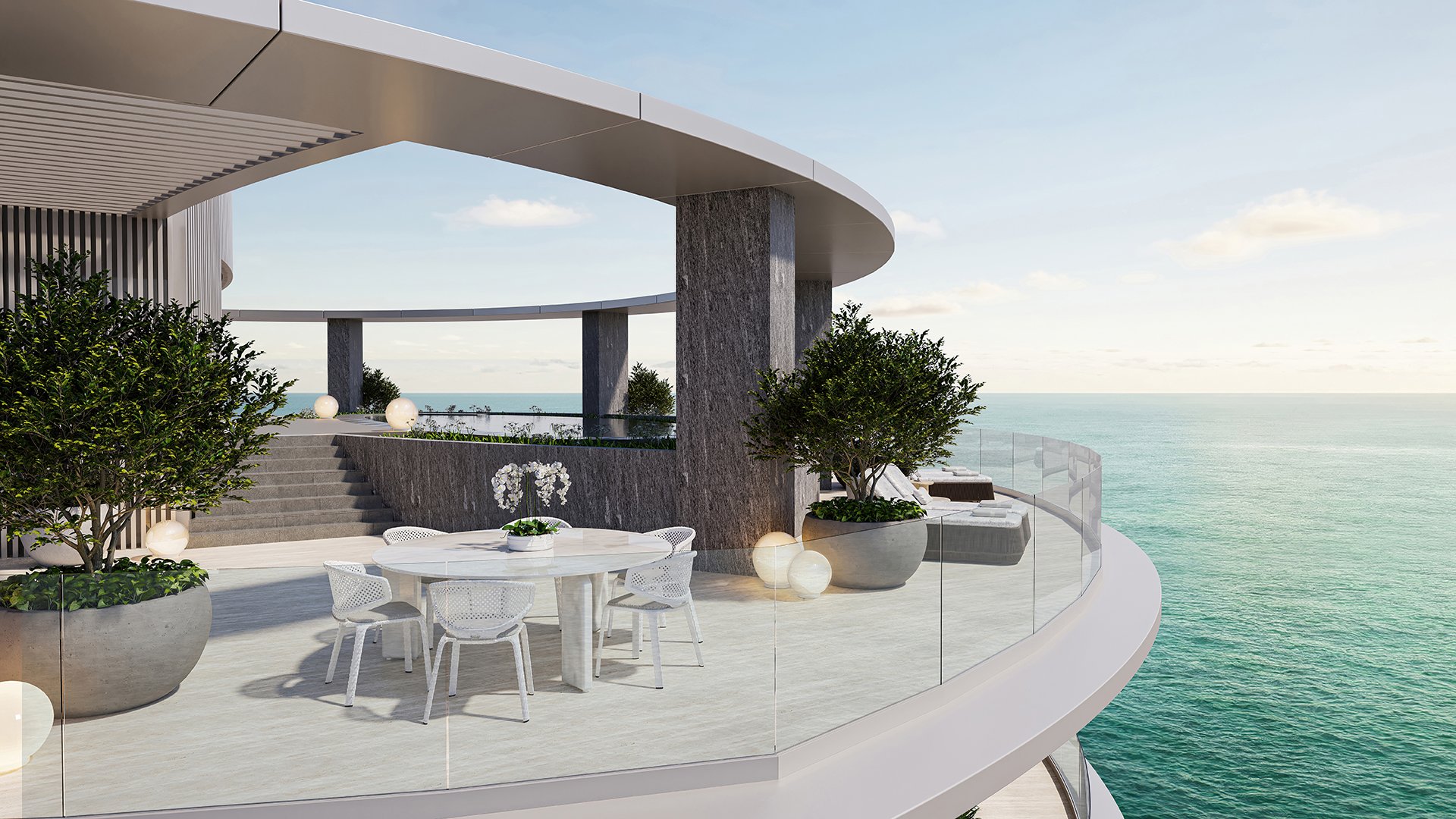
A terrace can meaningfully extend the social plan, but its value depends on how the buyer intends to use it. Consider seating arrangements, access points, privacy, shade preferences, and the practical route for food and tableware. Confirm every physical, operational, and alteration-related detail during due diligence.
For a broader design comparison, Arte Surfside and The Delmore Surfside may help buyers refine their questions about residence planning. They should serve as comparison points, not substitutes for residence-specific review.
Elegant hosting depends heavily on spaces guests rarely notice. Pantry capacity, refrigeration, linen storage, laundry access, refuse handling, and room for serving pieces can matter more than a decorative feature. Buyers who entertain with private chefs or household staff should map where preparation occurs and whether service circulation conflicts with the social setting.
Determine where suitcases remain during a visit-and where they go afterward. Identify storage for spare linens, pillows, toiletries, and occasional-use tableware. If a room must alternate among office, media, and sleeping functions, test the conversion rather than imagine it. The strongest solution can be restored quickly after departure.
Building documents and current policies merit close review before purchase. Buyers should consult qualified counsel and building representatives about occupancy, guest registration, access credentials, deliveries, staffing, alterations, pets, parking, and every other issue relevant to their hosting pattern. Verbal impressions should never replace written confirmation.
This is especially important for a second home, where household systems may need to function while the owner is away. Clarify who can enter the residence, which authorizations are required, and how procedural changes are communicated. Address insurance, tax, estate-planning, and security questions with the relevant professional advisers.
This article belongs among practical buyer’s guides because hospitality is not merely an interiors question. It lies at the intersection of floor plan, operations, governance, and personal boundaries.
Before making a final choice, score each candidate against consistent criteria: owner privacy, guest independence, bathroom allocation, acoustic separation, arrival quality, dining flexibility, exterior usability, storage, service circulation, and written building rules. Weight each category according to real habits rather than generic resale assumptions.
A buyer who hosts one couple several times a year may prioritize an exceptional secondary suite. A buyer planning larger family stays may favor adaptable rooms and stronger separation. Neither approach is inherently superior. The right Bal Harbour residence is the one that accommodates the buyer’s recurring scenarios with the fewest compromises.
How many guest bedrooms should a buyer prioritize? Begin with the number of people who regularly stay at once, then assess bathroom access, storage, and privacy rather than rely on bedroom count alone.
Is a den an adequate guest room? It may be, provided the buyer confirms its privacy, access, storage, and suitability for the intended use.
What should buyers examine during a showing? Walk the arrival route, bedroom circulation, bathroom access, entertaining flow, service paths, and luggage storage as though guests were present.
Why does acoustic separation matter? It allows owners and visitors to maintain different schedules without making either party feel constrained.
Should guests have a separate entrance? Not necessarily, but the arrival path should avoid exposing the owner’s most private spaces.
How important is outdoor space for hosting? Its importance depends on the buyer’s habits. Test furniture placement, circulation, privacy, and the connection to interior entertaining areas.
Which building rules deserve special attention? Review current written provisions governing occupancy, registration, access, deliveries, staff, alterations, pets, and parking with qualified advisers.
What storage is commonly overlooked? Plan for luggage, linens, toiletries, serving pieces, occasional furniture, and the owner’s personal effects during visits.
How should a buyer compare different projects? Apply one scorecard to specific residences, then verify plans, rules, services, costs, and availability directly during due diligence.
Can hosting needs coexist with owner privacy? Yes, when the plan separates sleeping zones, allows independent movement, and keeps operational requirements away from the private retreat.
For a tailored shortlist and next-step guidance, connect with MILLION.
If branded residences are on your mind — as a home or as an allocation — we would be glad to share what we are seeing, privately.
Begin a quiet conversation