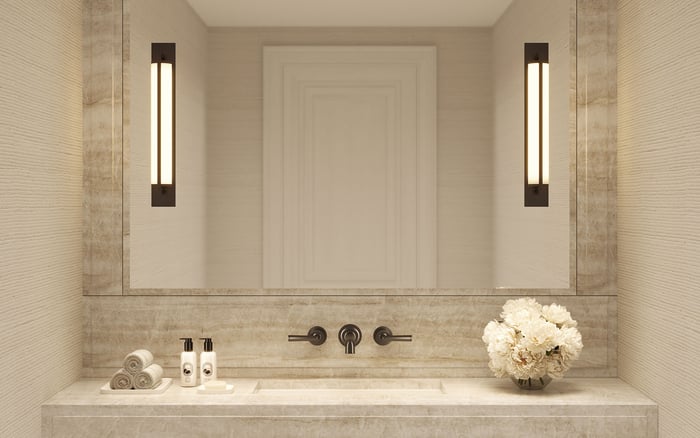
For discerning Fort Lauderdale buyers, true residential luxury begins with controlled access, discreet operations and resilient digital privacy. This guide outlines how to assess those invisible systems before finishes command the conversation.

Stone, millwork and bespoke lighting are easy to admire during a private showing. Security and privacy are less visible, yet they often determine how comfortably an owner can live, host, travel and delegate. For a serious Fort Lauderdale buyer, the essential question is not simply whether a residence looks exceptional, but whether the property can support a private life without unnecessary friction.
That assessment should begin before aesthetic preferences take over. Finishes can often be altered. Operational weaknesses may involve shared spaces, staffing practices, building rules, technology and circulation patterns that an individual owner cannot readily change.
This is especially relevant when comparing residential formats across Fort Lauderdale Beach, central neighborhoods and waterfront settings. A buyer evaluating Four Seasons Hotel & Private Residences Fort Lauderdale can apply the same disciplined questions used for any premium property: Who can enter? How is permission granted? Where are movements visible? What happens when a protocol fails?
Privacy begins well before the front door. Walk the property as an owner, guest, household employee, contractor and delivery person would. Examine every transition from the public realm to the residence, including the vehicle approach, pedestrian entry, reception point, elevator journey and service route.
The objective is not theatrical security. It is to determine whether access is deliberate, discreet and proportionate. Ask whether visitors can move beyond their intended destination, whether residents and service personnel routinely cross paths, and whether waiting areas expose names, schedules or unit information.
At Auberge Beach Residences & Spa Fort Lauderdale, as with any residence under consideration, buyers should experience the arrival sequence personally rather than rely on a verbal overview. Visit at more than one time, if possible. A calm presentation appointment may not reveal how protocols perform during active periods.
Cameras, readers, gates and alarms are components, not a complete security program. Their value depends on the rules and people surrounding them. A sophisticated buyer should ask who monitors alerts, who can override controls, how temporary credentials expire and who reviews exceptions.
Request a plain-language explanation of escalation. If an unrecognized visitor arrives, a credential is shared or a door remains open, who takes responsibility? How is the event documented? When is the resident contacted? Answers should be clear enough to demonstrate repeatable practice without revealing sensitive system details.
This is where a buyer's guide checklist should become more exacting. Rather than asking whether a building has security, ask how authorization, observation, response and accountability connect. Consistency matters more than an impressive collection of devices.
Privacy is both operational and architectural. Sightlines, elevator configuration, corridor geometry, glazing, terraces and the relationship between residential and service circulation can shape daily discretion. During a tour, pause in transitional areas and note what can be seen or overheard.
The same exercise applies to a buyer considering St. Regis® Residences Bahia Mar Fort Lauderdale. The relevant inquiry is not an assumption about the project, but a careful review of the specific residence, its approach and the routes used by guests and service providers.
Privacy preferences are personal. One owner may prioritize an anonymous arrival; another may care more about controlled access for family offices, caregivers or staff. Define those priorities before comparing properties so the decision reflects actual use rather than a generic notion of exclusivity.
Connected locks, cameras, climate controls and building applications can make ownership more convenient, but that convenience should be paired with disciplined permission management. Ask who administers each system, whether individual users receive separate credentials and how access is removed when an employee, vendor or tenant relationship ends.
Buyers should also clarify which technology belongs to the building and which belongs to the residence. That distinction affects control, maintenance and future changes. Determine whether activity can be reviewed, how updates are handled and what recovery process applies if an owner loses access.
Avoid sharing permanent credentials simply because it is easy. A well-planned residence should support temporary or role-specific permissions where available. The point is not technological complexity, but controlled delegation-with fewer opportunities for informal access to become permanent.
A due-diligence review should examine both documents and lived experience. Ask for applicable policies governing visitors, deliveries, contractors, move-ins, private events and emergency entry. Then compare those policies with what occurs during an in-person visit. A polished rulebook has limited value if everyday practice is casual.
For buyers exploring a different residential scale, Sixth & Rio Fort Lauderdale can be considered through the same lens. The purpose of applying the framework to a project is not to presume its protocols, but to insist that every candidate receive equivalent scrutiny.
New-construction and completed residences may require different questions, yet neither should be evaluated by renderings or materials alone. In Broward, as anywhere, the buyer should understand what is delivered, what is promised, what is owner-controlled and what remains subject to association or management decisions.
Before selecting a property, score each candidate against the household's actual routines. Useful categories include arrival discretion, guest authorization, staff access, delivery handling, service circulation, digital administration, incident response and the owner's ability to customize controls.
Weight the categories rather than treating them equally. A frequently traveling owner may place greater value on remote oversight and credential management. A household that entertains may emphasize guest flow. A principal with staff may focus on compartmentalized permissions and service access.
Only after this review should finishes become a deciding factor. Marble can distinguish one interior from another, but confidence comes from knowing that privacy has been considered as a layered system. The most compelling luxury is not constant awareness of security. It is the quiet assurance that access is intentional and daily life remains composed.
Why evaluate security before interior finishes? Finishes can often be changed, while shared access systems and operating practices may be difficult for one owner to alter.
What is a privacy layer? It is one part of a broader system that controls visibility, movement, information or access around a residence.
Is a staffed entrance enough? Not by itself. Buyers should understand authorization rules, staff responsibilities, escalation procedures and after-hours operations.
Should buyers request sensitive security plans? No. Request enough operational detail to assess discipline without seeking information that could compromise residents or systems.
How should guest access be reviewed? Trace the guest journey from arrival through departure, including authorization, waiting, elevator access and credential expiration.
Why does service circulation matter? Thoughtful separation can reduce unnecessary encounters and help household routines remain discreet.
What should be checked in a building application? Review user roles, permission controls, credential removal, update responsibility and account-recovery procedures.
Can privacy be assessed during one showing? A showing is a useful start, but additional visits and document review can reveal how operations perform under different conditions.
Do all luxury buyers need the same protocol? No. The right framework depends on household composition, travel, entertaining, staffing and personal tolerance for visibility.
When should a specialist join the review? Involve qualified legal, technology or security advisers when the household's risk profile or proposed systems require specialist judgment.
When you're ready to tour or underwrite the options, connect with MILLION.
If branded residences are on your mind — as a home or as an allocation — we would be glad to share what we are seeing, privately.
Begin a quiet conversation