A practical, design-led guide for seasonal buyers evaluating Baccarat Residences Brickell as a second-home setting for large-scale art, with attention to ceiling clearances, lighting, humidity control, access routes, and pre-closing verification.
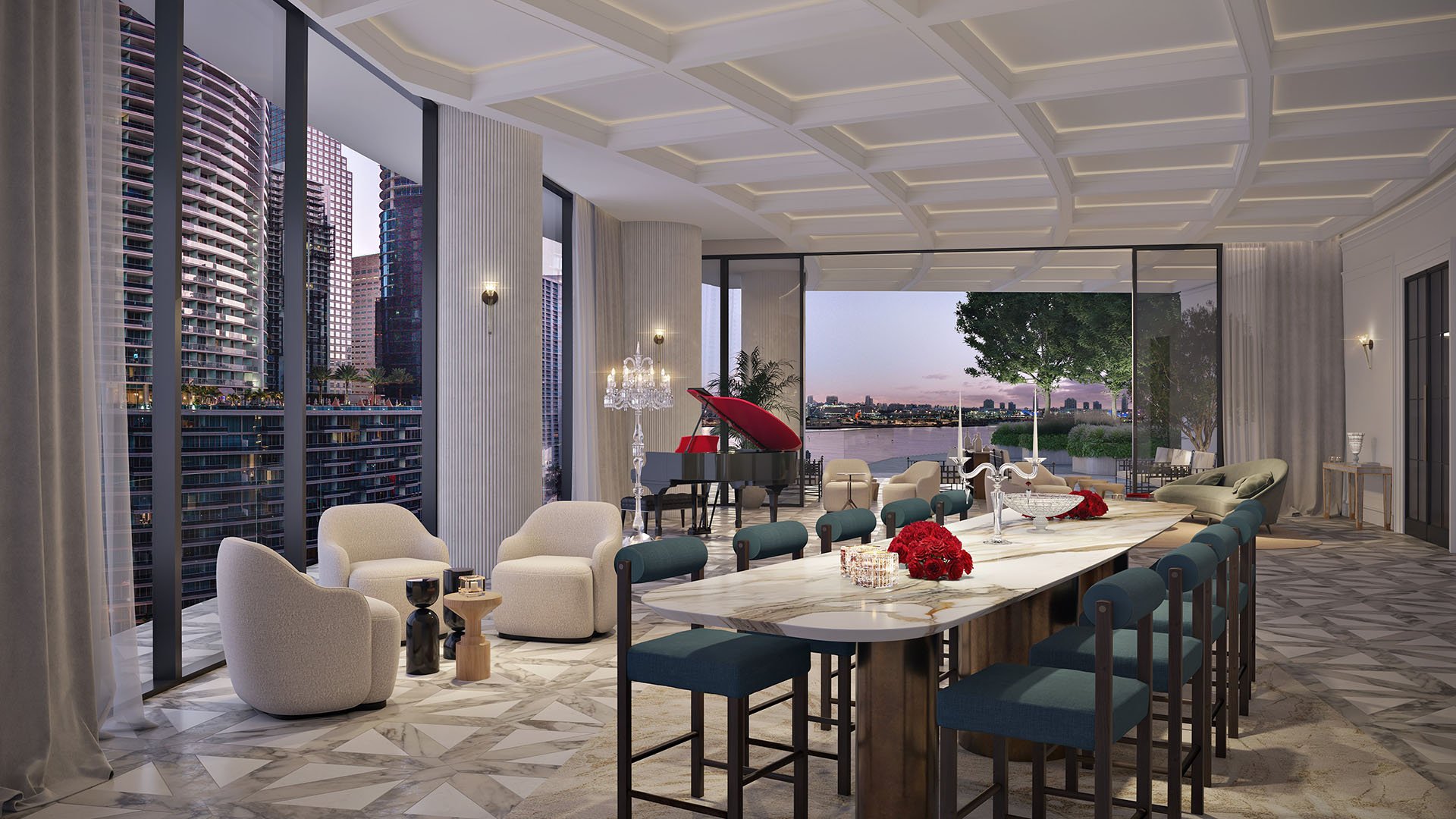
For a seasonal buyer considering Baccarat Residences Brickell, the question is not simply whether a room feels grand. It is whether the residence can properly receive, display, illuminate, and protect large-scale art when the owner may be away for extended periods. A dramatic canvas, textile work, sculptural wall piece, or ceiling-suspended installation depends on more than nominal ceiling height. It depends on usable height, wall composition, lighting placement, climate control, access, and the quiet technical realities of a luxury condominium.
That distinction matters in Brickell, where residences are often evaluated through views, finishes, amenity programs, and lifestyle. For collectors, however, a second layer of review is essential. A residence that photographs beautifully may still present constraints if a soffit interrupts a principal wall, if sprinklers or speakers limit a ceiling zone, or if an HVAC register sits precisely where a light wash should fall. The most prudent buyers treat art planning as part of the pre-closing process, not as an afterthought once the crates arrive.
The first step is to avoid relying on a single stated or assumed ceiling measurement. For Baccarat Residences Brickell, buyers should confirm actual ceiling conditions through floor plans, reflected ceiling plans, lighting layouts, mechanical plans, and any available finish documentation. Ceiling heights may differ by residence line, floor, penthouse configuration, or customized layout, and even a modest variation can determine whether an artwork reads as intended.
Usable display height is often less than the headline height a buyer has in mind. Recessed lighting, sprinklers, vents, speakers, linear diffusers, curtain pockets, and ceiling drops can all affect where a large piece can be centered. The relevant question is not only, “How high is the ceiling?” It is, “What is the uninterrupted wall height from finished floor to the lowest obstruction, and where does that obstruction fall in relation to the art?”
For seasonal ownership, this diligence is especially important because decisions may be made during condensed visits. A winter walkthrough might feel effortless, but the technical review should be deliberate. Bring artwork dimensions, including frame depth and crate dimensions, and measure the intended wall in person. If the buyer is comparing multiple Brickell options, the same standard should apply across the search, with the art-specific review conducted residence by residence.
Large-scale art does not merely hang in space. It loads into a wall, sits within a sightline, and interacts with architecture. Buyers should ask whether the selected wall can accommodate specialized hanging systems, reinforced support, concealed blocking, or ceiling-mounted hardware if the installation requires it. Drywall alone may not be sufficient for heavier works, and retrofitting after closing can be more complicated than planning in advance.
The best locations for art are not always the longest walls. A prominent living area wall may include an intercom, thermostat, outlet cluster, return vent, millwork reveal, or lighting control panel that interrupts the composition. A corridor wall may offer a refined gallery moment, but lack the depth needed for viewing a monumental work. A dining area may provide drama, yet humidity, lighting temperature, and circulation patterns still require review.
This is where new-construction buyers should be particularly attentive. Early involvement can sometimes allow cleaner coordination of backing, power, lighting, and shade systems, while late-stage changes may be constrained by completed mechanical and life-safety systems. The key is to ask precise questions before assuming a future installer can solve every condition.
A ceiling can be visually elegant and still create display challenges. Recessed fixtures may be too close to a work, producing glare. Decorative lighting may create uneven reflections on varnished surfaces. Speakers, sprinklers, and vents may prevent the centered placement of a ceiling-mounted track or dedicated art light. In a waterfront or skyline-facing residence, abundant glass can add another layer of complexity, requiring careful shade control and light calibration.
Buyers should review the reflected ceiling plan with the same seriousness they give to the floor plan. The plan reveals where lights, drops, soffits, and mechanical elements are expected to sit. It can also show whether a principal wall has the clean overhead condition needed for museum-style illumination. The goal is not to sterilize the home into a gallery. It is to ensure the architecture supports the collection rather than competes with it.
For collectors who visit during Art Basel season, the temptation is often to acquire first and solve placement later. In a seasonal residence, that sequence can be risky. A more disciplined approach is to pre-identify display zones, document their clear dimensions, and share those measurements with an art advisor, installer, or conservator before committing to a major work.
Miami’s climate makes humidity control a core issue for canvas, paper, textile, mixed-media, and other sensitive works. The concern is not limited to moments of visible heat. Seasonal residences may sit unoccupied for extended periods, making consistent HVAC performance and remote environmental monitoring important. A work can suffer from swings in humidity even if the residence appears immaculate when the owner returns.
Buyers should ask how the residence can be monitored while they are away, whether environmental alerts can be set, and what procedures apply if a system requires attention during an absence. This is a practical ownership matter, not a theoretical conservation concern. A second home that holds valuable art should have a plan for humidity, temperature, air circulation, and response.
Window treatments and exposure also matter. Large glass walls are part of the appeal of Brickell living, but direct sun and heat gain can affect art placement. The buyer should understand shade controls, solar exposure, and whether sensitive works belong on interior walls rather than view-facing walls. Art and view can coexist, but they should be composed intentionally.
Ceiling height inside the residence is only one dimension of fit. For monumental art, buyers should confirm elevator dimensions, service elevator procedures, loading access, service corridors, door widths, and in-unit turning clearances. A piece that fits beautifully on a living room wall still needs to reach that wall without damage to the work or the residence.
This is where early coordination with building management becomes essential. Ask about delivery windows, insurance requirements, protective coverings, elevator reservations, and whether specialized rigging is permitted. Also confirm whether an oversized crate can be staged safely and whether there is enough turning radius between the entry, corridor, and final display wall.
Collectors often think in terms of finished dimensions, while installers think in terms of crates, depth, pivots, and angles. The more sculptural or fragile the work, the more important these access details become. In a refined condominium environment, discreet logistics are part of the luxury experience.
Before closing, seasonal buyers focused on large-scale art should walk the residence with a tape measure, artwork dimensions, and a clear installation plan. Measure the intended wall from finished floor to the lowest obstruction. Note soffits, vents, speakers, sprinkler heads, thermostats, outlets, and switches. Photograph the wall and ceiling conditions from multiple angles. Confirm whether wall reinforcement is already present or feasible.
Request the relevant plans and compare them to the built condition. Reflected ceiling plans, lighting layouts, and mechanical drawings can clarify conflicts that are not obvious during a brief visit. If a penthouse or customized layout is under consideration, do not assume that conditions match another residence line. Ask specifically about variations by floor, line, and plan.
Finally, think about the residence as a living environment, not a static gallery. The best art placements allow for seating, circulation, daylight, evening lighting, humidity stability, and periodic inspection. At Baccarat Residences Brickell, the collector’s question is not whether art belongs in a luxury home. It is how to make the home worthy of the art.
Is there a verified ceiling-height figure buyers should rely on for Baccarat Residences Brickell? Buyers should not rely on an assumed figure. Confirm the specific residence’s ceiling conditions through plans, walkthrough measurements, and sales or building documentation.
Can ceiling heights vary within the same building? Yes. Heights and ceiling conditions can vary by residence line, floor, penthouse level, or customized layout, so each residence should be reviewed individually.
What is usable display height? Usable display height is the clear wall area available after accounting for soffits, vents, lights, sprinklers, speakers, and other interruptions.
Why do reflected ceiling plans matter for art buyers? They show the placement of lighting, mechanical elements, ceiling drops, and other details that can affect where art can be installed and illuminated.
Should a seasonal buyer involve an art installer before closing? For valuable or oversized works, yes. An installer can assess wall strength, access routes, hanging systems, and potential conflicts before the purchase is finalized.
Is humidity a serious concern in a Brickell residence? Yes. Miami’s climate makes humidity control important for canvas, textile, paper, mixed-media, and other sensitive works, especially during long absences.
What should buyers check beyond the residence interior? Confirm loading access, elevator dimensions, service corridors, delivery procedures, and turning clearances from the building entrance to the display wall.
Can lighting be adjusted after closing? Sometimes, but changes may be limited by mechanical systems, life-safety requirements, finished ceilings, and building rules. Early planning is cleaner.
Are view walls always the best place for major art? Not necessarily. Glass, sunlight, heat gain, and glare may make interior walls more appropriate for sensitive or highly reflective works.
What is the most important question for a collector buying seasonally? Ask whether the residence can protect the artwork while you are away, including climate monitoring, access protocols, and reliable maintenance response.
If you'd like a private walkthrough and a curated shortlist, connect with MILLION.
If branded residences are on your mind — as a home or as an allocation — we would be glad to share what we are seeing, privately.
Begin a quiet conversation