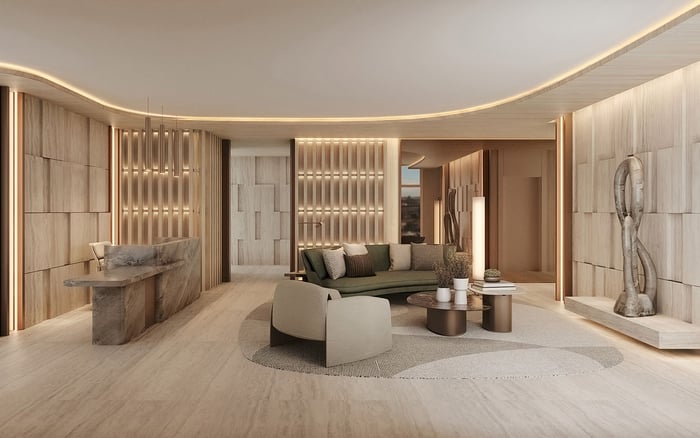
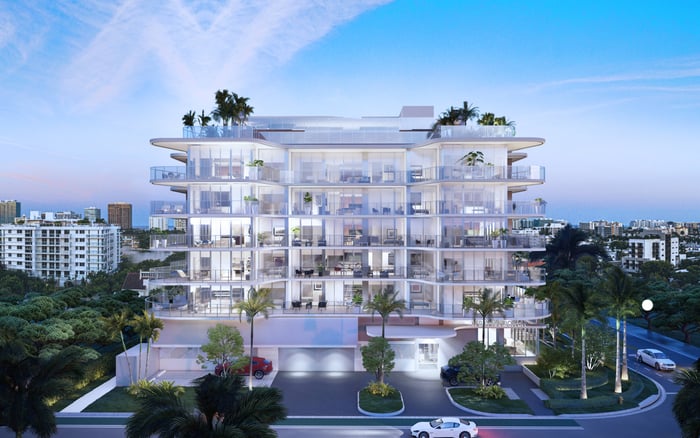
A collector-focused due-diligence guide to evaluating light exposure, usable wall space, environmental control, security, delivery access, and storage at Alana Bay Harbor Islands.
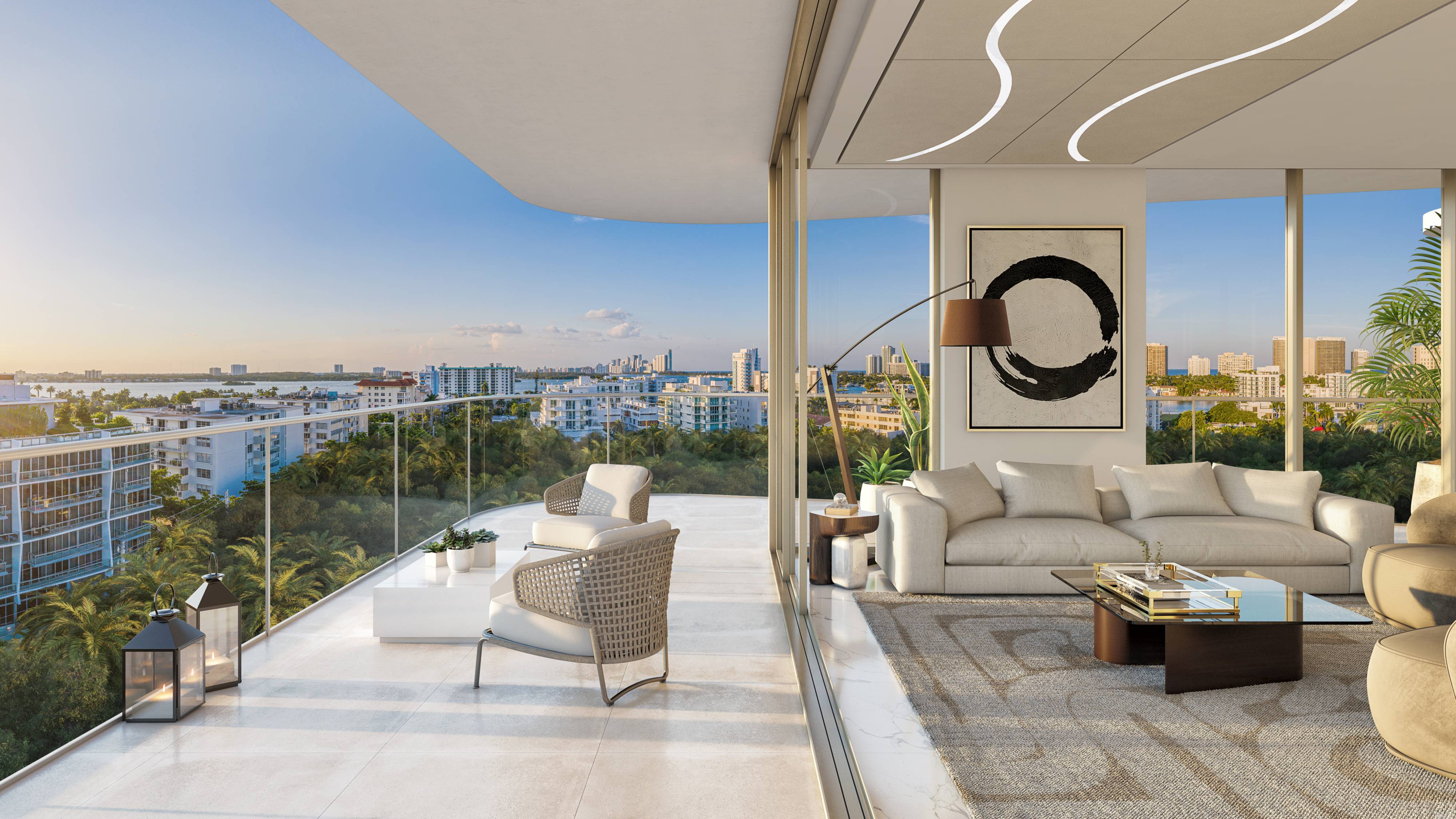
Choosing a residence for an art collection requires more than an appealing interior. At Alana Bay Harbor Islands, buyers should evaluate each residence as both a home and a setting for the display, care, movement, and protection of art.
Because no collection has identical requirements, the review should begin with the works themselves. Note dimensions, weights, materials, sensitivity to light and humidity, mounting needs, insurance conditions, and anticipated acquisitions. These details can then guide questions for the sales team, association, contractors, conservators, art handlers, and insurers.
A floor plan should be read as a sequence of usable elevations and movement paths rather than only as a room arrangement. Identify uninterrupted interior walls, corners suitable for sculpture, spaces between openings, and areas affected by cabinetry, controls, vents, or circulation.
Request dimensioned plans and verify important measurements in the residence when possible. For every proposed art wall, ask about the wall assembly, concealed utilities, anchoring restrictions, permitted reinforcements, and approval procedures. Heavy framed works, stone, dimensional pieces, and custom display systems may require specialist review.
Furniture placement also affects exhibition capacity. A wall that appears generous on paper may need to accommodate seating, doors, switches, or a clear path through the room. Mock-ups or scaled drawings can help test sightlines and spacing before installation.
Collectors comparing Bay Harbor Islands options can also review Bay Harbor Towers and Onda Bay Harbor. These project pages provide additional residential choices for a residence-by-residence comparison without assuming that one plan will suit every collection.
Glass, views, and daylight can enhance a home while complicating the placement of sensitive works. Buyers should request available glazing specifications and ask about ultraviolet transmission, visible-light transmission, solar heat gain, tint, and any permitted films or shading systems.
The review should be specific to the selected residence. Orientation, nearby structures, terrace depth, interior layout, and seasonal sun angles can change exposure from one room or wall to another. A lighting consultant or conservator can help assess risk for works on paper, photographs, textiles, pigments, and other light-sensitive materials.
Ask whether automated shades, blackout treatments, conservation films, or other controls are permitted. Any proposed solution should be checked for compatibility with the glazing, building rules, interior design, and conservation requirements of the artwork.
Collectors should not assume that standard residential systems provide collection-specific temperature or humidity performance. Request written information about HVAC zoning, operating controls, filtration, humidity management, maintenance access, and any restrictions on supplemental equipment.
Independent sensors can help document temperature and relative humidity over time. Before installing connected monitoring equipment, confirm in-residence connectivity, device placement, alert functions, and any applicable building rules. Monitoring is most useful when paired with a response plan for abnormal readings.
Outage planning also matters. Ask which systems receive standby support and whether in-residence cooling, dehumidification, security, connectivity, or elevators continue operating during an interruption. The answers can inform contingency planning but should not be assumed without project documentation.
Security planning should address both routine access and periods when contractors, installers, or art handlers enter the residence. Buyers can ask about building access procedures, visitor management, common-area surveillance, key or credential controls, and the rules governing in-unit security systems.
For installation logistics, measure the complete route from the arrival point to the final display location. Verify loading procedures, elevator and doorway clearances, turning radii, weight limits, protective-material requirements, delivery hours, insurance documentation, and approval lead times. Large works may require a professional handler to assess feasibility before purchase or delivery.
Storage should be evaluated with the same care as display space. Confirm dimensions, access, permitted contents, environmental conditions, fire rules, and whether crates or packing materials may be retained. A convenient storage area should not be treated as collection-safe unless its conditions have been reviewed for the intended use.
A wider coastal comparison may include Rivage Bal Harbour. The useful comparison is not a general ranking, but how each residence’s walls, light, systems, rules, and handling routes align with a particular collection.
Before making a decision, assemble a written checklist covering planned display locations, wall construction, light exposure, environmental targets, monitoring, security, delivery access, storage, alteration permissions, and emergency procedures. Where documentation is incomplete, treat the issue as an open question rather than an established feature.
Specialists can then review the residence through their respective disciplines. A conservator may assess environmental and lighting needs, an art handler can test access, an engineer or qualified contractor can examine mounting requirements, and an insurer can identify documentation or security conditions.
What should an art collector examine first at Alana Bay Harbor Islands? Start with the collection’s dimensions, weights, materials, sensitivities, and installation needs, then compare those requirements with the selected residence.
How should a floor plan be reviewed for art display? Mark usable wall runs, openings, circulation paths, controls, vents, cabinetry, and potential sculpture locations, then verify critical dimensions.
What should be confirmed before mounting a heavy artwork? Confirm the wall assembly, concealed utilities, load requirements, suitable anchors, reinforcement options, and all required approvals.
Why should glazing specifications be requested? They can help a conservator or lighting specialist assess ultraviolet exposure, visible light, and solar heat gain for proposed display locations.
Can shades or conservation film solve every light issue? No. Suitability depends on the artwork, glazing compatibility, exposure, design objectives, and applicable building rules.
What HVAC questions matter for a collection? Ask about zoning, operating controls, humidity management, filtration, maintenance, sensor placement, and permitted supplemental equipment.
How can environmental conditions be monitored? Appropriately placed temperature and relative-humidity sensors can record conditions and issue alerts when paired with compatible connectivity.
What should be checked for art deliveries? Verify the arrival route, loading rules, elevator and door dimensions, turning clearances, weight limits, delivery hours, and insurance requirements.
Should storage be assumed suitable for artwork or crates? No. Inspect its dimensions, access, environmental conditions, fire rules, and permitted uses before relying on it.
Who can help evaluate a residence for a collection? Depending on the works, the review may involve a conservator, art handler, lighting specialist, qualified contractor or engineer, security professional, and insurer.
For a discreet conversation and a curated building-by-building shortlist, connect with MILLION.
If branded residences are on your mind — as a home or as an allocation — we would be glad to share what we are seeing, privately.
Begin a quiet conversation