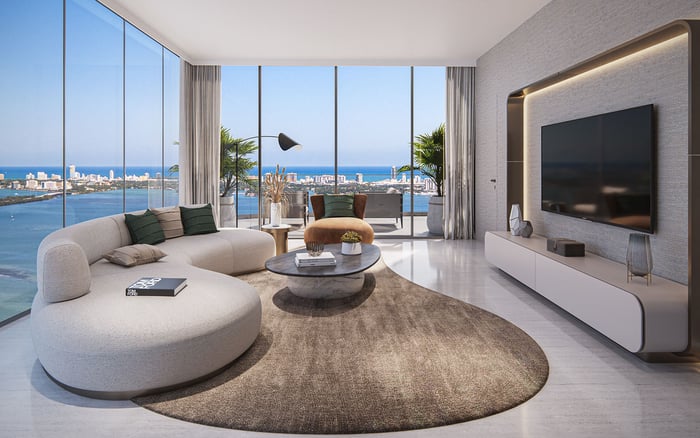
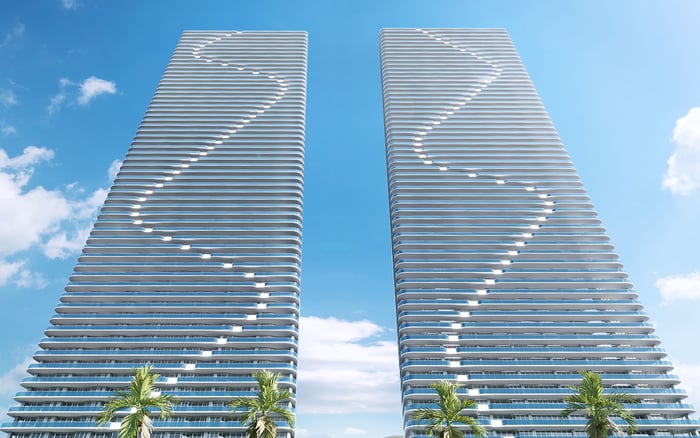
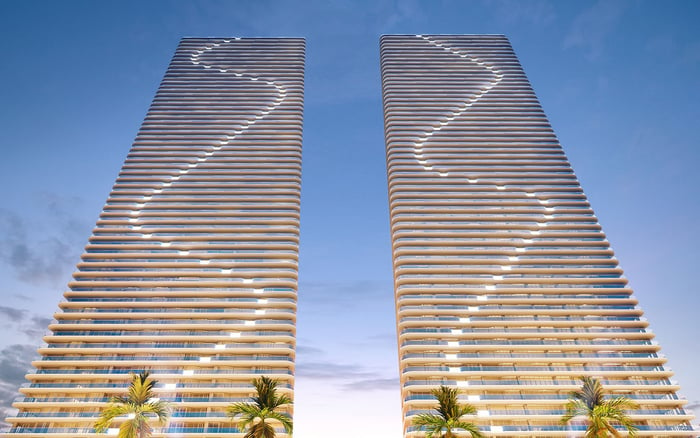
A buyer-focused MILLION editorial on evaluating Aria Reserve Miami in Edgewater through the practical lens of service value, operational clarity, and disciplined premium pricing.
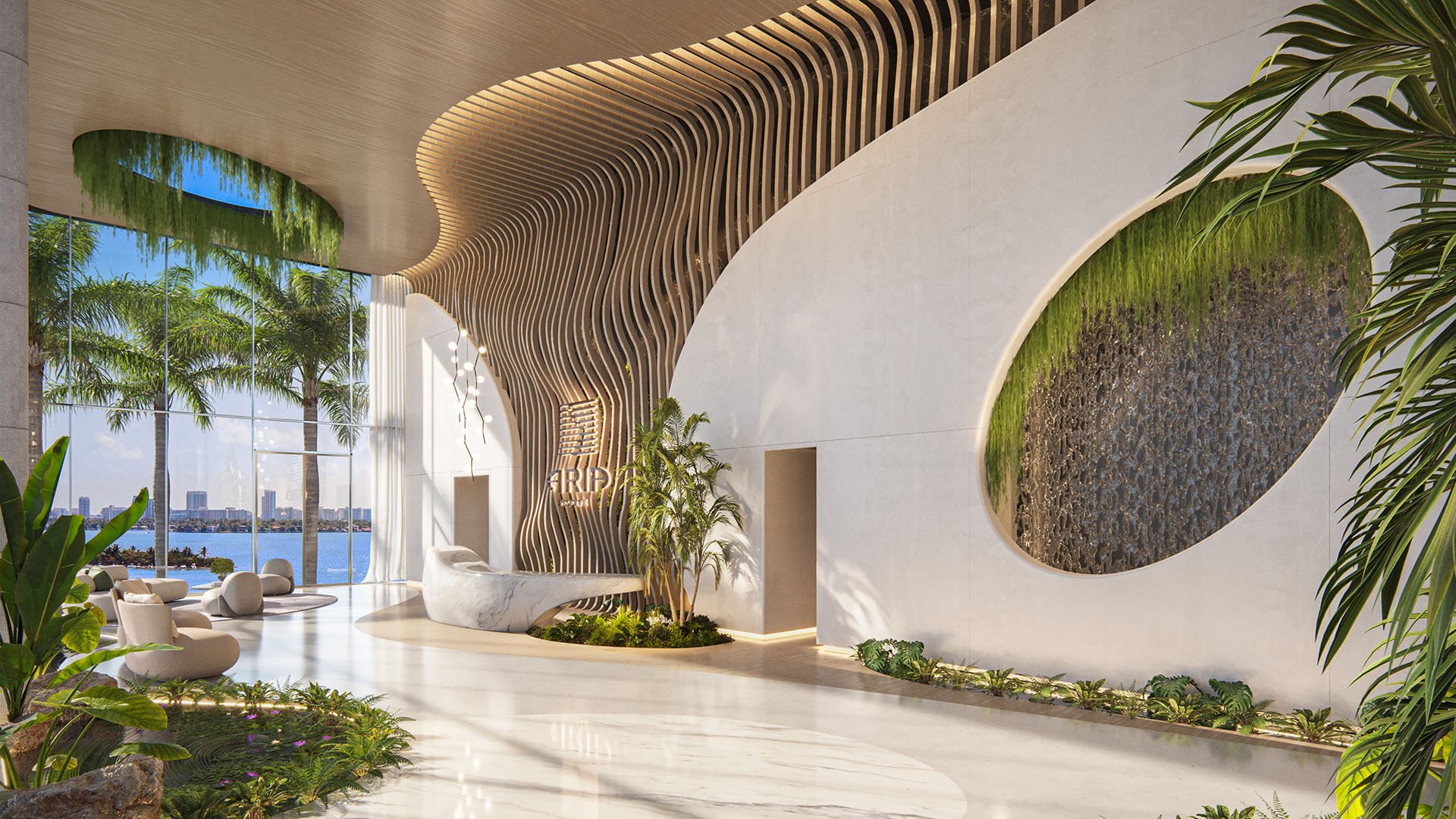
Aria Reserve Miami sits in Edgewater, placing it squarely within one of South Florida luxury real estate’s more scrutinized questions: when should a buyer pay for lifestyle, service, and brand-adjacent promise, and when should that premium be treated as marketing language?
For sophisticated buyers, the answer is not emotional. It is operational. A service premium is justified only when it can be traced to daily utility, predictable access, clear staffing, disciplined rules, and a cost structure that matches how the residence will actually be used. The name on the brochure is secondary. The operating model is the asset.
That distinction matters for Aria Reserve Miami because its Edgewater positioning will naturally draw comparisons with branded, design-led, amenity-rich residences across Miami and the broader South Florida market. The buyer best positioned here is not the one who simply asks whether the project feels luxurious. It is the one who asks whether the luxury can be repeated, staffed, maintained, and governed over time.
A branded-service premium is not simply a higher purchase price attached to polished common spaces. It is a measurable expectation that the building will reduce friction for the resident. For a primary-home buyer, that may mean a consistent front-of-house experience, reliable amenity access, and rules that protect privacy. For a second-home owner, it may mean arrival readiness, secure access protocols, and confidence that the residence is cared for while the owner is away.
For an investment buyer, the analysis becomes more exacting. Service must support durability of demand, not just early excitement. If future buyers or tenants value the experience, the premium may be defensible. If the service promise is vague, expensive, or difficult to sustain, the premium can become a liability rather than a differentiator.
The cleanest test is simple: identify the service, identify who delivers it, identify when it is available, identify who pays for it, and identify how the rules protect the resident experience. Without those answers, the premium remains theoretical.
Edgewater gives Aria Reserve Miami a recognizable Miami frame. It is a neighborhood category that attracts buyers seeking proximity, vertical living, and a more urban residential rhythm. But neighborhood desirability should not be confused with operational certainty. A strong location can support value, yet it cannot replace careful review of building governance, fee structure, amenity programming, and service delivery.
This is especially important in a market where buyers often compare very different forms of luxury under one broad label. A waterview residence, a branded hospitality concept, a boutique building, and a large amenity-forward development may all compete for attention, but they do not necessarily compete on the same operating basis. The correct comparison set for Aria Reserve Miami should be selected with care.
A buyer should separate three premiums. The first is the location premium attached to Edgewater. The second is the design or architecture premium attached to the physical product. The third is the service premium attached to the promised daily experience. Only the third requires proof of execution beyond the residence itself.
The most useful buyer work happens before emotional attachment hardens. Service-oriented purchasers should review the documents that define what is included, what is optional, what is subject to change, and what may be billed separately. That includes governing materials, budgets, rules, service descriptions, and disclosures that explain the relationship between amenities, staffing, and resident obligations.
This is not a defensive posture. It is how ultra-premium buyers preserve leverage. The right question is not whether Aria Reserve Miami sounds compelling. The right question is whether its service environment, as documented and delivered, aligns with the premium being asked.
New-construction buyers are often especially vulnerable to paying for a future feeling. The best protection is specificity. If an amenity matters, ask how it is reserved, how capacity is managed, what hours apply, what staffing is contemplated, and whether usage has direct or indirect costs. If service matters, ask who is accountable for it. If privacy matters, ask how guest access, deliveries, short stays, and amenity use are governed.
A service premium can be worth paying when it solves problems the buyer genuinely has. A frequent traveler may value a building that feels organized on arrival. A family may value predictable rules and controlled access. A wellness-focused owner may care less about the number of amenities and more about whether they are usable at the times that matter. A collector of residences may value consistency across ownership periods.
In that sense, Aria Reserve Miami should be evaluated less as a label and more as a practical environment. The project may be most compelling for buyers who treat service as infrastructure rather than ornament. Infrastructure either works or it does not. Ornament photographs well, but it rarely sustains a premium on its own.
The disciplined buyer also asks whether the service proposition is appropriately scaled. Too little staffing can make luxury feel aspirational rather than real. Too much staffing can pressure fees and create a future affordability discussion. The balance is not universal. It depends on buyer profile, building size, amenity expectations, and governance.
The strongest comparison process begins with use case. A buyer should decide whether the residence is intended as a primary home, second home, family base, lock-and-leave asset, or investment position. Each use case assigns different value to service.
A primary resident may prioritize consistency over novelty. A seasonal owner may prioritize readiness and ease. An investor may prioritize rules, liquidity, and the ability of future buyers to understand the value proposition quickly. A design-driven buyer may accept a premium for architecture, but should still avoid confusing design prestige with operational performance.
For Aria Reserve Miami, the Edgewater setting provides the geographic anchor, but the buyer’s own behavior should drive the premium analysis. If the owner rarely uses amenity spaces, the service premium must be modest or justified by resale expectations. If the owner depends on building support, the service premium may be more rational, provided the details are documented.
The most elegant luxury purchase is not necessarily the most dramatic. It is the one where cost, service, privacy, location, and daily life align without requiring the buyer to excuse unanswered questions.
Before assigning full value to any branded-service premium at Aria Reserve Miami, a buyer should be able to answer a few practical questions. What services are essential rather than cosmetic? Which are included in recurring costs? Which require separate payment? Who supervises delivery? How are standards maintained after the initial sales period? What happens if demand for a popular amenity exceeds capacity?
These questions do not diminish the appeal of the project. They protect it from being evaluated too loosely. In South Florida’s luxury market, restraint is often the mark of a serious buyer. The goal is not to reject premiums. The goal is to pay them only when they are earned.
For buyers who care about Aria Reserve Miami, the most refined position is clear: admire the residence, respect the Edgewater address, and underwrite the service claim with the same discipline used for any other high-value asset.
Is Aria Reserve Miami located in Edgewater? Yes. Aria Reserve Miami is positioned within the Edgewater market context.
Should buyers pay extra for branded-service language alone? No. A premium is best justified when the service model is documented, staffed, and useful.
What should a buyer verify first? Start with governing documents, budgets, amenity rules, service descriptions, and fee-related disclosures.
Does a strong location automatically justify a service premium? No. Location and service are separate value components and should be evaluated independently.
Why does operational clarity matter? It shows whether the promised lifestyle can be delivered consistently after purchase.
How should a second-home buyer view the premium? The premium may be rational if it improves arrival, privacy, access, and ease of ownership.
How should an investment buyer view the premium? The premium should be tied to durable demand, clear rules, and future buyer understanding.
Is new construction always easier to evaluate? Not necessarily. Buyers should distinguish future promise from documented operation.
What role does waterview value play? Waterview value should be considered separately from service value so the buyer avoids double-counting.
Can Aria Reserve Miami be a top project for the right buyer? It can be considered seriously when the buyer’s lifestyle needs align with verified service delivery.
When you're ready to tour or underwrite the options, connect with MILLION.
If branded residences are on your mind — as a home or as an allocation — we would be glad to share what we are seeing, privately.
Begin a quiet conversation