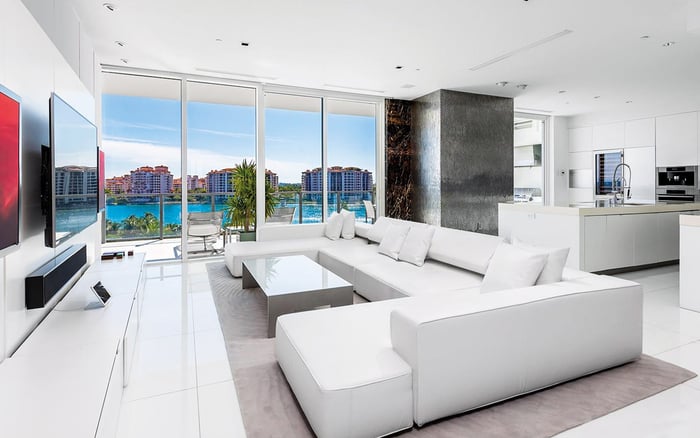
An Apogee South Beach resale deserves a document-led review of association finances, assessments, structural obligations, insurance and residence-specific details before a buyer commits.

At 800 S Pointe Drive, beside South Pointe Park in Miami Beach’s South of Fifth neighborhood, Apogee South Beach offers a compelling starting point for a considered resale search. Completed in 2008, the 22-story building contains 67 residences. Its development and design pedigree includes The Related Group, Sieger Suarez and Yabu Pushelberg.
For a buyer, however, architectural authorship and address begin the diligence process; they do not complete it. The essential question is whether the specific residence, its ownership costs and the association’s obligations support the intended purchase. A beautifully presented interior cannot answer questions about reserves, insurance deductibles or future capital spending.
A thorough review connects three things: what the buyer will own, what the association must maintain and what each will cost. Keep those questions separate until the documents allow them to be reconciled.
Apogee’s floor plans range from approximately 3,103 to 7,190 square feet, depending on residence and penthouse configuration. Standard layouts include approximately 3,103-square-foot three-bedroom homes and 4,154-square-foot four-bedroom homes. Four residences occupy a typical floor.
Those figures provide a framework, not a substitute for unit-specific verification. Confirm the offered floor plan, area measurement and bedroom configuration against the relevant documents. Then assess the line, floor, exposure and privacy in person. Two residences in the same building are not interchangeable simply because their bedroom counts match.
For buyers also considering Continuum on South Beach, apply the same discipline to each candidate: compare the actual residence, documented carrying costs and ownership restrictions rather than relying on a building-level impression. A useful comparison explains differences rather than reducing the decision to asking price alone.
Indicative monthly association-fee estimates include approximately $7,950 for a 3,103-square-foot residence and $10,000 for a 4,154-square-foot residence, with a separate estimate placing the building average near $9,629 monthly. None should be treated as the verified charge for a specific purchase.
Obtain the unit’s current association ledger and the approved budget. Ask management to identify regular charges, outstanding balances and any separate assessment installments. Read the financial statements alongside the budget to assess projected spending against the association’s financial position.
The objective is not merely to confirm a monthly figure. It is to understand what that figure covers, what falls outside it and whether future obligations have been identified. Keep ordinary operating expenses, reserve contributions and special assessments distinct in your ownership model.
An assessment for lobby, gym and sun-deck improvements was last checked in September 2026, with work anticipated to begin in 2027. Treat those details as a prompt for verification, not confirmation of the current scope, schedule or balance.
Request the assessment resolution, approved scope, payment schedule and unit-specific balance. Ask whether the work has changed, whether additional funding is being considered and what disruption owners should anticipate. Written answers matter more than an informal assurance that an improvement is already handled.
Have transaction counsel address the allocation of assessment payments between buyer and seller in the contract. Do not assume that an installment falling after closing automatically determines responsibility. The negotiated agreement should reflect the verified obligation, not an estimate or marketing description.
A milestone inspection evaluates structural condition. A structural integrity reserve study addresses funding for major building components. These reviews are complementary, not interchangeable: one concerns condition; the other addresses financial provision for relevant future work.
Request available inspection findings, engineering documentation, the reserve study and associated funding decisions. Review identified work alongside evidence of completion or the plan for addressing it. A reserve balance is more meaningful when read against the components and spending assumptions it is intended to support.
Do not rely on a generic inspection timetable. A 2038 first-milestone date has been projected under a 30-year framework, but guidance on statewide milestone requirements and local recertification timing is inconsistent. Obtain written confirmation from the association and City of Miami Beach regarding the building’s applicable obligations and status. Completion in 2008 alone does not establish the answer.
The document package should include the declaration and amendments, bylaws, current rules, approved budget, financial statements and insurance information. Request at least 12 months of board and association meeting minutes. Read them for discussions of assessments, disputes, deferred work, maintenance decisions and rule changes.
Minutes give context to questions a budget alone cannot answer. If a capital project appears repeatedly, ask what has been approved, funded and completed. Distinguish discussion from an adopted decision, and an adopted decision from work actually performed.
For insurance, obtain full policies and declarations rather than relying solely on a certificate. Review property, windstorm, flood and liability coverage, including exclusions and deductibles. Ask a qualified insurance adviser to explain the relationship between association coverage and the protection appropriate for the residence. The relevant issue is the buyer’s potential exposure, not simply whether a policy exists.
A 12-month minimum lease term and association approval of tenants should both be confirmed in the current governing documents before rental income or future leasing flexibility informs the purchase decision.
If the residence will be used intermittently, review applicable occupancy and use rules as carefully as the floor plan. Ask counsel to clarify provisions that could affect the intended ownership arrangement. An attractive residence is not necessarily a suitable purchase if the governing documents conflict with how the buyer plans to use it.
A broader Miami Beach search might also include Five Park Miami Beach. Whatever the shortlist, use a consistent decision framework: residence suitability, verified recurring charges, capital obligations, structural documentation, insurance and permitted use. Do not presume that another address shares Apogee’s financial position or restrictions.
Before proceeding, assemble a concise written record of unresolved questions and assign each to management, counsel, the insurance adviser or the appropriate technical professional. Resolve those questions before treating the purchase as fully understood. At this level, clarity about obligations is part of the quality of ownership.
For a discreet conversation about your South Florida property search, connect with MILLION.
If branded residences are on your mind — as a home or as an allocation — we would be glad to share what we are seeing, privately.
Begin a quiet conversationApogee South Beach is at 800 S Pointe Drive in Miami Beach’s South of Fifth neighborhood, beside South Pointe Park.
Completed in 2008, Apogee has 22 stories and 67 residences, with four residences on a typical floor.
Published floor plans range from approximately 3,103 to 7,190 square feet. Standard layouts include approximately 3,103-square-foot three-bedroom and 4,154-square-foot four-bedroom residences.
Indicative estimates include approximately $7,950 and $10,000 monthly for the standard three- and four-bedroom layouts, respectively. Verify the specific residence’s charges through its current ledger and approved budget.
Confirm the approved scope, payment schedule and unit-specific balance for the described lobby, gym and sun-deck improvements. The anticipated 2027 start and allocation of payments require written verification.
Request the declaration and amendments, bylaws, rules, approved budget, financial statements, insurance documentation and at least 12 months of board and association meeting minutes.
A milestone inspection evaluates structural condition, while a structural integrity reserve study addresses funding for major building components. Buyers should review both rather than treating either as a substitute for the other.
No. That date has been projected under a 30-year framework, but buyers should obtain written confirmation of applicable requirements and status from the association and City of Miami Beach.
Review full policies and declarations covering property, windstorm, flood and liability, including exclusions and deductibles. An insurance certificate alone is not sufficient for this review.
A published summary describes a 12-month minimum lease term and association approval of tenants. Confirm the current requirements in the governing documents before relying on rental flexibility.