Waldorf Astoria Residences Pompano Beach advertises residential-only living, private elevator entries, and staffed arrival services. A buyer-focused audit separates those commitments from the circulation plans, guest permissions, and arrival protocols that still require written confirmation.
For a discerning oceanfront buyer, privacy is more than a quiet lobby or a private entry foyer. It means understanding who may enter, where they may travel, and when their permissions end. At Waldorf Astoria Residences Pompano Beach, that distinction belongs at the center of an ownership-readiness review.
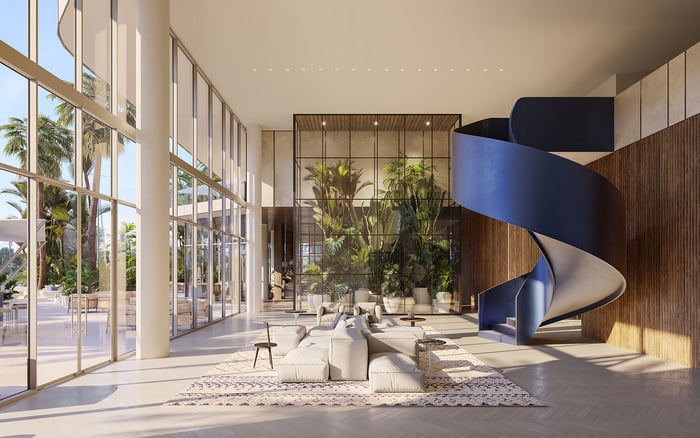
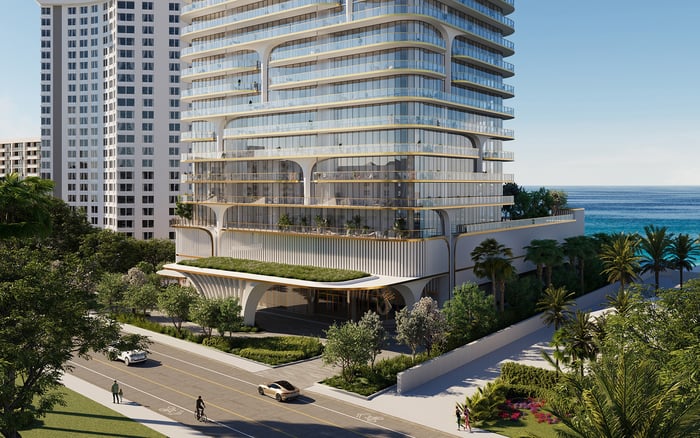
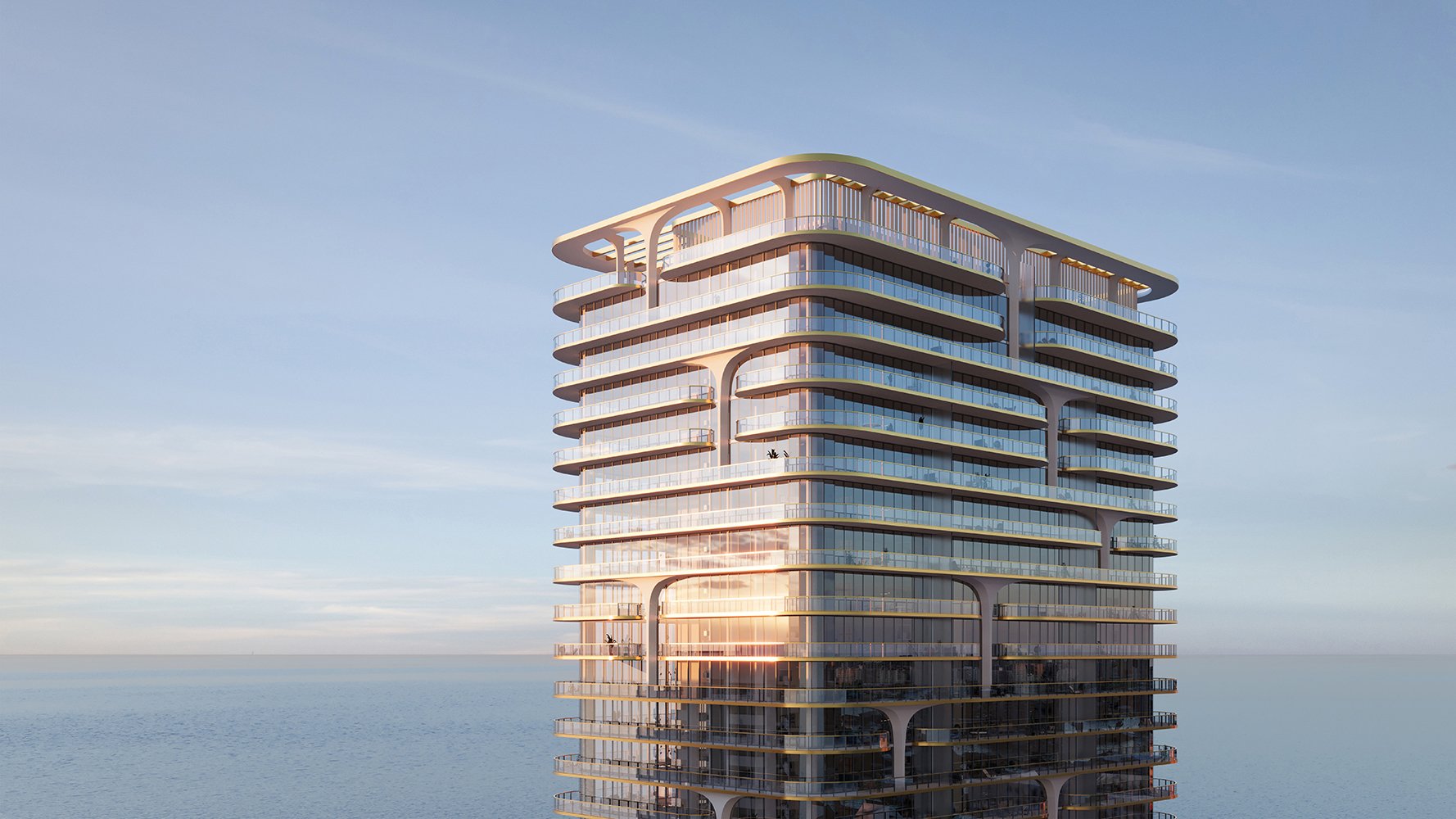
The development at 1350 South Ocean Boulevard is marketed as a standalone, residential-only property with 92 private residences, rather than a combined hotel-and-condominium building. Each residence is advertised with a private elevator and dedicated entry foyer. The planned arrival experience includes a porte-cochère, grand lobby, doorman, bellman, and valet parking, alongside advertised 24-hour security and 24-hour reception.
These are meaningful privacy features. On their own, however, they do not establish fully resident-only circulation, exclusive elevator trips, or a specific guest-screening protocol. Residential-only describes the development's positioning; it is not a blanket prohibition on invited guests, contractors, domestic staff, or other authorized nonresidents.
A private arrival foyer can provide an intimate threshold to a home. The ownership question is what governs access before that threshold. The advertised elevator description does not establish destination-control technology, floor-specific credential permissions, or exclusive journeys.
Request the current elevator and access-control plan for the residence under consideration. Ask which credentials permit entry to the elevator vestibule, which destinations each credential can select, and whether a guest can reach a residential landing without renewed authorization. Clarify whether a private elevator means a dedicated car, a controlled stop, or another arrangement.
The same review should trace residential routes against service, dining, beach, and back-of-house circulation. The purchaser descriptions do not establish physical separation. Distinguish an architecturally separate path from a shared path managed through staff procedures.
For a Pompano Beach shortlist that also includes The Ritz-Carlton Residences® Pompano Beach, apply the same questions independently. Brand identity is not evidence that two properties use equivalent elevator permissions or circulation arrangements.
An elegant guest experience should still rest on clear permissions. The advertised service descriptions do not establish a detailed admission policy covering identification, advance registration, resident approval, badges, or escorts. That leaves an important ownership question unresolved; it does not prove that controls are absent.
Obtain written rules describing how a guest is registered, how identity is checked, and who authorizes entry when the resident is away. Ask whether remote approval grants access only to the home or also to amenities, and whether a visitor may proceed unaccompanied.
Overnight stays deserve separate attention. Confirm whether permission expires automatically, whether credentials can be revoked immediately, and how an unexpected additional visitor is handled. A household should not have to discover the limits of its guest permissions during a busy arrival.
Deliveries, contractors, domestic staff, and event attendees each require screening and routing questions. Ask where each group waits, which entrance it uses, whether residential elevator access is permitted, and when an escort is required. These are audit questions, not descriptions of confirmed operating practices.
The advertised porte-cochère and staffed arrival services provide the framework for a composed welcome. They do not explain how personal information is protected during the handoff from vehicle to lobby to elevator.
Ask how valet and reception identify an owner without announcing a unit number within earshot of others. Clarify how ride-share arrivals are directed, where invited guests wait, and how staff distinguish a recognized visitor from someone who still needs approval. Arrival privacy depends on discretion as much as access hardware.
At elevator vestibules, request details on staffed posts, surveillance, and access logs. Confirm who may review those logs and how exceptions to normal admission are recorded. Security and reception coverage are advertised around the clock, but the precise location and duties of each post still warrant confirmation.
When considering another residence such as Ocean 580 Pompano Beach, use the same arrival sequence as a comparison exercise. Follow an owner, an invited visitor, and a delivery from the curb to their authorized destinations, without assuming their routes are identical.
The planned amenity program includes a Peacock Alley-inspired resident lounge, a 20,000-square-foot oceanfront pool deck with resident cabanas, an outdoor bar, dining lounge, and summer kitchens. Wellness offerings include spa facilities, fitness and movement areas, saunas, and steam rooms. A beachside café is also advertised.
The café's description does not establish whether nonresident customers may use it. Nor does an amenity's presence settle its guest permissions. Ask who may enter each space, whether residents must accompany their guests, and whether dining or wellness reservations create additional access rights.
Direct, private access to 200 linear feet of beachfront is advertised. That wording does not establish ownership of an exclusively private shoreline or explain whether the access route uses credentials, staff checks, or guest lists. Confirm both the mechanism and the route back into residential areas.
For buyers extending a Broward search to Rosewood Residences Hillsboro Beach, keep amenity admission separate from residential admission in the comparison. The relevant question is not merely what an amenity offers, but whether its users can cross into a residential route.
A useful ownership-readiness file should pair the current circulation plan with written guest rules, amenity eligibility, and service-routing procedures. Ask the sales team to identify which provisions are design commitments, which are proposed operating policies, and which remain subject to change.
Then test the file against ordinary household scenarios: a dinner guest arriving early, a contractor attending while the owner is away, a delivery during a gathering, or a resident returning from the beach. Each scenario should have a clear authorized destination and a defined boundary beyond it.
The conclusion is measured. Advertised private entries, residential-only positioning, and staffed arrival services support privacy at Waldorf Astoria Residences Pompano Beach. Fully resident-only circulation and specific invited-guest controls still require written confirmation. For the buyer who values discretion, that distinction belongs in the purchase decision-not after it.
For a discreet review of your South Florida residential shortlist, connect with MILLION.
If branded residences are on your mind — as a home or as an allocation — we would be glad to share what we are seeing, privately.
Begin a quiet conversationIt is marketed as a standalone, residential-only development with 92 private residences, rather than a combined hotel-and-condominium property.
The development is identified at 1350 South Ocean Boulevard, Pompano Beach.
Each residence is advertised with a private elevator and dedicated entry foyer. That description does not establish exclusive elevator trips or the precise access-control arrangement.
The advertised elevator description does not establish floor-specific credential permissions or destination-control technology. Buyers should request the current elevator and access-control plan.
The advertised service program includes 24-hour security and 24-hour reception. Staffing locations, screening procedures, and access-log arrangements require further confirmation.
Planned arrival services include a doorman, bellman, and valet parking, with an advertised porte-cochère and grand lobby.
The advertised service descriptions do not establish detailed rules for identification, advance registration, resident approval, badges, or escorts. Obtain the current written guest policy before relying on a particular procedure.
No such ownership conclusion is established by the advertised direct, private access to 200 linear feet of beachfront. The description also does not specify the access-control mechanism.
The café is advertised, but its description does not establish whether nonresident customers may use it. Confirm eligibility and whether café users have separate routes from residential circulation.
Request the current circulation and elevator access-control plans, written guest rules, amenity eligibility, and service-routing procedures. Clarify which provisions are design commitments and which remain proposed operating policies.