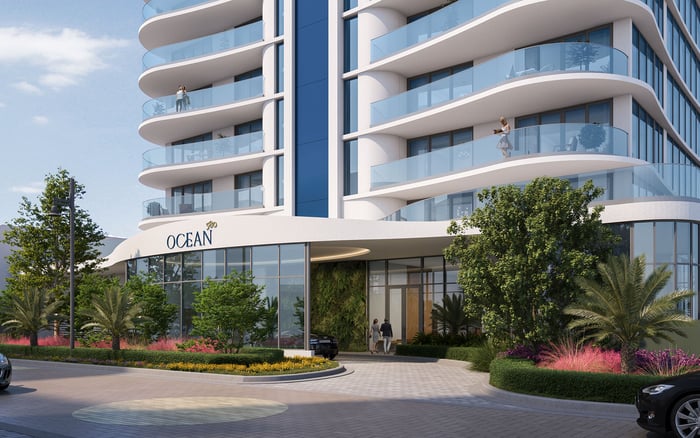
A Lisbon-to-Miami residence strategy should separate acquisition costs from estate liquidity, coordinate ownership and beneficiaries with cross-border advisers, and budget ongoing expenses without assuming homestead eligibility.

For a family office moving from Lisbon to Miami, the residence is both a private setting and a balance-sheet decision. The starting point is not a preferred floor plan but a clear mandate: permanent home, seasonal retreat, or property held principally for investment. That distinction should guide ownership discussions, cash planning, and property-tax assumptions.
A disciplined acquisition plan separates four questions: who will own the property, who should ultimately benefit from it, which funds will support the purchase, and which funds will sustain the residence afterward. These are planning questions, not interchangeable legal conclusions. Portugal-U.S. succession and tax outcomes require individualized advice; a Miami closing cannot resolve them on its own.
In Brickell, a family considering The Residences at 1428 Brickell can apply this framework before comparing residences. The address belongs in the lifestyle brief. Ownership, access to cash, and succession intentions belong in a separate adviser-led brief.
The ability to buy a residence does not establish whether the family will have accessible cash when circumstances change. As a planning exercise, distinguish acquisition capital from operating reserves and liquidity intended to support an estate plan. Do not assume one account can serve all three purposes without reviewing access and authority.
Ask advisers to examine scenarios rather than prescribe an arbitrary reserve percentage. What happens if a principal becomes unavailable? Who can authorize payments? Which funds would remain accessible while ownership or succession questions are resolved? Could the residence continue operating without an immediate sale?
These questions do not establish a Portugal-U.S. estate-tax liability, succession rule, or mandatory reserve. They define the decisions qualified counsel should address. No universal estate-liquidity amount is appropriate here, and the purchase price alone is not a sufficient basis for choosing one.
For a Miami Beach search that includes The Perigon Miami Beach, maintain this distinction throughout negotiations: committing capital to a property and retaining accessible capital are separate decisions.
Florida title-insurance premiums are regulated statewide, not freely negotiated between title agents. For an original owner's policy, the premium schedule begins at $5.75 per $1,000 for the first $100,000 of coverage, followed by $5.00 per $1,000 above $100,000 through $1 million.
The higher tiers apply cumulatively: $2.50 per $1,000 above $1 million through $5 million, $2.25 per $1,000 above $5 million through $10 million, and $2.00 per $1,000 above $10 million. Applying those tiers to a hypothetical $10 million original owner's policy produces a base premium of $26,325. This illustration is neither a complete closing-cost estimate nor a property-specific quote.
Request an itemized quotation separating the policy premium from other quoted charges. The regulated premium is not the entire amount required at closing. Keep the title budget separate from the residence's ongoing operating budget as well.
A qualifying reissued policy can carry lower rates, including $3.30 per $1,000 for the first $100,000 and $3.00 per $1,000 above $100,000 through $1 million. Eligibility and prior title evidence matter; a resale should not automatically be modeled at reissue rates.
Where financing is involved, request a combined quotation for owner's and lender's policies. Special simultaneous-issue treatment applies when the same insurer issues both in the same transaction. New-home purchase discounts and substitution-loan rates are distinct categories, not automatic benefits for every buyer.
Consider preparing a single adviser-reviewed ownership and beneficiary matrix. It can identify the proposed purchaser, intended beneficiaries, relevant estate documents, payment authority, and unresolved decisions. Its purpose is to reveal inconsistencies before closing, not to create rights or replace legal instruments.
Ask Portugal and U.S. advisers to reconcile the family's intentions with the proposed ownership arrangement. Avoid choosing an individual, entity, or trust structure solely for apparent administrative convenience. The appropriate arrangement cannot be determined from title-premium rules or homestead eligibility alone.
For a Coconut Grove shortlist that includes Four Seasons Residences Coconut Grove, this coordination can proceed alongside property evaluation. Keep the lifestyle decision moving, but make adviser review a deliberate checkpoint before finalizing ownership instructions.
Miami-Dade homestead eligibility depends on permanent residence, not ownership alone. A second home, investment property, or pied-à-terre should not automatically receive homestead benefits in the family's financial model.
An owner generally must establish the property as a permanent residence by January 1 and apply by March 1 to qualify for that tax year. Add those dates to the planning calendar and have eligibility reviewed against the family's actual circumstances.
The first $25,000 of homestead exemption applies to all property taxes, including school-district taxes. The additional exemption applies to assessed value above $50,000 and excludes school-district taxes. Confirm the applicable tax-year amount rather than treating a familiar total as a permanent maximum.
Save Our Homes includes a 3% annual cap on homestead assessment increases. The cap limits assessment growth; it does not guarantee that the total tax bill cannot rise by more than 3%. Ownership questions and eligibility for portability or other exemptions require separate review.
Build the annual operating budget from property-specific documents and quotations, not an assumed percentage of purchase price. Suggested categories include property taxes, applicable association charges, insurance, utilities, staffing, maintenance, storm preparation, and capital repairs. These are budgeting prompts, not claims that every residence incurs every expense.
In Surfside, a family evaluating Ocean House Surfside should request the documents relevant to its proposed purchase and identify which costs are included, separately payable, or unresolved. No project-specific operating figure should enter the model without supporting documentation.
Separate recurring expenses from contingency funds and longer-term capital allowances. Then assign responsibility for updating quotations, approving payments, and revisiting assumptions when the family's use changes. A seasonal retreat and a permanent household should not share an unexamined operating brief.
The objective is a residence that fits the family's life without obscuring its financial responsibilities. Before committing, bring the closing quotation, ownership instructions, beneficiary intentions, tax assumptions, and operating budget into one decision file. Clearly assign each unresolved item to the appropriate adviser.
Explore a residence strategy aligned with your family's priorities at MILLION.
If branded residences are on your mind — as a home or as an allocation — we would be glad to share what we are seeing, privately.
Begin a quiet conversationFlorida title-insurance premiums are regulated statewide. An itemized quote should distinguish the policy premium from other closing charges.
The rates are $5.75 per $1,000 for the first $100,000 of coverage and $5.00 per $1,000 above $100,000 through $1 million.
The cumulative tiers are $2.50 per $1,000 above $1 million through $5 million, $2.25 above $5 million through $10 million, and $2.00 above $10 million.
Applying the stated cumulative tiers produces a base premium of $26,325. This is not a complete closing-cost estimate or a property-specific quote.
No. Lower reissue rates depend on eligibility and prior title evidence.
Special simultaneous-issue treatment applies when the same insurer issues both policies in the same transaction. A combined quote allows that treatment to be evaluated.
No. Miami-Dade homestead eligibility depends on permanent residence, not ownership alone.
An owner generally must establish permanent residence by January 1 and apply by March 1 to qualify for that tax year.
No. The 3% cap concerns annual increases in homestead assessment, not a guaranteed limit on total tax-bill growth.
Treat acquisition capital, operating reserves, and estate-plan liquidity as separate planning decisions. Use property-specific cost documentation and individualized cross-border advice rather than a universal reserve percentage.