A buyer-focused audit of e-bike ownership at Una Residences, separating advertised amenities from the written permissions needed for storage, charging, battery handling, and elevator access.

At Una Residences Brickell, the appeal is architectural and residential: a 47-story waterfront condominium with 129 residences and private elevator entries. For an owner planning to keep an e-bike, daily convenience depends on a less visible layer of ownership: where the bicycle may go, where its battery may remain, and whether charging is permitted.
Listed bike storage is a useful starting point, but it does not establish acceptance of electric bicycles, charging outlets, monitoring, or controlled access. Private air-conditioned storage is also listed, without establishing permission to store or charge lithium-ion batteries there.
Treat storage, charging, and transport as separate questions requiring written confirmation before closing. Silence in an amenity description establishes neither permission nor prohibition.
Begin with the current association rules and a written response identifying permitted devices. Ask whether your specific bicycle, battery, and charger are acceptable, whether the battery must be removed before storage, and whether any insurance conditions apply. A general assurance that bicycles are welcome does not resolve those details.
Next, confirm the physical arrangement: storage dimensions, rack compatibility, assigned-space procedures, access hours, and security provisions. Provide the bicycle’s actual measurements and weight rather than describing it as a standard commuter model. The practical test is whether the approved space accommodates your equipment without obstructing circulation.
Keep bicycle storage and battery storage distinct in the correspondence. If a removable battery cannot remain on the bicycle, management should identify where it may be kept. Do not assume an air-conditioned private storage area is an approved alternative simply because its temperature seems suitable.
For a buyer also considering 2200 Brickell, the same written checklist provides a consistent way to compare ownership suitability without assuming the buildings have identical permissions or facilities.
Una’s listed amenities do not identify a dedicated e-bike charging room or battery-storage room. They also do not establish charging permission inside residences, private storage areas, parking spaces, or common areas. Charging therefore remains an unresolved diligence item-not evidence that an approved facility is absent.
Ask management to identify every permitted charging location and the conditions governing its use. Clarify whether permission applies to an installed battery, a detached battery, or both. An available outlet is not, by itself, authorization to charge.
General fire-safety precautions provide a separate safety framework, not Una’s verified association policy. These include using e-bikes, batteries, and chargers listed by a nationally recognized testing laboratory, pairing the device only with its intended battery and charger, and following manufacturer instructions.
Other precautions include charging only one device or battery at a time to reduce circuit-overload risk, stopping charging once it is complete, and not charging an e-bike while sleeping. These precautions do not substitute for building approval. Safe equipment and an authorized location are separate requirements.
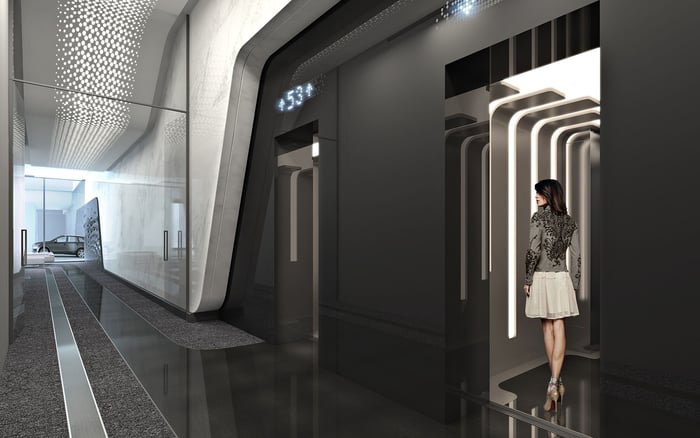
Private elevator entries are an advertised feature, but they do not establish permission to transport bicycles or batteries in residential elevators. Before relying on that convenience, obtain the approved route from the arrival point to storage and, where permitted, to the residence.
Valet and self-parking are listed, but an approved e-bike route from the garage is not specified. The listed amenities also do not establish service-elevator dimensions, loading access, reservation procedures, or permitted transport hours.
Request the service-elevator door width, cab dimensions, weight limit, reservation lead time, and permitted hours. Ask about protection requirements and escort rules. Then examine the entire route, not just the cab: loading access, doors, turns, and the final approach to storage all require confirmation.
If your shortlist includes Cipriani Residences Brickell, apply the same route-based audit independently. Evaluate elevator access through each property’s written operating rules rather than inferring it from the property’s residential positioning.
A package room and 24-hour concierge service are listed for Una, but neither amenity establishes whether staff accept, store, or transfer e-bike batteries. Do not build a delivery or repair routine around an unconfirmed service.
Ask whether valet staff may handle the bicycle and whether delivery companies or repair technicians may bring it through approved access points. Confirm any vendor insurance documentation required before a service visit. Battery acceptance deserves a separate written answer, particularly when a replacement battery arrives without the bicycle.
Request the building’s damaged-battery emergency procedure and any relevant fire-inspection or association notices. Do not assume management maintains a battery-quarantine area. The goal is to understand the designated response before a problem occurs, not to improvise a storage solution afterward.
General battery-safety precautions include keeping batteries at room temperature when possible and not charging below 32°F or above 105°F. Storage should be well ventilated and away from combustible materials, hot cars, and direct sunlight. E-bikes and batteries should remain away from exit doors and materials that can become hot or catch fire.
Charging should occur in a flat, dry location away from children, pets, liquids, direct sunlight, exits, and tripping hazards. These characteristics help assess an approved location; they do not authorize an otherwise unapproved space.
Overheating, unusual odors or noises, changes in shape or color, and leaking are warning signs to report by calling 911. Obtain management’s emergency instructions as well. Repairs should be performed only by a qualified professional, and lithium-ion batteries should not enter ordinary trash; follow appropriate recycling or local disposal instructions.
Before closing, assemble a concise ownership file: current association rules, written device acceptance, approved bicycle and battery storage locations, charging permission, transport arrangements, staff-handling limits, and applicable insurance conditions. Keep unanswered questions open rather than turning verbal reassurance into an assumed entitlement.
For buyers weighing Una against The Residences at 1428 Brickell, the useful comparison is not an unsupported claim about which property is more accommodating. It is whether each property’s confirmed rules support the buyer’s intended routine.
An ownership-ready arrangement answers three practical questions: where the bicycle stays, where the battery may be stored and charged, and how both move through the building. With explicit answers, the amenity becomes something an owner can plan around with confidence.
For a considered approach to Brickell ownership and residential selection, explore MILLION.
If branded residences are on your mind — as a home or as an allocation — we would be glad to share what we are seeing, privately.
Begin a quiet conversationYes, bike storage is listed among the amenities. That does not establish whether electric bicycles are accepted or whether charging, monitoring, or controlled access is provided.
The listed amenities do not identify a dedicated e-bike charging room or battery-storage room. That does not establish that such a facility is absent; management must confirm the arrangement.
The listed amenities do not establish permission to charge inside residences. Obtain written confirmation of approved charging locations and conditions.
Private air-conditioned storage is listed, but battery-storage or charging permission is not established. Confirm each activity separately with management.
No such permission is established by the advertised feature. Ask which elevators and routes are approved for bicycles and batteries.
Request door width, cab dimensions, weight limit, reservation lead time, permitted hours, protection requirements, and escort rules. Confirm loading access and the complete route to storage as well.
The listed concierge, package-room, and parking services do not establish battery-handling permission. Ask whether staff may accept, store, transfer, or otherwise handle batteries.
Choose e-bikes, batteries, and chargers listed by a nationally recognized testing laboratory. Use only the battery and charger designed for the device and follow manufacturer instructions.
Avoid charging while sleeping, continuing after full charge, and charging below 32°F or above 105°F. Charge only one device or battery at a time and confirm the building’s approved location.
Call 911 for overheating, unusual odors or noises, shape or color changes, or leaking. Lithium-ion batteries should not go in ordinary trash; follow appropriate recycling or local disposal instructions.