A buyer-focused audit for The Lincoln Coconut Grove, separating advertised balcony features from the written storm procedures, access permissions, and absence arrangements that future owners should confirm before closing.

A well-prepared second residence should make an owner’s absence uneventful. At The Lincoln Coconut Grove, that ambition begins with pre-closing diligence-not an assumption that someone will handle the balcony when a storm approaches. The project at 2650 Lincoln Avenue, Miami, Florida 33133, is under construction. Buyers should distinguish the residence being offered from the operating procedures they will eventually rely on.
The essential audit has three parts: what must be prepared, who is responsible, and what that person is authorized to do. An attractive outdoor room is only one side of ownership. The other is a clear arrangement for protecting it when the owner is elsewhere.
For a seasonal household, readiness belongs in the furnishing and handover brief. A beautiful balcony deserves a practical clearance plan before the furniture is selected.
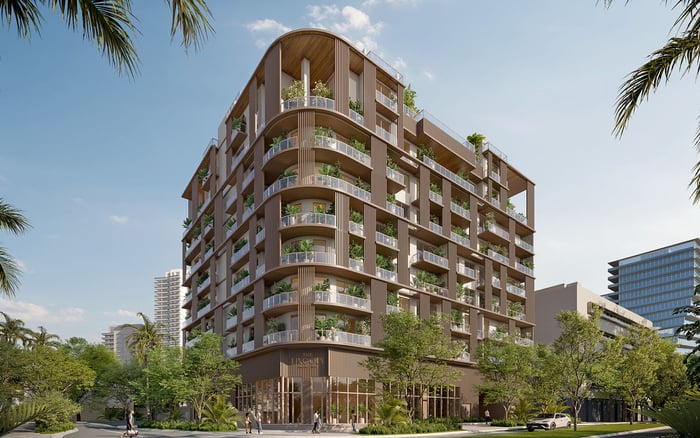
The Lincoln’s advertised features include private balconies with glass railings and power outlets. These details describe the intended residential experience; they do not establish approved storm tie-downs, storage locations, or a management obligation to move furniture. Nor should buyers infer a particular shutter, panel, or impact-glass system from the balcony description.
Request the current governing documents and written storm procedures before closing. Ask which provisions are final, which remain subject to adoption, and how owners will receive subsequent instructions. The goal is a written allocation of responsibilities, not a general assurance that the building will be prepared.
Apply the same discipline when comparing Arbor Coconut Grove. Ask these questions independently, without assuming that one property’s arrangements carry over to another. Compare documented obligations and available services, not impressions of convenience.
Hurricane season runs from June 1 through November 30. Loose-object preparation extends beyond dining chairs and loungers to bicycles, toys, gardening supplies, and household items that could become windborne. The inventory should capture everything exposed outdoors, including small accessories that are easy to overlook.
During a qualifying severe-weather advisory affecting Miami-Dade, best efforts must be used to store, brace, bundle, or fasten exposed loose objects sufficiently to prevent them from becoming windborne. Outdoor furniture and similar items should be secured before anticipated tropical-storm-force winds-not after dangerous conditions arrive.
For the buyer, the practical questions are specific:
Who clears the balcony if the owner is away, and who serves as backup?
Are any tie-down methods permitted, and what written approval is necessary?
Where may furniture and other items be stored?
Who pays for removal, handling, and storage?
Do not treat glass railings as approved anchoring points. Obtain confirmation before planning any attachment. If items will come indoors, identify a suitable location and confirm that the person assigned to move them can complete the task safely. The clearance plan should fit the actual furnishings, not an imagined, lighter version of them.
Florida condominium law prohibits owners from doing anything within their units or on common elements that adversely affects the safety or soundness of common elements or association property. Residential and mixed-use condominium boards must also adopt hurricane-protection specifications for each building. Those specifications may address appearance, style, color, and other relevant factors, and must comply with applicable building codes.
Subject to the statutory approval framework, an association may install or require owners to install hurricane protection that meets or exceeds applicable code requirements. Buyers should ask what protection is contemplated for their residence, who maintains it, and who will operate it when needed.
A board may operate hurricane protection without individual owner permission when necessary to preserve and protect condominium or association property. That authority should not be read as unrestricted permission to enter a residence or relocate possessions. Keep protection operation, access rights, and furniture handling distinct in the ownership file, with legal review where their boundaries are unclear.
An absence authorization should identify people and permitted actions, rather than simply state that management may “take care of things.” Confirm whether an owner-absence form will be required, whether a local representative must be designated, and how the building will recognize that representative.
Ask what keys or access credentials must be provided, where they will be held, and what happens if the owner cannot be reached. Establish the representative’s expected response time and a backup contact. These are questions to resolve, not confirmed policies at The Lincoln.
The proposed scope deserves separate attention. Ask whether written permission should cover balcony-item relocation, hurricane-protection operation, water shutoffs, emergency repairs, and vendor access. Clarify spending limits and approval procedures with the appropriate parties. Do not assume an authorization overrides applicable law or governing documents.
For buyers also considering Opus Coconut Grove, use the same absence scenario as a diligence exercise: the owner is unreachable, preparation is needed, and someone must know exactly what they may do. The answer should come from each property’s own documents and arrangements.
For a residence left unoccupied during hurricane season, bringing patio and balcony furniture indoors before departure is prudent. It reduces dependence on a last-minute visit but does not replace the building’s eventual requirements or the need to confirm permissible storage.
Arrange pre- and post-storm inspections through the association, if offered, or a private provider. Do not assume The Lincoln will provide an inspection service. Ask who will attend, what will be checked, how findings will be communicated, and what authorization is needed for follow-up work.
When officials issue a storm-related compliance order, responsibility falls to the person most logically responsible for maintenance. An owner’s private service arrangement should therefore specify duties rather than rely on a contact name alone. Before departure, ask the designated provider to confirm acceptance of the assignment and explain its availability and limitations.
The audit is complete when its answers can be used without the owner being present. Assemble the current governing documents, written storm instructions, balcony inventory, storage plan, access arrangements, accepted authorizations, and inspection contacts in one accessible file. Mark unresolved items for follow-up before closing or the first seasonal departure.
The standard is not a promise that every disruption can be avoided. It is clarity about responsibility, permission, timing, and cost. At The Lincoln, that clarity should develop alongside the residence, so the eventual pleasure of ownership rests on arrangements that are understood rather than assumed.
For a considered approach to South Florida ownership, explore MILLION.
If branded residences are on your mind — as a home or as an allocation — we would be glad to share what we are seeing, privately.
Begin a quiet conversationThe Lincoln is under construction. Buyers should confirm future operating procedures rather than assume completed-building services are already established.
The project is at 2650 Lincoln Avenue, Miami, Florida 33133.
Private balconies with glass railings and power outlets are advertised. These features do not establish approved storm-securement methods or furniture-handling services.
Hurricane season runs from June 1 through November 30. Seasonal departure planning should account for that period.
Outdoor furniture and similar loose items should be secured before anticipated tropical-storm-force winds. Preparation should not wait until conditions become dangerous.
Bringing balcony furniture indoors before leaving a residence unoccupied during hurricane season is a prudent approach. Confirm permissible storage and applicable building requirements first.
Buyers should not assume railings are approved anchoring points. Request written confirmation of permitted methods before planning attachments.
A board may do so when necessary to preserve and protect condominium or association property. That power should not be treated as unrestricted authority to enter units or move possessions.
Confirm authorized entrants, access credentials, response expectations, and procedures if the owner cannot be reached. Clarify permissions for furniture relocation, protection operation, water shutoffs, emergency repairs, and vendor access.
Neither should be assumed as an established project policy. Confirm requirements and available services in writing, and arrange inspections through the association if offered or a private provider.