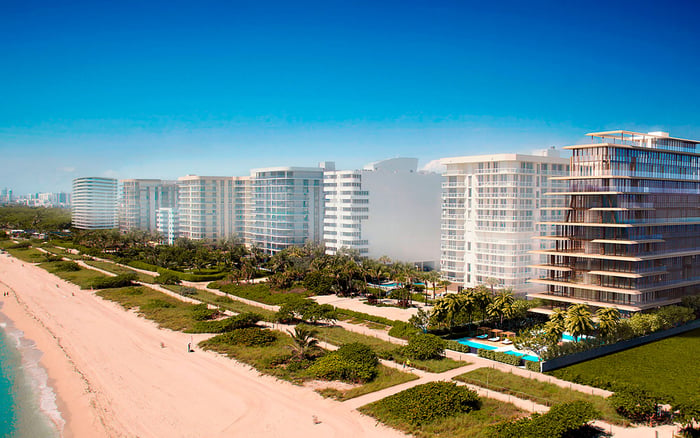
A buyer-oriented framework for evaluating Ocean House Surfside through reserve liquidity, investment governance, and capital-call timing, while separating Florida’s general requirements from property-specific obligations.

For a discerning purchaser, ownership readiness extends beyond the residence itself. It means understanding how shared obligations will be funded, who controls those decisions, and when money may be required. At Ocean House Surfside, located at 9309-9317 Collins Avenue, Surfside, FL 33154, the starting point is a disciplined financial review-not an assumption about reserve strength.
This is a buyer’s audit framework, not a finding that Ocean House is adequately funded, underfunded, structurally deficient, or facing an assessment. Its reserve position and any capital-call exposure remain open questions until supported by property-specific documents. The same restraint applies to building age, turnover status, and inspection obligations.
The central distinction is simple: a reserve balance is not the same as cash available when a bill falls due. An ownership decision should connect that balance to the permitted uses of the funds and the dates of expected expenditures.
Florida’s milestone-inspection framework generally covers residential condominium and cooperative buildings with three or more habitable stories, including mixed-ownership buildings. A milestone inspection evaluates structural safety, including load-bearing elements. It is not a reserve-funding study.
The first inspection is generally required at 30 years, followed by inspections every 10 years. Local authorities may require an earlier inspection at 25 years. That earlier threshold should not be applied automatically to Ocean House, nor should an inspection date be inferred from its address or project identity.
A Structural Integrity Reserve Study, or SIRS, addresses a different question: which building components are covered and what funding is needed for their future maintenance and replacement. The framework generally applies to condominium and cooperative buildings with three or more habitable stories, with a study generally required at least every 10 years after the condominium’s creation.
Ask counsel to establish the applicable obligations from the condominium’s records and local requirements. A structural inspection and a reserve study answer different questions; neither substitutes for the other.
Unit-owner-controlled associations existing on or before July 1, 2022, generally faced an initial SIRS deadline of December 31, 2025, subject to statutory exceptions and coordination provisions. Associations required to complete a milestone inspection by December 31, 2026, may qualify to complete their SIRS simultaneously with that inspection.
Florida law also generally restricts waiving or underfunding required structural reserves for budgets adopted on or after December 31, 2024, subject to applicable statutory provisions. These dates provide context, not a property-specific compliance conclusion.
For a purchase decision, request a written explanation of which requirements apply, the basis for that determination, and any relevant completion or future due dates. Where a proposed budget relies on an exception or coordination provision, ask counsel to confirm its applicability. Do not build a personal cash plan around an assumed exemption.
Begin by requesting the current budget, reserve schedules, financial statements, and supporting bank or custodial statements, as available. Ask the association’s accountant to reconcile the balances and identify restrictions, existing commitments, and assumptions behind future contributions.
Then organize the review around three questions:
What money is available now for each contemplated expenditure?
What additional contributions are expected before payment is due?
What commitments already have a claim on those funds?
Request a dated cash-flow schedule rather than relying solely on an aggregate reserve figure. Separate funds already held from contributions expected later, and ask how any timing gap would be addressed. Treat projected receipts as assumptions to examine, not cash already collected.
For buyers also considering Fendi Château Residences Surfside, apply the same document review without assuming that either property shares the other’s funding position or obligations. A consistent review is more useful than a comparison based on monthly charges alone.
Begin the investment-policy review by requesting the policy itself, if one exists, and the approvals governing it. Do not infer an investment approach from a reserve balance or projected interest income.
Ask which instruments are permitted, who may authorize transactions, how holdings are monitored, and how maturities align with anticipated spending. Clarify any withdrawal restrictions, potential costs of early liquidation, and procedures for making funds available when needed. These are diligence questions, not claims about Ocean House’s holdings.
Have a qualified adviser review the investment schedule against the expenditure schedule. The question is whether planned access to funds supports planned obligations-not whether a projected return looks attractive in isolation.
The governance question is equally direct: who is responsible for revising the cash plan when project timing changes? Ask for clear assignments of responsibility for approvals, recordkeeping, and communication to owners. A clear decision process belongs alongside the financial figures in the ownership file.
Ask management to distinguish approved expenditures and assessments from proposals, preliminary estimates, and longer-term study assumptions. For each identified item, request its current status, expected payment dates, intended funding source, and the basis for allocating any owner contribution.
Where work is contemplated, ask whether the cash-flow schedule accounts for deposits, staged payments, and final payment rather than a single completion date. Request an explanation of how changes in pricing or accelerated work would affect the funding plan. Do not turn a study estimate into a scheduled assessment without supporting documentation.
Review insurance alongside this exercise. Request the applicable coverage and deductible information, and ask the relevant advisers how those terms should inform personal contingency planning. No deductible amount or insurance-related capital call should be presumed for Ocean House.
If the search extends to Bal Harbour and Rivage Bal Harbour, apply this timing-based review across the shortlist. Compare documented obligations and unresolved questions, not unsupported expectations of future assessments.
Before committing, assemble a concise decision file: confirmed legal obligations, reconciled reserve figures, investment controls, and a dated schedule of identified capital needs. Ask counsel to clarify responsibility for any approved or pending assessment under the transaction documents, and have the financial assumptions reviewed separately.
The aim is not to promise that ownership costs will never change. It is to understand what is established, what remains contingent, and which decisions could alter the timing of a cash requirement. That clarity allows the residence’s appeal and the practical demands of ownership to be considered together.
For a discreet perspective on South Florida ownership decisions, explore MILLION.
If branded residences are on your mind — as a home or as an allocation — we would be glad to share what we are seeing, privately.
Begin a quiet conversationOcean House Surfside is located at 9309–9317 Collins Avenue, Surfside, FL 33154.
No. The framework does not establish an assessment, reserve adequacy, or a structural deficiency; those conclusions require property-specific documentation.
A milestone inspection evaluates structural safety, including load-bearing elements. A SIRS identifies covered components and the funding needed for their future maintenance and replacement.
A qualifying building generally requires its first milestone inspection at 30 years, although local authorities may require one at 25 years. Neither threshold establishes Ocean House’s specific inspection date.
After the initial milestone inspection, qualifying buildings generally require another every 10 years. A qualifying building generally requires a SIRS at least every 10 years after the condominium’s creation.
No. That general initial deadline concerned unit-owner-controlled associations existing on or before July 1, 2022, subject to exceptions and coordination provisions; Ocean House’s applicability requires confirmation.
Florida law generally restricts waiving or underfunding required structural reserves for budgets adopted on or after December 31, 2024, subject to applicable statutory provisions.
Request a reconciliation of reserve balances, restrictions, existing commitments, and expected contributions against dated expenditures. Separate money already held from receipts expected later.
Ask about permitted instruments, transaction authority, monitoring, maturities, and access restrictions. Have a qualified adviser assess whether planned access to funds aligns with anticipated spending.
Separate approved assessments and expenditures from proposals and study estimates, then request payment dates and intended funding sources. Ask counsel to clarify transaction-specific responsibility for any approved or pending assessment.