In Edgewater, privacy is not defined by an elevator door alone. A disciplined review should trace the full access journey, identify who controls each digital system, and establish how resident, visitor, vehicle, video, and biometric information is handled before closing.
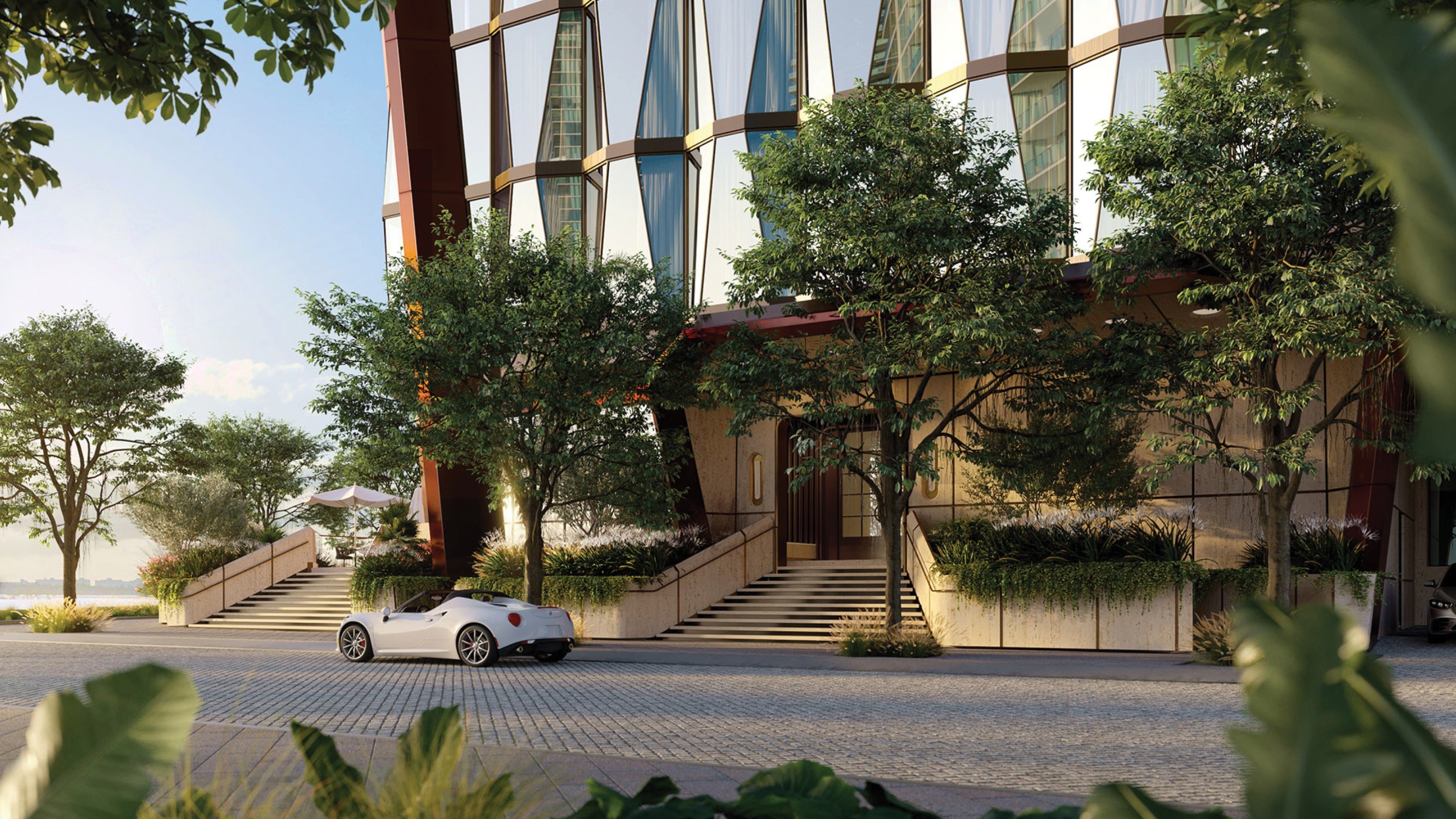
In an Edgewater residence, privacy is often expressed architecturally: a discreet porte cochère, a controlled lobby, a swift elevator journey, and a quiet private foyer. Yet the most consequential details may lie behind the finishes. A buyer should understand not only how arrival feels, but how every person, credential, device, and record moves through the building.
This is particularly important in a boutique condominium, where an intimate scale can suggest inherent discretion. Fewer residences do not, by themselves, establish stronger access controls or narrower data use. This entry in MILLION's Buyer's Guides treats privacy as an operational chain, beginning at the property line and continuing through the elevator, residence, app, visitor desk, and technology vendors.
The exercise applies to established towers and newer waterfront offerings alike. Buyers exploring Aria Reserve Miami or other Edgewater residences should request the documents governing the specific building and unit rather than extrapolate from renderings or broad amenity descriptions.
Private-elevator access can describe materially different configurations. Buyers should not assume that every installation operates identically or provides the same degree of separation from shared areas.
For the selected residence, verify whether the elevator opens directly into the home, into a private vestibule, or onto a landing shared with another unit. Confirm which residences have the arrangement and whether service staff, management, contractors, or other occupants can reach the floor. Ask what prevents an incorrectly authorized stop and how elevator permissions change when household staff or guests no longer require access.
A private elevator is an arrival feature, not a complete security system. Its practical value depends on credentialing, lobby control, floor permissions, surveillance, guest procedures, and the integrity of the foyer door. During a tour, follow the route as a resident, invited visitor, delivery person, and service provider. Each journey may expose a different control point.
Guest registration warrants the same scrutiny as title documents because, depending on the system, it can capture names, contact details, arrival information, vehicle records, photographs, and access logs. Ask precisely what the building collects, why each field is necessary, who can see it, and whether the information can be exported.
The subject property's terms should address permitted use, retention, administrator access, vendor access, correction, and deletion. Buyers should verify whether confidentiality protections apply and whether guest information may be used for purposes beyond access administration.
Compare those written terms while evaluating intimate new developments such as Lilli Miami Edgewater. The intended experience matters, but the operative procedure should reveal whether an owner preregisters guests, whether identification is scanned, what happens to denied entries, and how records are handled after a visit.
A building app may combine doors, elevators, visitors, amenities, packages, concierge requests, maintenance, and household profiles. Convenience can make these functions feel like one seamless service, even when several companies process the underlying information.
Request a function-by-function map. For each feature, identify the data collected, its purpose, the controller of the resident account, the storage location, the retention period, and every party able to view or export records. Determine whether responsibility rests with the association, developer, property manager, or technology vendor. Ask whether one module shares information with another and whether optional functions can be disabled without forfeiting essential building access.
When considering EDITION Edgewater or any digitally managed residence, review available data-request rights, including the process for requesting a copy of account information. Buyers should also ask how accounts transfer on resale, how former users are removed, and what manual procedure applies during a system outage.
If facial, fingerprint, or another biometric method is offered, first identify the exact identifier collected. Then obtain written answers addressing notice, consent, purpose, storage duration, security, sharing, and deletion. The party operating the system should explain the distinction between storing an image and storing a derived biometric template; the buyer should not be left to assume it.
Consider enrollment requirements for family members, children, household employees, recurring vendors, and visitors. Clarify whether participation is optional and which equivalent non-biometric method remains available. Ask who can enroll or remove a person, whether administrators can override permissions, and how compromised credentials or suspected misuse are addressed.
This level of inquiry remains appropriate when the residence is positioned around highly personalized service, as with Villa Miami. Luxury and data minimization can coexist, but only when the operating rules make the boundaries legible.
Before closing, request the declaration, house rules, access-control procedures, resident-app privacy policy, biometric enrollment terms, and relevant vendor disclosures. Add internal privacy and security policies, available breach-response provisions, employee and contractor training practices, retention schedules, deletion procedures, administrator privileges, and outage protocols.
Read the materials together. A promise in one document may be qualified by permissions in another. The objective is a coherent account of who can enter, who can authorize entry, what information is created, how long it survives, and who remains accountable throughout ownership.
Does a private elevator always open inside the residence? No. It may open into the home, a private foyer, or another landing configuration, so the exact plan and permissions require confirmation.
Is a private elevator a complete security system? No. Credentialing, lobby controls, floor permissions, foyer protection, and guest procedures must be evaluated separately.
What visitor information should a buyer ask about? Ask about names, contact details, identification, vehicle information, images, visit history, and access logs the system may collect.
Who may control data generated by building technology? Control may rest with the association, developer, property manager, or technology vendor, depending on the system and governing terms.
What should an app review cover? Review every function, the data it uses, its purpose, storage and retention, and who can view, share, or export records.
Should biometric enrollment be optional? Buyers should ask whether enrollment is optional and confirm which equivalent non-biometric access method is available.
What biometric details belong in writing? Obtain the identifier collected, notice and consent terms, purpose, safeguards, retention period, sharing rules, and deletion process.
How should system outages be handled? The building should explain its manual access procedure, authorization hierarchy, logging practices, and restoration process.
Which documents should be requested before closing? Request governing documents, house rules, access procedures, app policies, biometric terms, vendor disclosures, and relevant security policies.
Why review deletion and resale procedures? They show how former owners, staff, guests, devices, and credentials are removed when access is no longer appropriate.
If you'd like a private walkthrough and a curated shortlist, connect with MILLION.
If branded residences are on your mind — as a home or as an allocation — we would be glad to share what we are seeing, privately.
Begin a quiet conversation