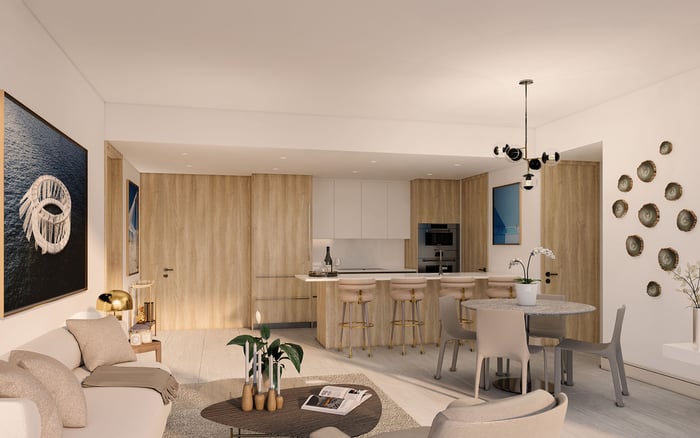
A move from Singapore to Las Olas calls for more than property due diligence. Buyers should establish a healthcare plan, evaluate concierge medicine and home-care options, and confirm that the residence can support access, privacy, and changing needs over time.

For a buyer leaving Singapore, selecting a home in Las Olas involves more than architecture, water views, and proximity to Fort Lauderdale’s social life. The move also requires a practical plan for primary care, specialist access, urgent needs, home support, and communication with family or trusted representatives.
That work is most useful before care becomes urgent. A residence may suit the owner’s lifestyle today, but long-term confidence depends on questions that rarely appear on a conventional property schedule: Who will coordinate routine care? What happens after hours? Can a caregiver or visiting clinician enter efficiently? Is there a workable plan after a hospital discharge?
Buyers considering central options such as Sixth & Rio Fort Lauderdale can conduct this review alongside legal, financial, insurance, and physical due diligence. The objective is not to predict every future need. It is to identify gaps before they become difficult to solve.
A resilient relocation plan connects the residence, the physician, and the support network before care becomes urgent.
Begin by defining three functions: routine medical care, backup coordination, and assistance in the home. These functions may be handled by different professionals, so buyers should avoid assuming that one relationship will cover every circumstance.
For routine care, compare traditional primary-care and concierge practices according to the owner’s priorities. Relevant questions include whether the practice is accepting patients, how appointments are scheduled, what communication is available after hours, whether home visits are offered, and how specialist referrals or hospital follow-up are coordinated.
Concierge medicine can mean different things among practices. Before joining, request a written explanation of membership fees, included services, exclusions, insurance handling, response expectations, coverage when the principal physician is unavailable, and any geographic limits. A polished presentation is not a substitute for confirming the operating details.
The backup layer should identify who can act if the owner is unavailable, temporarily away, or unable to coordinate personally. Keep physician details, medication information, relevant authorizations, emergency contacts, and residence-access instructions in a secure record. Review that record with the people expected to use it and update it when circumstances change.
Professionally managed residences may provide a highly organized living experience, but buyers should distinguish residential hospitality from medical or caregiving responsibility. Building personnel, private clinicians, home-care providers, and family representatives have different roles.
At Four Seasons Hotel & Private Residences Fort Lauderdale, as with any managed residence under consideration, a buyer should ask management how visitors, caregivers, deliveries, and emergency responders are handled. The project link identifies a residential option and does not imply that healthcare services are included.
Questions should address registration procedures, parking, entry outside regular hours, elevator access, temporary support personnel, medical-equipment deliveries, and the process for changing permissions. Buyers should obtain current information directly because procedures can vary by residence and may change.
Privacy also requires planning. Determine who may receive information, enter the home, speak with management, or make decisions if the owner cannot do so. Any legal or medical authorization should be prepared with the appropriate professional rather than inferred from a building’s access list.
Home support may range from companionship and household assistance to personal care or clinically directed services. Buyers should first define the expected task, then identify the type of provider qualified to perform it. Service labels should not be treated as interchangeable.
Interview more than one provider and ask for written details. Topics can include service scope, staffing continuity, minimum visit requirements, overnight availability, supervision, replacement coverage, escalation procedures, and post-discharge coordination. Buyers should also clarify who answers after hours and what happens if the regular caregiver is unavailable.
If a geriatric care manager or similar coordinator is being considered, ask how that person communicates with physicians, home-care providers, the residence, and family. The goal is a clear chain of responsibility rather than a long contact list with overlapping or undefined roles.
A trial of routine logistics can be revealing. Walk the path from vehicle arrival to the residence, consider where a caregiver would park, and test how a visitor receives authorization. A plan that appears straightforward on paper may be less practical when applied to a controlled-entry waterfront property.
Aging in place is both a care issue and a design issue. Review the residence for step-free movement, bathroom usability, lighting, flooring transitions, door clearances, elevator dependence, emergency communication, and space for a future caregiver or visiting professional.
At St. Regis® Residences Bahia Mar Fort Lauderdale, buyers can incorporate questions about caregiver registration, emergency access, equipment deliveries, and temporary support personnel into their broader project due diligence. No healthcare capability should be inferred from branding, amenities, or service culture.
The same disciplined approach applies to The Ritz-Carlton Residences® Fort Lauderdale. Obtain current residence rules, inspect the actual route through the property, and determine whether the home could adapt to changing mobility or support needs without undermining privacy.
Potential adaptations should be evaluated before closing. Buyers can identify which changes would require building approval, professional design input, or other review without assuming that a particular alteration will be permitted. The analysis should focus on the specific residence rather than the project name alone.
A buyer relocating from Singapore may continue to travel or divide time among residences. The healthcare plan should therefore address both presence and absence. Identify who monitors the home, receives time-sensitive communications, and coordinates locally if the owner cannot respond.
The plan should cover several scenarios: routine appointments, an after-hours concern, a hospital discharge, a temporary mobility limitation, and a longer period of in-home assistance. For each scenario, define the first contact, backup contact, access procedure, and communication route to family or advisers.
Medication and pharmacy arrangements also deserve attention, but the appropriate solution depends on the owner’s prescriptions, clinicians, insurance, and travel pattern. Confirm the process with the relevant licensed professionals rather than relying on assumptions carried over from another country.
Before committing to a Las Olas residence, buyers should be able to answer the following:
Which physician or practice will handle routine care, and who provides backup?
How are urgent concerns managed outside regular appointment hours?
Which specialists may be relevant, and how will records be transferred?
Who can coordinate after a hospital discharge?
Which home-support providers have been interviewed and compared?
How will caregivers, clinicians, equipment, and deliveries reach the residence?
Who holds access permissions and may communicate with management?
Can the home accommodate changing mobility and support needs?
What happens when the owner is traveling or temporarily unavailable?
When will the plan be reviewed and updated?
Las Olas can provide a compelling Fort Lauderdale base, but the residence should be assessed as part of a larger support system. Healthcare access, concierge medicine, home assistance, and aging-in-place planning belong in the acquisition file beside ownership structure, insurance, and property condition.
For discreet guidance on aligning a Las Olas residence with your long-term priorities, connect with MILLION.
If branded residences are on your mind — as a home or as an allocation — we would be glad to share what we are seeing, privately.
Begin a quiet conversationEarly planning gives buyers time to compare physicians, support providers, and residence-access procedures before care becomes urgent.
The plan should address routine medical care, backup coordination, in-home support, residence access, and communication with trusted contacts.
Ask about availability, fees, included services, exclusions, insurance handling, after-hours communication, backup coverage, and geographic limits.
Not necessarily. Buyers should confirm whether home visits are offered and under what conditions.
No. Buyers should distinguish residential hospitality from clinical care, caregiving, and emergency-response responsibilities.
Review visitor registration, parking, after-hours entry, elevator access, caregiver permissions, and procedures for equipment deliveries.
Compare service scope, staffing continuity, supervision, scheduling minimums, overnight availability, replacement coverage, and escalation procedures.
Consider step-free movement, bathroom usability, lighting, flooring transitions, door clearances, elevators, emergency communication, and caregiver space.
The plan should identify who can coordinate locally, receive communications, access the residence, and contact family while the owner is away.
Review it when health needs, travel patterns, provider relationships, access permissions, or the residence itself changes.