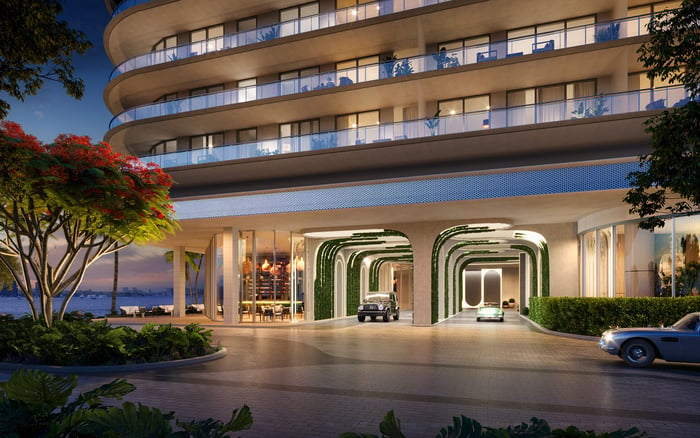
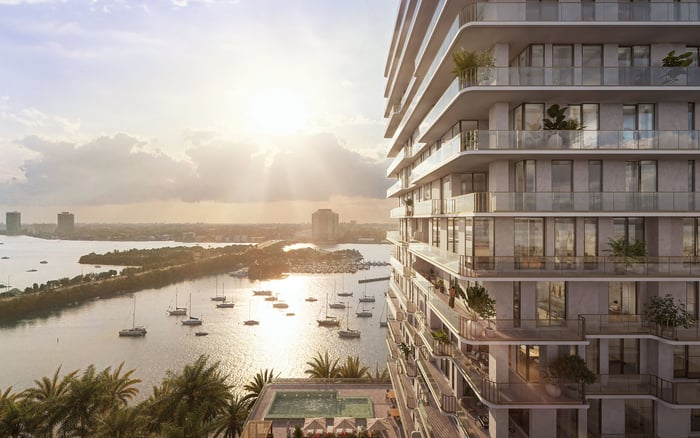
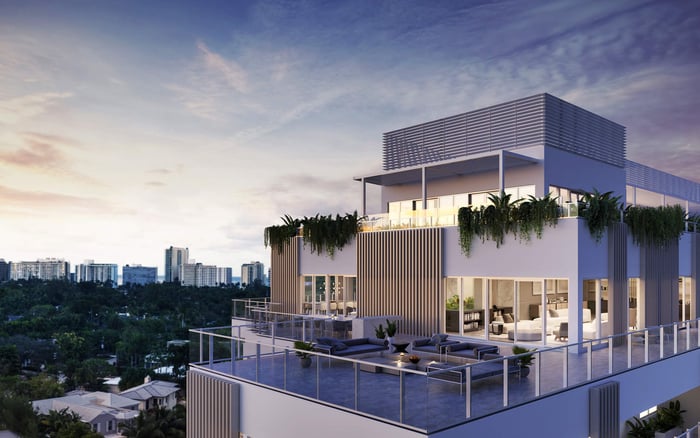
For buyers leaving Los Angeles, a North Bay Village purchase calls for a property-specific review of flood mapping, building elevation and the boundary between association insurance and personal protection.
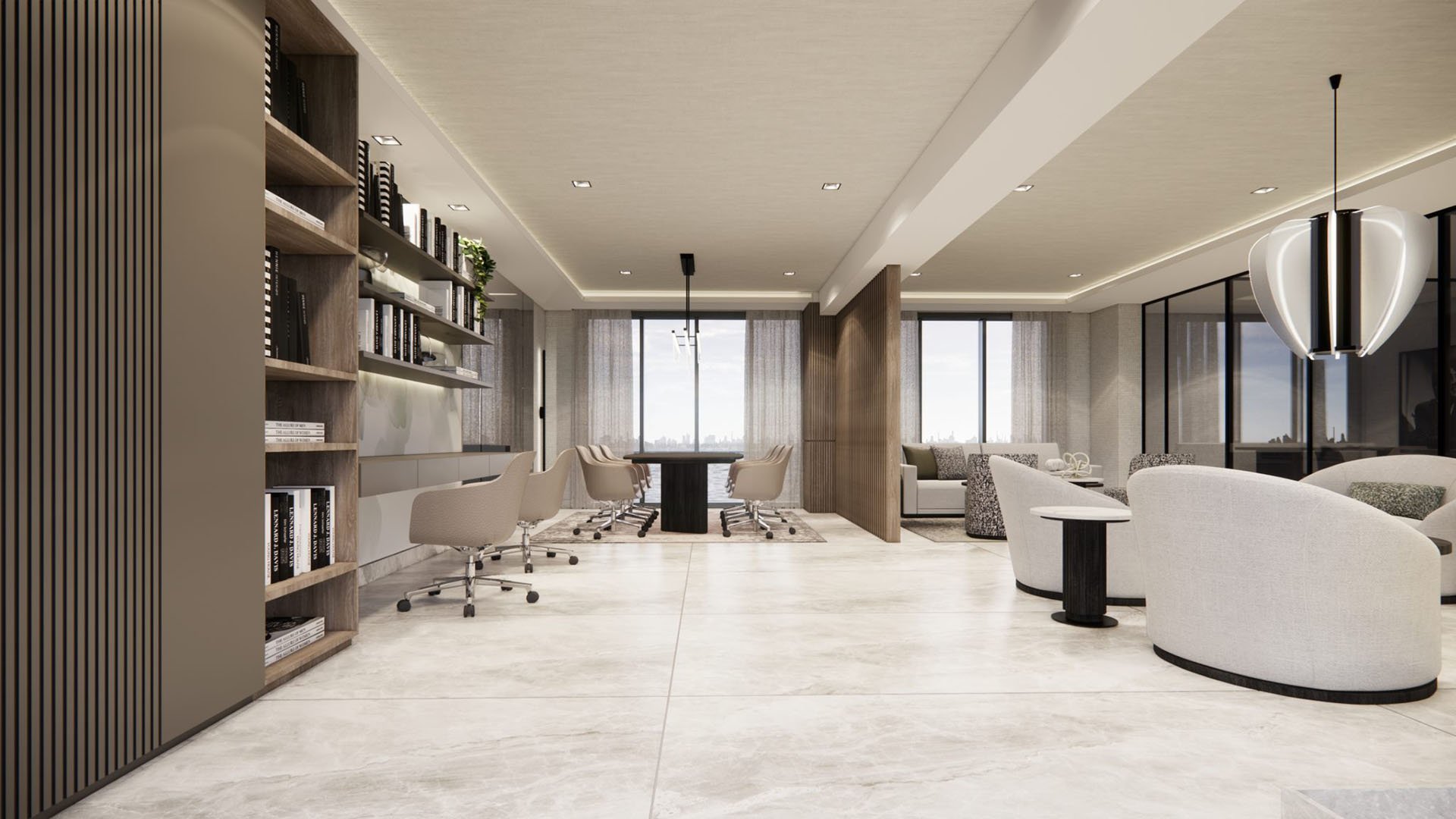
For a buyer leaving Los Angeles, choosing North Bay Village may begin with a vision of life beside the water. The more consequential purchase decisions, however, rest in the documents: the parcel’s current flood designation, the building’s measured elevation and the insurance provisions that define who covers what.
A refined residence should not come with an imprecise understanding of risk. A practical review moves from current flood mapping to mapped Base Flood Elevation, then to building elevation and association and owner-level coverage. This is a recommended diligence sequence, not a mandated procedure. Its purpose is to clarify the acquisition before the buyer commits.
For someone considering Continuum Club & Residences North Bay Village, that sequence offers a useful framework for requesting property-specific information. A project’s identity alone establishes neither its flood designation nor its insurance protection.
As of May 2016, all of North Bay Village was mapped as Zone AE. That is historical context, not a present-day determination for a particular address. In 2021, most of the village was described as Zone AE-another reason to verify the parcel rather than rely on a village-wide assumption.
Zone AE is a Special Flood Hazard Area associated with a 1% annual chance of flooding. The important word is annual. The designation describes a modeled hazard, not a schedule on which flooding occurs.
Ask the buyer’s team to obtain the property’s current official flood-map determination and identify the mapped Base Flood Elevation, or BFE. Keep that information with the acquisition documents so the insurance and elevation reviews begin from the same reference.
If the search also includes Miami Beach, repeat the exercise for each address. A determination for one location should not become a shortcut for another, even when both offer a similar waterfront lifestyle.
BFE describes the modeled floodwater elevation for the 1%-annual-chance event. It does not describe a building’s height, a residence’s terrace elevation or a unit’s floor number.
The BFEs identified in 2021 were 8-10 feet referenced to NGVD. Historical regional mapping used NAVD88. These are different vertical datums, or measurement reference systems. Figures expressed in them should not be compared directly without reconciling those systems.
A useful document request therefore asks for more than an elevation number. It should establish what was measured, which datum was used and how the building’s documented lowest-floor elevation relates to the applicable mapped BFE. Have a qualified professional reconcile any differences rather than subtracting figures that may not share a reference point.
For a buyer evaluating Shoma Bay North Bay Village, this distinction keeps the review focused: request the relevant building documentation rather than treating a residence’s position within the building as the answer to an elevation question.
An elevation requirement is separate from a measured elevation. In 2019, the local requirement for new or substantially improved residential buildings placed the lowest floor, including any basement, at least one foot above BFE. A separate local provision specifies two to four feet above BFE.
These figures do not establish a single, unambiguous current construction standard. Buyers should confirm the applicable requirement with the village for the specific building and scope of work. The historical one-foot provision should not be treated as a universal national flood-insurance rule.
The better question is not simply whether a building is elevated. It is which requirement applies, what the approved documentation establishes and whether the measurements use compatible datums. This avoids turning a historical code provision into an assurance about a present purchase.
Under Risk Rating 2.0 for residential condominium buildings, Elevation Certificates are no longer required for rating but remain an optional way to establish first-floor height. If a policyholder submits one, the rating system reviews available first-floor-height values and applies the value most beneficial to the policyholder.
An existing certificate is therefore worth requesting and discussing with the insurance professional. It does not guarantee a particular premium. Nor does the building’s first-floor-height treatment establish that an upper-floor unit automatically receives a lower premium.
When considering Tula Residences North Bay Village, apply the same distinction: ask what elevation documentation is available and how it relates to the proposed coverage. Do not substitute a floor-plan designation for building-level evidence.
The association’s master policy generally addresses the building and common areas, while an owner’s HO-6 policy addresses unit-level interests such as interiors. The precise boundary matters: HO-6 does not cover building components assigned to the master policy’s responsibility, and standard HO-6 insurance excludes flood.
Association insurance is therefore the beginning of the review, not its conclusion. Request declarations and complete policy forms, including applicable endorsements, and have the insurance professional establish:
What property the association coverage includes and where owner responsibility begins.
Whether flood coverage exists and which policy provides it.
The relevant limits, deductibles and exclusions.
Whether personal contents and interior improvements need separate flood protection.
Request claims or loss-history records separately. A declarations page is not a complete account of exclusions, nor does it substitute for prior-loss information.
For a residence with carefully selected finishes and furnishings, the concern is straightforward: identify which interests are insured, against which events and subject to which financial limits. Ask for a written explanation of unresolved coverage boundaries before treating the insurance review as complete.
Whether the residence will be a primary home or a second home, do not assume association insurance protects all personal contents or interior improvements against flood. Depending on the building and ownership arrangements, those interests may require separate coverage. Discuss appropriate flood and structural coverage with the insurance professional.
Before committing, assemble a concise decision file: current parcel mapping, mapped BFE and datum, available building-elevation evidence, confirmation of the applicable construction requirement, complete association policies and a unit-level coverage proposal. Keep unanswered questions visible until the appropriate professional resolves them.
Leaving Los Angeles need not mean importing assumptions about insurance costs or coverage. The sounder purchase rests on an address-specific review, with the pleasures of ownership matched by a clear understanding of its responsibilities.
For a considered approach to your North Bay Village search, connect with MILLION.
If branded residences are on your mind — as a home or as an allocation — we would be glad to share what we are seeing, privately.
Begin a quiet conversationHistorical mapping placed all of the village in Zone AE in May 2016, while in 2021 most of it was described that way. Verify the current designation for the specific parcel.
Zone AE is a Special Flood Hazard Area associated with a 1% annual chance of flooding. It describes a modeled hazard, not a schedule for flood events.
Base Flood Elevation is the modeled floodwater elevation for the 1%-annual-chance event. It is not the height of a building or the floor number of a residence.
NGVD and NAVD88 are different vertical reference systems. Elevation figures using them should be reconciled by a qualified professional before being compared.
The historical 2019 requirement specified at least one foot above BFE, while a separate local provision specifies two to four feet. Confirm the applicable current requirement with the village for the particular building and work.
Under Risk Rating 2.0 for residential condominium buildings, it is no longer required for rating but remains an optional way to establish first-floor height. When submitted, available height values are reviewed and the most beneficial value is applied.
The building first-floor-height rating guidance does not establish an automatic premium reduction for upper-floor units. Obtain a property-specific coverage proposal rather than assuming a discount.
Standard HO-6 insurance excludes flood. Depending on the building and ownership arrangements, personal contents and interior improvements may need separate flood protection.
Request declarations, full policy forms and applicable endorsements to establish insured property, limits, deductibles, exclusions and flood coverage. Obtain claims or loss-history records separately.
Do not assume it does: the master policy generally addresses the building and common areas, while owner coverage addresses different interests. Review the actual coverage boundary and any separate flood needs with an insurance professional.