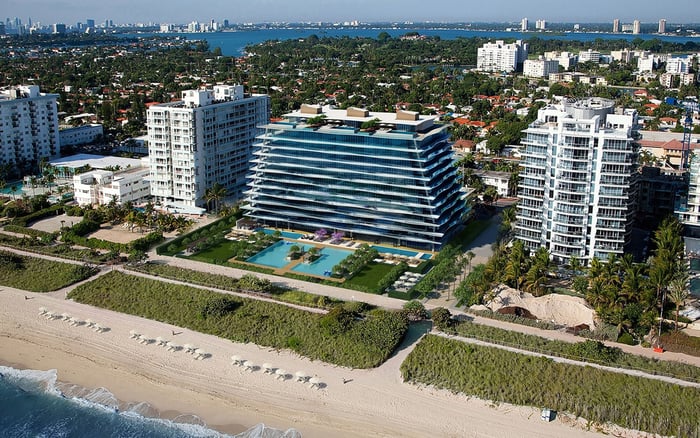
For buyers relocating from Greenwich, a Miami Beach home should be evaluated alongside a practical care plan. Concierge primary care, urgent care, in-home assistance, skilled services, transportation, and emergency procedures require separate decisions before closing.

Leaving Greenwich for Miami Beach can feel like an elegant simplification: warmer winters, waterfront living, and a residence designed for ease. Yet the most consequential considerations may extend beyond the floor plan. For buyers expecting to spend substantial time in South Florida, healthcare access deserves advance attention alongside insurance, ownership structure, and building operations.
The objective is not to anticipate every medical need. It is to establish a clear chain of access before that access becomes necessary. Primary care, urgent care, non-medical personal assistance, skilled nursing, therapy, transportation, and transitional support are separate service categories. Buyers should not assume that one physician relationship, membership, or household arrangement addresses them all.
That distinction matters whether the purchase is a full-time move or a second home. It is especially relevant for couples managing different physicians, prescriptions, mobility needs, or travel schedules. A considered plan identifies who handles routine care, what happens after hours, how urgent issues will be assessed, and who can enter the residence to assist after an illness or procedure.
The most resilient purchase pairs the right residence with a defined chain of care.
The first decision is usually the primary physician relationship. Buyers comparing concierge practices should request current terms directly and determine whether the model fits their expected time in Miami Beach. Proximity matters, but it should be weighed with continuity, communication preferences, scheduling expectations, and travel patterns.
Concierge medicine is a service model rather than a universal package. A buyer should ask whether the arrangement covers office appointments, remote consultations, after-hours communication, urgent needs, coordination with specialists, or visits to the residence. Insurance handling, geographic coverage, response expectations, and hospital relationships also require direct confirmation.
For someone evaluating The Perigon Miami Beach or another Miami Beach residence, the useful question is not simply whether a practice serves the broader area. It is whether the practice's access model suits the owner's routines, seasonal occupancy, and expectations for continuity.
Routine physician access does not replace an urgent-care option, and urgent care does not replace an emergency protocol. Buyers should identify appropriate local options and verify their current hours, services, and suitability directly before relying on them.
This distinction is relevant throughout the barrier island and neighboring communities. A buyer considering The Delmore Surfside should confirm care coverage for the exact residence rather than assuming that a provider serving the wider Miami area will offer the required access.
Before occupancy, document whom to contact after hours, what information should accompany the patient, who can meet a spouse or family member, and how building staff should respond if authorized access to the residence is required. Keep current medication, physician, allergy, and emergency-contact details in a secure but readily accessible place.
This preparation is particularly important when adult children, household managers, or advisers live elsewhere. A verbal understanding can be fragile. A concise written protocol gives authorized participants consistent instructions and can be revised as physicians, medications, or seasonal occupancy change.
Aging in place is not merely an architectural concept. It is an operating plan for remaining at home as daily needs evolve. Non-medical assistance may focus on personal routines and household support, while licensed clinical services occupy a different category. Buyers should distinguish the roles clearly and verify which services each provider is qualified to deliver.
The residence itself should accommodate support discreetly. Consider the path from vehicle arrival to the front door, elevator access, bathroom circulation, bedroom access, space for a caregiver, and the way household staff would coordinate authorized visitors, deliveries, or therapy appointments. These are due-diligence questions rather than predictions. They protect autonomy and preserve options.
The same lens applies in Bal Harbour, where a buyer considering Rivage Bal Harbour can evaluate the residence alongside provider coverage, transportation logistics, and building access procedures. Luxury is most valuable when a home's operations can adapt without unnecessary disruption.
Building rules deserve particular attention. Buyers should ask how authorized caregivers and medical visitors are admitted, whether service elevators affect access, how temporary mobility equipment would be handled, and whom household representatives should contact when the owner is away. Any answer that may influence the purchase should be confirmed with the appropriate building representative.
A complete framework should address a primary physician, an urgent-care option, an emergency protocol, non-medical assistance, skilled home-health support, and backup transportation. Assign primary and secondary contacts where appropriate, then verify that each selected provider serves the exact address.
For concierge practices, request the current membership scope and clarify office, remote, after-hours, urgent, and residence access. For in-home support, distinguish personal assistance from licensed clinical services, ask how assessments are arranged, and confirm scheduling expectations. Transportation planning should cover routine appointments as well as situations in which the owner may need accompaniment.
This framework also brings greater precision to the real-estate search. Healthcare readiness can sit alongside privacy, service, layout, and carrying costs. It is part of lifestyle planning rather than an afterthought. A beautiful home becomes a more durable choice when its location, building procedures, and interior layout can support the owner through changing circumstances.
The final step is documentation. Keep the plan concise, share it only with appropriate family members and advisers, and review it after meaningful changes in health, occupancy, or provider relationships. Before closing, verify current terms, availability, service areas, and building procedures directly.
For discreet guidance on aligning a South Florida residence with long-term priorities, connect with MILLION.
If branded residences are on your mind — as a home or as an allocation — we would be glad to share what we are seeing, privately.
Begin a quiet conversationAdvance planning gives buyers time to evaluate care access, transportation, and building procedures before those resources are needed.
No. Membership scope and access terms vary, so buyers should confirm each practice's current arrangements directly.
Yes. They serve different needs and should have distinct contacts, instructions, and procedures.
Ask about office access, remote consultations, after-hours communication, insurance handling, geographic coverage, and coordination expectations.
Serving the broader Miami area does not necessarily confirm access at a specific Miami Beach, Surfside, or Bal Harbour address.
Buyers can evaluate arrival routes, elevators, bathroom circulation, bedroom access, caregiver space, and visitor procedures.
Skilled home health involves licensed clinical services, while personal assistance generally focuses on daily routines and non-medical support.
Include authorized contacts, physician and medication information, access instructions, transportation details, and responsibilities for household representatives.
Visitor admission, elevator use, staff coordination, and authorized entry can affect how care is delivered at the residence.
Review it after meaningful changes in health, occupancy, providers, medications, transportation, or building procedures.