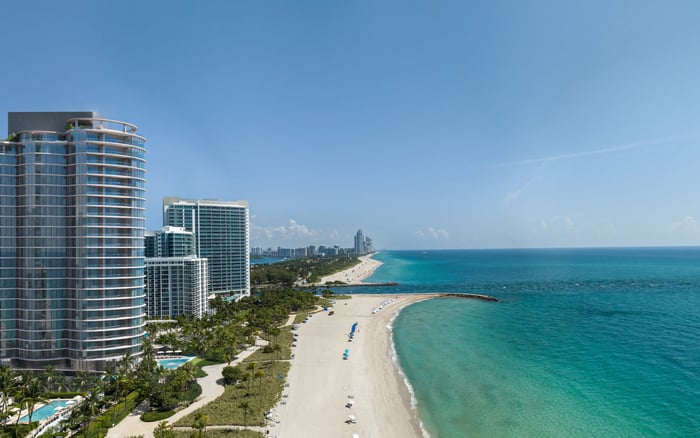
For Boston buyers considering Bal Harbour, a seasonal residence and a permanent move lead to different property-tax outcomes. Understand the homestead residency test, why Massachusetts tax history is not portable, and why deed decisions deserve review before closing.

A Boston-to-Bal Harbour purchase can represent two very different decisions: acquiring a seasonal retreat or establishing a permanent Florida home. That distinction matters more to homestead eligibility than the property's price, design, or form of ownership. A conventional second home generally does not qualify for Florida's property-tax homestead exemption.
For a buyer considering Oceana Bal Harbour, the first planning question is not how much tax relief might be available. It is whether the residence will genuinely become the permanent home. Homestead eligibility, Save Our Homes portability, and deed ownership are separate questions that should be resolved together before closing.
A disciplined approach starts with budgeting for the intended use, establishing whether any prior Florida benefit exists, and having the proposed title structure reviewed before signing the deed.
Florida homestead eligibility generally requires legal or beneficial title and qualifying permanent residence as of January 1. The residence may be that of the owner or a person legally or naturally dependent on the owner. Owning a condominium and spending part of the year there does not, by itself, satisfy that test.
If Boston remains the permanent home and Bal Harbour remains a seasonal address, a prudent acquisition budget excludes Florida homestead exemption and Save Our Homes portability. Individual ownership does not change that conclusion, nor does placing both spouses on the deed.
For a residence under consideration at Rivage Bal Harbour, separate the lifestyle decision from the eligibility decision. A purchase can be compelling without qualifying for homestead. The carrying-cost analysis should not depend on a benefit the intended use cannot support.
Moving permanently from Boston can support eligibility for a new Florida homestead, provided the ownership, residency, and other applicable requirements are met. The key distinction is between intending to relocate eventually and having established the qualifying residence by January 1 of the relevant year.
For Bal Harbour, Miami-Dade's property appraiser determines eligibility. The application requests ownership and residency information, and the filing should align with documentary evidence of the applicant's actual permanent residence. Address that consistency during purchase planning rather than deferring it until the application deadline.
A Florida declaration of domicile documents an established domicile. It does not substitute for actually making Florida the permanent home. The general March 1 filing deadline is also distinct from the January 1 eligibility date. One governs submission of the application; the other concerns the qualifying circumstances.
Homestead eligibility and portability are separate tests. A buyer can qualify for a new Florida homestead yet have no Save Our Homes benefit to transfer. A Massachusetts homestead exemption or Boston property-tax history cannot be carried into Florida through this program.
Save Our Homes generally limits annual increases in an established Florida homestead's assessed value to the lower of 3% or the applicable Consumer Price Index change, subject to statutory rules. This is an assessed-value limitation, not a promise that the entire tax bill will rise by the same percentage.
Portability concerns all or part of an accumulated assessment difference from a previous Florida homestead. It does not transfer the old exemption itself. A permanent move from Boston creates no prior Florida assessment benefit on its own.
For a household that previously held a qualifying Florida homestead, the analysis is different. Identify that property and its eligible assessment benefit rather than treating the Boston residence as the starting point for portability.
The portability window generally requires establishing the new homestead within three years of January 1 of the year the previous Florida homestead was abandoned. It is not simply a three-year period measured from the next purchase contract or closing.
Buyers seeking portability file the new homestead application, DR-501, together with the assessment-difference transfer application, DR-501T. The general deadline is March 1 of the year for which the new exemption and portability are requested.
Before relying on a transfer in the budget, have the relevant abandonment year, new homestead year, and eligible assessment difference reviewed. Confirming these details early keeps a potential tax benefit from becoming an unsupported assumption in the acquisition model.
An existing owner's assessment is not a guaranteed starting point for the next owner. A qualifying change in ownership can remove existing Save Our Homes protection and trigger reassessment at just value on the following January 1.
The same caution applies after closing. Florida's change-of-ownership rules address transfers of legal or beneficial title, although exceptions apply to certain transactions. Adding or removing a person from the deed can therefore have assessment consequences. Neither a family relationship nor an estate-planning purpose proves that a proposed change preserves the benefit.
Ask for a buyer-specific assessment review rather than carrying the seller's tax history into the ownership budget. This distinction is especially important when the purchase decision assumes ongoing homestead protection.
Individual, spousal, trust, and entity ownership warrant Florida legal review before selection. A desire for homestead treatment alone cannot determine the appropriate structure. Property-tax homestead, creditor protection, and inheritance rights are distinct issues; advice addressing one should not be assumed to resolve the others.
For spouses relinquishing ownership of property they co-owned while married, an existing Save Our Homes assessment differential may be divided and the allocated shares ported to new homesteads, subject to applicable requirements. This provision concerns an existing Florida benefit. It does not create portability for a Boston residence or a nonhomesteaded Bal Harbour condominium.
Have counsel review both the initial deed and any contemplated later transfer. Choose title deliberately rather than assuming an adjustment after closing will be tax-neutral.
If the search expands to Surfside and Ocean House Surfside, retain the same sequence: intended use, eligibility date, prior Florida benefit, filing calendar, and deed review. Changing the residential shortlist does not replace the permanent-residence test.
For a continuing second home, budget without homestead or portability. For a genuine permanent move, evaluate new homestead eligibility separately from any transferable assessment benefit. In either case, confirm the applicable tax-year exemption amount rather than relying on a familiar headline figure.
For a considered approach to your South Florida residential search, explore MILLION.
If branded residences are on your mind — as a home or as an allocation — we would be glad to share what we are seeing, privately.
Begin a quiet conversationGenerally not. The property must be a qualifying permanent residence, rather than merely a seasonal address.
Eligibility generally requires legal or beneficial title and qualifying permanent residence for the owner or a person legally or naturally dependent on the owner.
Miami-Dade's property appraiser determines eligibility. The application should accurately reflect ownership and actual permanent residence.
No. A declaration documents an established domicile but does not replace actually making Florida the permanent home.
No. Florida's Save Our Homes portability program requires an eligible assessment benefit from a previous Florida homestead.
It generally limits annual increases in an established homestead's assessed value to the lower of 3% or the applicable Consumer Price Index change, subject to statutory rules.
Portability transfers all or part of an eligible accumulated assessment difference from a previous Florida homestead, not the old exemption itself.
The new homestead generally must be established within three years of January 1 of the year the previous Florida homestead was abandoned.
Buyers file DR-501 for homestead and DR-501T for the assessment-difference transfer. The general deadline is March 1 of the year for which the benefits are requested.
Yes. Transfers of legal or beneficial title, including adding or removing an owner, can have assessment consequences, although exceptions apply to certain transactions.