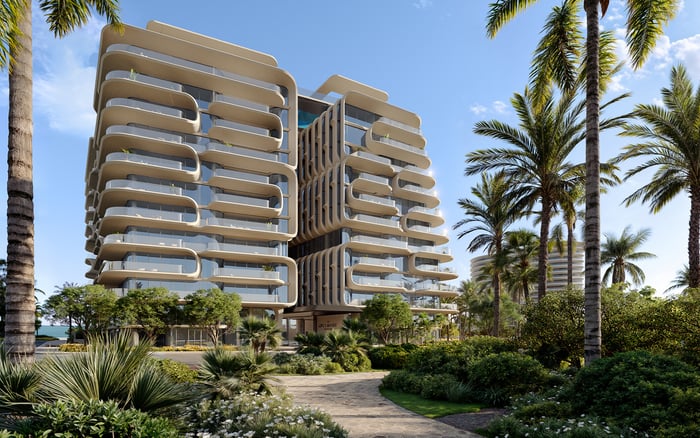
A buyer-oriented review of vacancy planning at The Delmore Surfside, focused on humidity targets, moisture prevention, remote alerts, and the written responsibilities that make second-home ownership more reassuring.

A second home should feel effortless on arrival. Preserving that experience through an extended absence requires something less visible than beautiful finishes: a clear moisture-management plan. For a buyer considering The Delmore Surfside, the question is not simply whether the residence can remain cool. It is whether humidity can be measured, controlled, and acted upon while the owner is elsewhere.
This is a technical due-diligence review, not a firsthand inspection or a certification of building performance. Treat HVAC design, installed sensors, monitoring services, and vacancy procedures as items requiring written confirmation. The aim is to understand what the residence does automatically, what requires owner action, and who can intervene locally.
Second-home confidence rests on three connected elements: moisture control, reliable information, and an authorized response. A reassuring thermostat display addresses only part of that equation.
Keep indoor relative humidity below 60%, ideally within 30%-50%. For controlling mold and dust mites in a South Florida residence, levels below 50% are preferred. These are general moisture benchmarks, not a universal thermostat prescription.
Air conditioners and dehumidifiers can remove moisture, but temperature alone does not establish that humidity is controlled. A vacancy plan should identify both the temperature setting and the relative-humidity target, with a qualified HVAC professional confirming how the installed equipment will maintain them together.
A suggested relative-humidity operating range of 45%-55% is distinct from the preferred range above and should not be treated as a guarantee against mold. Likewise, 80°F-82°F with humidity control active is a possible setting to discuss for vacations longer than a week, not a Delmore-approved setting or a rule suitable for every residence.
The buyer's request should be specific: obtain a written vacancy setting for the actual system, along with instructions for responding if humidity rises. Simply lowering the thermostat should not substitute for investigating excessive humidity. If central air-conditioning cannot maintain humidity below 60%, have the system checked for problems.
Before relying on proposed settings, ask whether humidity is controlled independently or through cooling operation, what equipment serves the residence, and which controls the owner can adjust remotely. Request an explanation of any installed humidistat and how its settings interact with the thermostat.
For a Surfside buyer also considering Ocean House Surfside, the same questions provide a useful basis for comparison without assuming the buildings share equipment or services. Compare documented capabilities rather than the language used to describe convenience.
Ask for the maintenance requirements for condensate drainage and safety devices. HVAC drip pans should remain clean, unobstructed, and able to drain properly. Confirm who inspects them, who services the drainage system, and whether an installed condensate safety switch produces a notification the owner or local representative can receive.
Finally, request a demonstration of the proposed vacancy configuration. An explanation at handover is valuable; a written operating sequence gives the owner and caretaker a shared reference after departure.
A useful monitoring arrangement should answer three questions: what is being measured, who receives a warning, and who responds. Ask whether any installed system displays relative humidity as well as temperature, retains readings for review, and indicates when a device stops communicating. Confirm these capabilities rather than assuming they come with a smart thermostat.
A 55% relative-humidity early-warning alert is a possible operating suggestion to discuss with the HVAC professional. It is not a universal alert standard, a Delmore requirement, or a substitute for selecting an appropriate operating target. Agree on how to distinguish a brief fluctuation from a condition requiring investigation.
Before leaving, confirm that installed humidistats, smart thermostats, condensate safety switches, and water sensors are powered and functioning correctly. Test communication wherever available, and ask the service provider to demonstrate delivery of applicable alerts to the intended recipients.
When comparing a residence at Rivage Bal Harbour, apply the same standard: a remote notification should trigger an agreed action, not merely appear on a phone. Ask in writing who receives leak alerts, who can enter, and how response arrangements work when the owner cannot be reached.
Humidity management does not eliminate moisture from a plumbing leak or other direct water intrusion. Repair leaks promptly and establish who can arrange inspection and drying without waiting for the owner's return. Drying wet materials within 24-48 hours helps prevent mold growth; this is a reason for prompt action, not a waiting period or a guarantee.
The departure review should also address moisture-producing activities. Confirm that bathroom and cooking-area exhaust routes moisture outdoors, and that clothes dryers vent outdoors where possible. Ask a qualified professional to resolve any uncertainty about the installed arrangements.
Do not assume that opening the residence to outside air will solve a humidity problem. When outdoor air is warm and humid, dehumidification is preferable to relying on ventilation for moisture reduction. Have the vacancy instructions distinguish everyday exhaust use from any proposed ventilation strategy during an absence.
A second-home plan is incomplete until responsibilities are assigned. Request written clarification of owner-versus-association duties for equipment service, condensate issues, leak investigation, and any monitoring subscription. Confirm emergency access, permission to install devices, and authority to engage contractors rather than inferring them from the service offering.
Apply the same discipline when comparing The Perigon Miami Beach. Evaluate the actual written arrangements at each property; do not assume equivalent maintenance coverage or remote supervision.
A concise departure record can capture the agreed settings, current humidity reading, equipment checks, alert recipients, and authorized local contact. Ask the caretaker and relevant service providers to agree on inspection arrangements and escalation steps. The objective is not an elaborate dashboard. It is a clear chain of responsibility when something changes.
For The Delmore Surfside, the decisive vacancy questions are practical: can the installed system maintain the agreed humidity target, can the owner verify conditions remotely, and can someone act locally with permission? Request the equipment documentation, an operating demonstration, and the written responsibility schedule before treating those questions as resolved.
Luxury ownership should make absence less demanding, not make maintenance invisible. A documented moisture-control plan offers a more meaningful basis for confidence than a cool interior during a showing.
For a discreet perspective on South Florida second-home ownership, explore MILLION.
If branded residences are on your mind — as a home or as an allocation — we would be glad to share what we are seeing, privately.
Begin a quiet conversationKeep relative humidity below 60%, ideally within 30%–50%. Levels below 50% are preferred for controlling mold and dust mites in a South Florida residence.
No. Temperature alone does not establish moisture control, so the vacancy plan should include relative-humidity measurements.
Do not treat it as a Delmore-approved setting. It is a possible setting to discuss for extended vacations with humidity control active, and the actual residence needs a system-specific recommendation.
Simply lowering the thermostat should not substitute for investigating excessive humidity. If central air-conditioning cannot maintain humidity below 60%, have the system checked.
No. It is a proposed early-warning setting to discuss with the HVAC professional, separate from the operating target.
Confirm which conditions are measured, whether applicable devices communicate reliably, and who receives alerts. Obtain written clarification of local response and emergency access arrangements.
Check installed humidistats, smart thermostats, condensate safety switches, and water sensors for power and correct operation. Test communication and alert delivery wherever those functions are available.
No. Direct water intrusion requires prompt repair and drying, regardless of the indoor humidity setting.
Drying wet materials within 24–48 hours helps prevent mold growth but is not a guarantee. Act promptly rather than treating that period as permission to delay.
Obtain written confirmation of owner-versus-association duties, contractor authority, and local access arrangements. Do not assume that monitoring or vacancy care is included.