Aria Reserve Miami’s documented watersports storage should not be confused with conditioned private owner storage. For second-home buyers, environmental specifications, inventory records and representative access remain essential points to confirm in writing.
For a seasonal owner, a residence must work as gracefully during an absence as it does on arrival. At Aria Reserve Miami, the practical question is not simply whether storage appears among the amenities. It is whether a defined space can accommodate permitted belongings under specified environmental conditions, with reliable access when the owner is elsewhere.
The distinction matters: watersports storage is documented; conditioned private owner storage, item-level inventory controls and arrangements for extended absences remain unverified. That does not establish that these services are unavailable. It means buyers should not treat them as settled provisions of ownership.
For an Edgewater second home, a useful review separates waterfront amenities from the operational commitments needed to leave possessions behind. Those commitments should be confirmed for the specific residence and tower before they inform a purchase decision.
Aria Reserve’s advertised offering includes paddleboard service with storage and access to a private bayside dock. Kayak service and storage within the watersports marina have also been described. These are equipment-specific provisions, not evidence of a general-purpose private owner locker.
Those provisions do not establish permission to store luggage, furniture, wine, artwork or electronics. Buyers should not interpret a recreational amenity as a household service without written confirmation of accepted items, allocation and capacity.
A package room is also listed among the building’s features, but package receipt is not a provision for long-term storage. Confirm collection deadlines, handling arrangements and restrictions before planning deliveries during an absence.
Waterfront living may make watersports storage particularly appealing. Its value should nevertheless be assessed separately from where personal possessions can remain between visits.
The stated amenities do not specify owner-storage air conditioning, humidity control or guaranteed temperature and relative-humidity ranges. “Conditioned” should therefore prompt a request for measurable specifications, not an assumption attached to an enclosed room.
First, establish whether dedicated owner-storage space exists and is available to the residence under consideration. Then request its location, dimensions, permitted contents and environmental specifications. Ask separately about cooling and humidity management: how conditions are monitored and who responds when they fall outside any stated range.
For extended absences, request available monitoring logs and written emergency procedures. These should clarify notification, responsibility for inspecting contents and authority to move possessions. Ask what happens during a power loss or interruption to environmental systems; do not assume backup protection exists.
A buyer also considering EDITION Edgewater can apply the same questions there. This is a comparison standard, not a claim that either property supplies a particular storage service.
The documented storage offering does not establish barcode logging, photographic condition records or check-in/check-out records. Those details matter whenever someone other than the owner may receive, move or retrieve an item.
If managed storage is offered, request a sample inventory record. A useful record would identify the item, its location, its condition at acceptance and the person responsible for each transfer. Ask whether owners can obtain copies remotely and whether records remain available after an item is removed.
Distinguish staff-managed custody from an owner-controlled locker. The former raises questions about handling and release procedures; the latter about keys, credentials and authorized entry. Neither model should be assumed from the word “storage.”
If item-level records are not provided, consider maintaining a personal photographic inventory. That is a buyer precaution-not evidence of a building service or a substitute for an agreed custody arrangement.
Storage-access hours, authorization for an owner’s representative and staff handling during extended absences are not established by the documented offering. For an owner spending months elsewhere, these are central operating questions.
Ask whether a designated property manager can inspect or retrieve permitted belongings without the owner present. Obtain the required authorization form, identification requirements and rules for renewing or revoking access. Clarify whether permission covers inspection, removal, delivery or all three.
Operating rules should distinguish routine access from urgent requests. Confirm appointment requirements, escort procedures, after-hours restrictions and charges. Ask whether entries and removals are logged and whether the owner receives a notification or receipt.
Finally, establish the limits of staff responsibility. Permission to enter a space does not necessarily include unpacking, photographing, transporting or accepting custody of possessions. If a representative will perform these tasks, agree on the scope before departure rather than negotiating it from another time zone.
Aria Reserve South and Aria Reserve North have separate identified developer entities: South Park Tower LLC and North Park Tower LLC, respectively. Buyers should ensure that storage representations and agreements apply to the correct tower, residence and responsible operator.
The project addresses also require clarification: both 725 NE 24th Street, Miami, FL 33137, and 700 NE 24th Street are listed. Confirm the applicable address for the specific tower, contractual paperwork and delivery instructions rather than choosing one by assumption.
Request the condominium documents and any separate storage agreement. Have counsel clarify whether storage is included, separately charged, assigned to the residence or subject to a revocable arrangement. Review fees, assignment and transfer terms, termination rights, insurance limits and responsibility for loss or damage.
Current specifications and operating rules can be requested through [email protected] or +1 (305) 800-8888. Ask which entity will confirm the terms in writing and administer them after purchase.
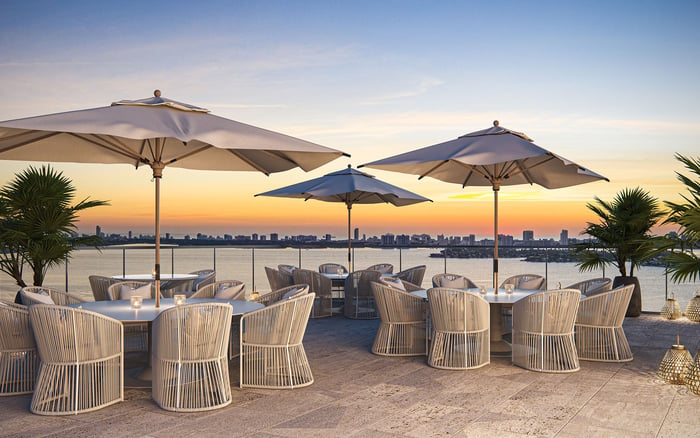
Aria Reserve’s advertised amenities span more than two acres and include a private watersports marina, alongside an entire floor devoted to sports, family activities, socializing, relaxation and fitness. These provisions describe the experience of being in residence. They do not, by themselves, establish how possessions are protected while an owner is away.
For buyers weighing Villa Miami as another option, keep amenity appeal and absence-management requirements in separate columns. Apply the same storage checklist without assuming equivalent provisions at either address.
The verdict is conditional. Watersports storage is a documented amenity; general-purpose conditioned storage and its associated controls still require confirmation. If those services are essential to your ownership plan, resolve them before committing. If the terms do not meet your needs, evaluate an independently arranged alternative.
For a considered approach to your next South Florida residence, explore MILLION.
If branded residences are on your mind — as a home or as an allocation — we would be glad to share what we are seeing, privately.
Begin a quiet conversationThe documented amenities do not establish dedicated, general-purpose conditioned owner storage. Availability and environmental specifications should be confirmed in writing for the particular residence and tower.
The described watersports offering includes paddleboard service with storage and access to a private bayside dock. Kayak service and storage have also been described.
The documented watersports offering does not establish permission to store household belongings. Buyers should obtain written rules for accepted items before relying on that space.
A package room is listed, but that does not establish long-term, climate-controlled storage for personal possessions. Collection deadlines and handling rules require separate confirmation.
The stated amenities do not specify guaranteed temperature or relative-humidity ranges for owner storage. Request written environmental specifications and available monitoring logs.
The documented storage description does not establish barcode logging, photographic condition records or check-in/check-out records. Ask for the actual procedures and a sample record if managed storage is offered.
Representative access is not established by the documented offering. Confirm authorization forms, identification requirements, permitted activities and access logs before departure.
Request the condominium documents, any storage agreement and written operating rules. Review fees, assignment and transfer terms, permitted contents, insurance limits and responsibility for loss or damage.
The project addresses noted in this review are 725 NE 24th Street and 700 NE 24th Street. Confirm the applicable address for the specific tower, paperwork and deliveries.
The project contact is [email protected] or +1 (305) 800-8888. Request tower-specific written specifications and confirmation of the entity responsible for operating any storage service.