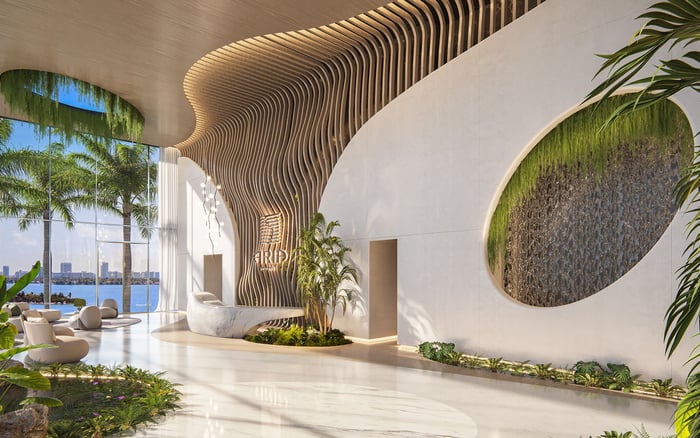
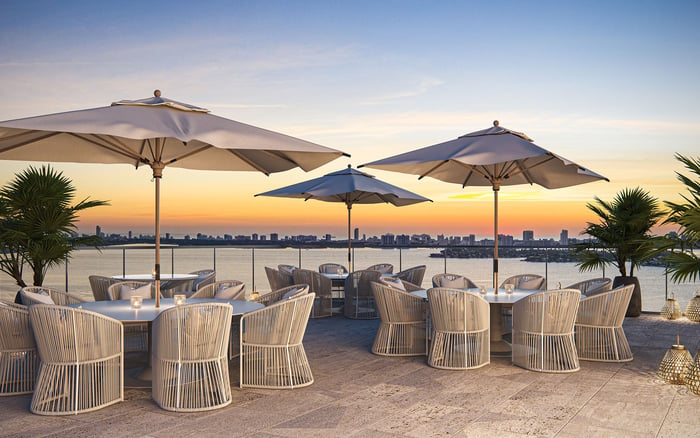
For Toronto buyers considering an Edgewater second home, hurricane readiness belongs in the purchase decision. Clarify what standby power serves, authorize local assistance, and distinguish a post-storm assessment from a municipal inspection before relying on a residence from afar.

For a Toronto buyer considering Edgewater, the most consequential luxury may be confidence that the residence can be managed while its owner is elsewhere. Views and interiors shape the arrival experience. Hurricane planning determines whether an absence remains manageable when power, access, or communications become uncertain.
The purchase conversation should extend beyond whether a building has a generator. Establish what it powers, who maintains it, who may enter the residence, and how damage will be assessed after a storm. Backup power is a defined service, not a promise of uninterrupted living.
For a buyer considering Aria Reserve Miami, these questions belong alongside the floor plan and ownership documents. The same diligence applies to every candidate property; a project name alone establishes neither generator coverage nor emergency procedures.
Request a written description of the systems connected to standby power. Separate common-area and life-safety functions from service inside the apartment. Elevators, pumps, lighting, access controls, refrigeration, air-conditioning, and selected outlets belong on a checklist as questions, not assumed benefits.
Then establish the operating limits. Which equipment can run simultaneously? What fuel arrangements support the stated operation? Who decides which equipment takes priority or is shut down? Request supporting operating documents rather than relying on a broad description such as “full backup.”
When evaluating EDITION Edgewater, ask the same unit-specific questions rather than inferring resilience from branding or finishes. Written confirmation should distinguish installed capabilities from proposed provisions.
Compare documented services. A building that clearly explains a limited standby system gives an absentee owner a sounder basis for planning than an expansive but undefined assurance. Do not assume backup power reaches individual units.
A permanently installed generator in Miami-Dade requires a permit, generally with professionally prepared plans addressing the equipment, fuel system, electrical work, and applicable environmental requirements. For an Edgewater property, confirm the City of Miami permitting process and which county installation requirements apply to the specific work.
Under the applicable county provisions, a portable generator used only for a few appliances and lights connected directly to it does not require a building permit. Connecting that generator to a building's electrical system is different: an electrical permit and an approved transfer or interlock arrangement are required.
Neither distinction establishes a condominium owner's right to install or operate private equipment. Obtain written confirmation of association restrictions and identify who controls fuel, exhaust, installation, and maintenance. The post-storm provisions for portable generators of 5 kW or less are not a blanket exemption for associated electrical connections, fuel installations, or other work.
Portable generators must operate outdoors in a well-ventilated location away from building openings to reduce carbon-monoxide exposure. A private terrace is neither automatic permission nor proof of a suitable location.
For an Edgewater purchase, generator location deserves attention alongside capacity. Equipment, remote fuel-fill ports, and tank tops generally must satisfy applicable flood-elevation requirements. Designs with components below those elevations must address floodwater, hydrostatic, hydrodynamic, and buoyancy forces.
Ask the relevant design professional to explain the applicable elevation and how the installed system meets it. The apartment's floor level is no substitute for an assessment of building equipment.
For permanent-generator installations subject to the applicable county criteria, exhaust termination requires clearances of 10 feet from operable openings and property lines, and 10 feet above adjoining grade. The applicable expedited installation criteria also require an identified emergency shutoff at least 20 feet from the generator, with signage and visibility for approaching emergency personnel.
These are scope-specific installation criteria, not universal instructions for every existing condominium. Request documentation of the applicable design and ask how responders reach the shutoff and equipment areas. Screening may also be required for permanent generators in residential districts.
A Toronto owner should consider appointing a locally authorized manager, with written entry permission and a clear spending limit for urgent repairs. These are recommended ownership arrangements, not statutory requirements established here.
Agree on who holds access credentials, how building management recognizes that person's authority, and who acts if the primary contact is unavailable. Clarify procedures for contractors, emergency personnel, and owner representatives separately. Written permission does not override official restrictions or building safety decisions.
For a residence under consideration at Villa Miami, make access part of purchase diligence rather than a task deferred until departure. Ask for the applicable building protocol without assuming any particular arrangement is available.
Remote monitoring may supplement this plan, but it should not be the sole means of oversight. Decide how updates will be delivered if normal communications are interrupted. Establish who can authorize a qualified professional to assess a concern once access is permitted and safe.
A generator deserves a maintenance file, not simply a place in an amenities description. A maintenance contract and at least one service annually, commonly before hurricane season, are recommended. Request the latest service record and confirmation of who arranges follow-up work.
Aboveground fuel tanks, pipes, and valves should be inspected regularly for cracks or leaks, with damaged components replaced promptly. Ask who performs those checks and who controls refueling access.
For household fuel storage, the recommendation is to use approved containers holding five gallons or less, kept in a cool, dry, ventilated, secure location away from appliances and children. This is not permission to store fuel in a condominium; building restrictions and the proposed installation still require review.
After a storm, distinguish the manager's initial damage assessment from a municipal permit inspection. An authorized representative can arrange documentation of visible conditions when entry is permitted and safe. That assessment does not establish structural safety or replace required professional evaluations and inspections.
Within the City of Miami's post-storm permitting process, inspections may be scheduled within 24-48 hours of a request, weather and safety permitting. Virtual inspections or extended hours may be available where feasible. This conditional scheduling window does not guarantee a timeline for inspection completion, repair, or re-entry.
Before returning from Toronto, seek confirmation of access conditions, available building services, and any unresolved work affecting the residence. The objective is not an assurance that nothing will happen. It is a documented plan for who acts, what remains operational, and which decisions require professional approval.
For a considered approach to an Edgewater second-home purchase, explore MILLION.
If branded residences are on your mind — as a home or as an allocation — we would be glad to share what we are seeing, privately.
Begin a quiet conversationNo. Obtain a written description of the common systems and individual-unit circuits served rather than assuming standby power reaches the residence.
Miami-Dade requires a permit, generally with professionally prepared plans covering equipment, fuel, electrical work, and applicable environmental requirements. Confirm the permitting jurisdiction and requirements for the specific property.
Connecting a portable generator to a building's electrical system requires an electrical permit and an approved transfer or interlock arrangement.
No. Portable generators require an outdoor, well-ventilated location away from building openings, and a terrace does not automatically satisfy safety criteria or condominium rules.
No. The provision should not be treated as a blanket exemption for electrical connections, fuel installations, or other associated work.
The apartment's floor level does not establish protection for building equipment. Generator equipment, fuel-fill ports, and tank tops generally must meet applicable flood-elevation requirements or have designs addressing the relevant flood forces.
Consider a locally authorized manager, written entry permission, urgent-repair authority, and backup contacts. These are recommended arrangements, and they do not override official access restrictions or building safety decisions.
A maintenance contract and at least one maintenance service annually, commonly before hurricane season, are recommended. Aboveground fuel tanks, pipes, and valves should also be checked regularly for cracks or leaks.
No. A manager's assessment can document visible conditions but does not establish structural safety or replace required professional evaluations and municipal permit inspections.
No. Inspections may be scheduled within that window after a request, weather and safety permitting; it is not a guaranteed completion, repair, or re-entry timeline.