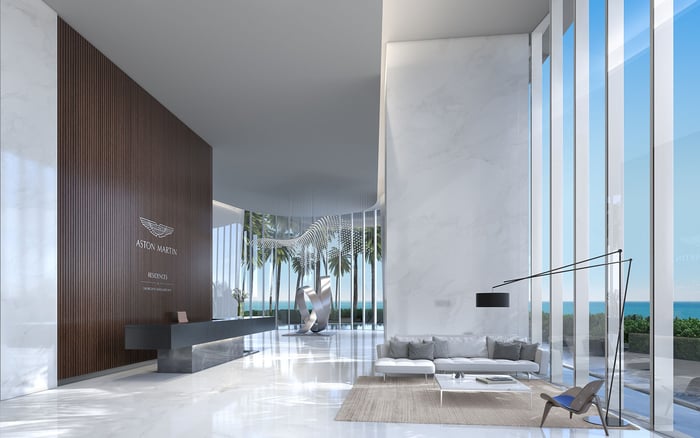
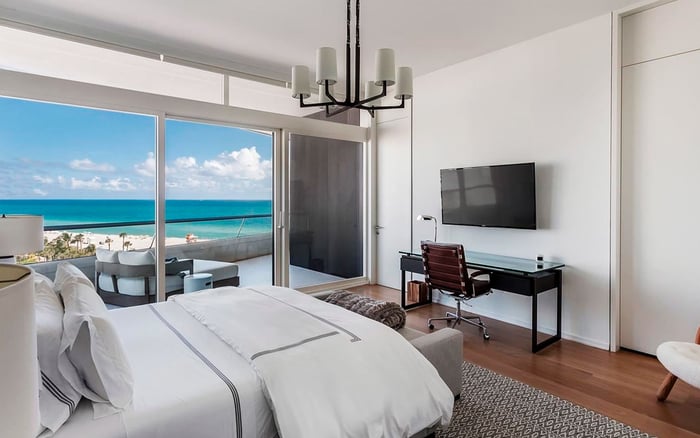
A disciplined reserve strategy for a South Florida exchange residence separates tax qualification from rental permissions, recurring ownership costs, private services, and capital exposure.

A South Florida residence acquired through a tax-deferred exchange calls for two distinct reviews: whether it supports the intended investment use, and whether its annual cash requirements remain manageable without optimistic rental assumptions. A compelling address cannot resolve either question.
For the private client, a reserve is more than an estimate of bills. It is a liquidity plan that separates recurring ownership expenses from capital exposure, financing, and discretionary services. Tax deferral does not make ownership self-funding. Establish the investment framework first, then price the residence’s operating obligations before deciding which lifestyle benefits belong in the budget.
The dwelling-unit replacement-property safe harbor requires ownership for at least 24 months immediately after the exchange. During each of the two 12-month periods following the exchange, the dwelling must be rented to another person at fair rental value for at least 14 days.
Personal use during each qualifying period cannot exceed the greater of 14 days or 10% of the days rented at fair rental value. These conditions address investment use; they do not replace the other requirements for a valid Section 1031 exchange or describe every possible route to qualification. Have tax counsel assess the transaction rather than treating a rental calendar as sufficient approval.
Building permission is a separate requirement. For a Brickell search that includes Cipriani Residences Brickell, obtain the governing rental restrictions and minimum lease terms before relying on any income scenario. A project’s inclusion in a search does not confirm rental eligibility or exchange suitability. Preserve leases, fair-market-rent support, occupancy records, and personal-use logs throughout the holding period.
Consider an illustrative $3 million Miami-Dade residence, using a 2,000-square-foot branded-residence HOA assumption. The initial annual framework is:
Property taxes: $60,000, based on an illustrative 2% allowance, not a universal tax rate.
HOA charges: $60,000-$120,000, reflecting $2.50-$5.00 per square foot monthly.
Insurance: $15,000-$25,000, an underwriting allowance rather than a property-specific quote.
Together, these three items total $135,000-$205,000 annually. This is a starting subtotal, not an all-in carrying-cost estimate. It excludes management, maintenance, utilities, staffing, financing, vacancy, turnover, and additional reserves.
Replace the tax allowance with a post-closing projection and the insurance allowance with quotations reflecting the intended rental use. Keep annual expense estimates distinct from the cash balance retained to pay them: payment timing and vacancy exposure should inform the liquidity plan. The illustrative subtotal is not a recommended reserve for every residence.
HOA comparisons are useful only when the properties and included services are comparable. A separate luxury-condominium illustration places annual HOA charges at $45,000-$75,000 for a typical 2,500-square-foot residence, while flagship branded towers may cost materially more. That benchmark describes a different segment and should not be blended with the branded-residence range above.
For a Miami Beach candidate such as The Perigon Miami Beach, request the applicable association budget, financials, reserve information, assessment history, and engineering reports. Use those documents to build a unit-specific expense schedule rather than importing a nearby building’s economics.
Reconcile every service line. Identify what the association pays for, what the owner must arrange, and what is charged by usage. Review insurance, utilities, valet, concierge, security, and amenity charges for overlap. A private-service allowance should supplement confirmed building services, not duplicate them.
An illustrative professional-management allowance is approximately 10%-12% of gross rent. Maintenance and repairs can initially be modeled at approximately 0.5%-1% of property value annually, then refined to reflect the residence’s condition and service arrangements. For the $3 million illustration, that maintenance assumption translates to $15,000-$30,000 annually.
Neither allowance converts gross rent into dependable distributable income. Account for utilities, vacancy, turnover, and any owner obligations under the lease before evaluating cash flow. Some branded residences can incur carrying costs equal to or greater than rental income once taxes, HOA charges, insurance, management, and maintenance are included.
In Sunny Isles Beach, a review of Bentley Residences Sunny Isles should therefore begin with verified lease permissions and unit-specific expenses-not a presumption that rental receipts will fund ownership. Model lower-income and no-rent periods alongside the intended leasing scenario. The safe harbor’s minimum rental activity is a tax-use condition, not a financial break-even threshold.
Review unit-owner insurance alongside association coverage; the two are not interchangeable. An owner-occupied condominium policy description does not confirm rental-use coverage. Ask the insurance adviser to confirm the intended occupancy, covered property, liability protection, exclusions, and applicable deductibles. Likewise, an exemption from a flood-insurance purchase requirement does not establish coverage for flood losses.
Private house management, housekeeping, maintenance coordination, security, and applicable pool or landscape services warrant separate scopes and quotations. There is no defensible universal staffing figure for this exercise. Distinguish property-management duties from household-service duties so that oversight is neither omitted nor purchased twice.
For a candidate such as Four Seasons Residences Coconut Grove, ask which services are included, mandatory, or elective before assigning costs. Keep discretionary dining, wellness, club, driver, boating, and enhanced concierge spending outside the base operating reserve unless required by the lease or rental program. This is a diligence framework, not a statement of that property’s offerings.
The final ownership schedule should separate five categories: recurring operations; capital and special-assessment reserves; vacancy and turnover; financing costs; and discretionary lifestyle spending. Private staffing belongs within recurring operations when contracted as an ongoing obligation, while elective services remain separately visible.
Before committing, have the advisory team reconcile the tax-use plan, rental restrictions, post-closing tax projection, association documents, and insurance quotations. Fund the resulting obligations without assuming uninterrupted rental receipts. The objective is not the smallest reserve, but a transparent one that allows the residence to be held on investment terms without unwelcome liquidity pressure.
For a discreet conversation about aligning your South Florida residence search with disciplined ownership planning, connect with MILLION.
If branded residences are on your mind — as a home or as an allocation — we would be glad to share what we are seeing, privately.
Begin a quiet conversationNo. Building rental permissions and federal investment-use qualification are separate issues, and the dwelling-unit safe harbor does not replace other exchange requirements.
The taxpayer must own it for at least 24 months immediately after the exchange. Rental activity and personal use are tested during each of the two qualifying 12-month periods.
The dwelling must be rented to another person at fair rental value for at least 14 days during each qualifying 12-month period.
Personal use cannot exceed the greater of 14 days or 10% of the days rented at fair rental value during each qualifying period.
It combines $60,000 for taxes, $60,000–$120,000 for HOA charges, and $15,000–$25,000 for insurance. It excludes management, maintenance, utilities, staffing, financing, and additional reserves.
No. It is an illustrative allowance used in the $3 million Miami-Dade example and should be replaced with a property-specific post-closing tax projection.
Illustrative allowances are approximately 10%–12% of gross rent for management and 0.5%–1% of property value annually for maintenance and repairs. Refine both against actual contracts and property needs.
No. Confirm coverage for the intended rental occupancy with the insurance adviser, and do not assume a flood-insurance purchase exemption means flood losses are covered.
Obtain separate staffing scopes and quotations, reconciled against building-provided services. Keep elective lifestyle spending outside the base operating reserve unless the lease or rental program requires it.
Obtain a post-closing tax projection, association budget and financials, reserve information, assessment history, engineering reports, and insurance quotations. Confirm rental restrictions and retain rent, lease, occupancy, and personal-use records.