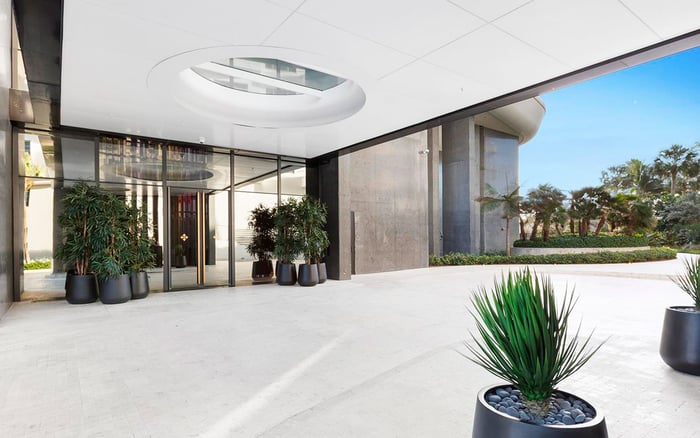
An ownership-focused review of e-bike storage, battery charging, elevator access and Miami Beach riding restrictions, with the written confirmations buyers should obtain before purchasing at Setai.

At Setai Residences Miami Beach, an e-bike question is ultimately about everyday convenience: where the bicycle is stored, where its battery charges and how both move between the street and their approved destinations. For an owner who expects an effortless arrival, these details deserve the same attention as parking assignments and storage rights.
The residential condominium component of The Setai is at 101 20th Street, Miami Beach, FL 33139. The setting makes the distinction between building permission and public-space restrictions particularly important. Permission to keep an e-bike at home does not confer permission to ride it on the adjacent Beachwalk.
Setai’s current e-bike storage, battery-charging and service-elevator policies are not established here. Buyers should obtain separate written confirmation of each rather than assume that hotel services establish residential permissions.
The hotel’s advertised amenities include a custom bicycle fleet and two universal electric-vehicle chargers. Neither establishes whether condominium owners may store e-bikes, bring batteries into residences or use an outlet for charging.
The distinction is practical. Access to a hotel bicycle is not an assigned place for a privately owned e-bike. Automobile charging equipment likewise does not establish an approved location for a removable bicycle battery.
Ask management to distinguish among the complete bicycle, its removable battery and any spare battery. Confirm whether each may enter the building, where it may remain and whether charging is allowed there. Permission to store should never be assumed to include permission to charge.
For buyers also considering Shore Club Private Collections Miami Beach, the useful comparison is in the documents: apply the same questions to each address without assuming that a hospitality identity implies equivalent owner privileges.
The existence of a Setai bike room or designated battery-charging area remains unverified. Begin with the current association rules and the documents attached to the residence being purchased-not a general assurance that bicycles are accommodated.
Request parking and storage assignment documents, relevant parking agreements and written charging rules. Establish whether any proposed storage location is assigned to the residence, available by separate arrangement or subject to additional approval. These are questions to resolve, not descriptions of Setai’s present arrangements.
Then inspect the proposed location. Check the bicycle’s dimensions against both the available space and the entire access route. A storage area that fits the frame is insufficient if the approved doorway or elevator cannot comfortably accommodate the bicycle.
Clarify whether the battery must remain attached, be removed or be kept elsewhere. If management permits storage but not charging, decide whether that arrangement suits your routine before making the e-bike a dependable part of daily life.
Battery policy deserves its own review. April 2024 recommendations included association prohibitions on e-bike charging in common areas, bicycle storage in walkways and stairways, and lithium-battery disposal in trash chutes or dumpsters. Those recommendations are not statewide e-bike mandates and do not establish that Setai adopted them.
For buyers, they provide a checklist of issues the building’s own policy should address. Request the current battery and fire-safety rules, including any distinction between keeping a battery in a residence and charging it there.
Ask specifically about permitted charging locations, applicable equipment requirements and procedures for damaged or unwanted batteries. A convenient outlet is not authorization. Nor is a battery bag or container guaranteed fire protection or a substitute for written permission.
The objective is clarity, not improvisation: an approved place for the bicycle, an approved arrangement for the battery and a clear understanding of owner responsibilities.
Do not assume that e-bikes must use a service elevator or may use a passenger elevator. Setai’s current routing requirements need direct confirmation. Ask which entrance and elevator owners must use and whether a detached battery follows different procedures.
The written response should address reservations, access hours, fees, size limits and handling requirements. Ask what happens when the designated elevator is unavailable. None of these operational details should be inferred from the building’s service offering.
During a management-approved inspection, walk the entire permitted route from arrival to storage. Check door clearances, turns and elevator dimensions against the actual bicycle. Where practical, ask to test the route with the bicycle itself rather than rely solely on measurements.
An occasional reservation may suit infrequent use but feel restrictive for daily trips. Owners comparing Faena House Miami Beach should request the same route demonstration there rather than infer comparable procedures from the address or presentation.
Florida Statutes §718.113 protects qualifying condominium owners’ installation of EV charging stations within limited common elements or exclusively designated parking areas, subject to statutory conditions. Associations may impose reasonable restrictions that do not significantly increase installation costs or effectively prohibit installation.
The installing owner bears installation, operation, maintenance and applicable insurance obligations. These provisions matter when evaluating an automobile charging proposal and the rights attached to a particular parking arrangement.
They should not, however, be read as a verified right to charge e-bike batteries inside a residence or in common areas. If an ownership decision depends on a disputed charging entitlement, have condominium counsel review the specific proposal and governing documents before relying on it.
Miami Beach prohibits riding motorized micromobility devices, including e-bikes and e-scooters, on the Beachwalk and city sidewalks. Listed restrictions also cover Collins Park, South Pointe Park, Lincoln Road, the Baywalk, Marina Baywalk south of 5th Street, and the Promenade west of the Beachwalk between 24th and 29th streets.
These restrictions change the practical meaning of a beachfront e-bike lifestyle. Approved storage does not make the most visually appealing route a permitted one. Check intended journeys against current city rules before deciding how useful the bicycle will be.
For a buyer weighing Five Park Miami Beach alongside Setai, route planning belongs beside the building-policy comparison. Treat permission to keep the bicycle and permission to ride the intended route as separate matters.
Before purchase, assemble three written answers: where the bicycle may stay, where its battery may charge and how both may move through the property. Match those answers to the residence’s assignment documents and an in-person access check. The strongest ownership fit is the one whose permitted routine matches yours.
For a discreet perspective on South Florida ownership decisions, explore MILLION.
If branded residences are on your mind — as a home or as an allocation — we would be glad to share what we are seeing, privately.
Begin a quiet conversationThe residential condominium component of The Setai is at 101 20th Street, Miami Beach, FL 33139.
Its current e-bike storage policy is not established here. Obtain written confirmation of permission and the approved location before purchase.
No. The advertised hotel bicycle fleet does not establish condominium owners’ permission to store or charge privately owned e-bikes.
No. The listed automobile charging amenity does not establish where owners may charge bicycle batteries.
Setai’s current in-unit battery-charging rules require confirmation. Permission to store a bicycle should not be treated as permission to charge its battery.
The current entrance and elevator requirements are not established here. Ask management about routing, reservations, hours, fees and size limits.
Miami Beach prohibits e-bike riding on the Beachwalk and city sidewalks. Building storage permission does not override those restrictions.
No. General condominium-law guidance recommends prohibiting common-area charging, but that does not establish Setai’s adoption of such a rule.
The EV charging-station provisions described here do not establish that right. They concern qualifying installations in limited common elements or exclusively designated parking areas, subject to statutory conditions.
Request current association rules, battery and fire-safety policies, elevator procedures, parking agreements, and storage assignment documents. Confirm the permitted route and dimensions in person.