A buyer-focused review of Rivage Bal Harbour’s delivery logistics, distinguishing advertised residence features from unverified freight dimensions, loading protocols, and installation hours, with a practical framework for written approvals.

A residence can comfortably accommodate a monumental dining table without offering a straightforward route for its delivery. At Rivage Bal Harbour, that distinction belongs at the beginning of an ownership review, not at the end of a furniture order. The practical question is whether each piece can travel from truck unloading to final placement within an approved appointment.
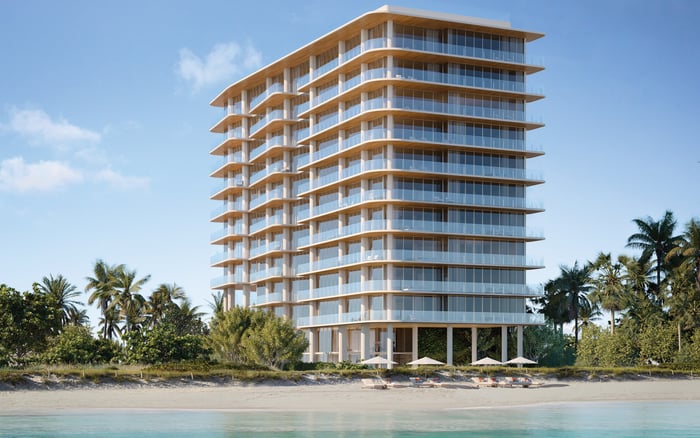
Planned at 10245 Collins Avenue, Bal Harbour, Florida 33154, Rivage is marketed as 56 residences across 25 floors, with no more than three residences sharing a floor. Residence sizes range from approximately 3,284 to 9,464 square feet. Those proportions invite ambitious interiors, but they do not establish the dimensions or permissions governing delivery.
The essential conclusion is straightforward: freight-elevator measurements, loading reservations, and white-glove installation windows remain unverified for this review. That does not mean arrangements are unavailable or unrestricted. Buyers should obtain written logistics information before committing to oversized purchases or a tightly choreographed installation.
Direct private-elevator entry to each residence is an advertised feature. It describes residential arrival, not necessarily the route available to movers, art handlers, or installers. Buyers should not assume a residential elevator may be used for deliveries, even when it opens directly into the home.
Freight-elevator cab and door dimensions remain unverified for this review, as do weight capacity, diagonal clearance, and turning clearances. There is therefore no grounded basis for promising that a particular sofa, stone tabletop, sculpture, or crated artwork will fit.
Request the designated delivery route and a current elevator cut sheet. Distinguish the clear door opening from the cab’s interior dimensions, and confirm the permitted load for the proposed delivery. Have the mover evaluate the object in its actual transport configuration, including packaging, handling equipment, and any approved disassembly.
Rivage residences are marketed with 10-foot ceilings and floor-to-ceiling glass. Neither specification establishes clearance at a service entrance, elevator threshold, corridor corner, or residence doorway. The destination and the journey require separate checks.
A useful route review follows the item from unloading through every transition to its final position. Ask the delivery team to identify the narrowest opening, the tightest turn, and any point requiring a change in orientation. Where protective coverings are required, confirm the usable clearance after protection is installed.
For an unusually large piece, seek written approval for that specific item rather than relying on a general assurance that furniture deliveries are accommodated. Provide its packed dimensions, weight, handling method, and proposed route. A designer’s placement drawing can clarify the destination; it cannot substitute for the mover’s route assessment.
Loading-dock dimensions, truck restrictions, staging limits, and crate-unpacking areas remain unverified for this review. Reservation lead times, appointment duration, deposits, cancellation policies, and simultaneous-vendor limits are likewise not established.
Before scheduling, request the current loading protocol and reservation form. Ask which vehicle configuration is permitted, where unloading may occur, whether temporary staging is allowed, and where crates may be opened. Confirm whether an appointment covers only unloading and elevator use or also work inside the residence.
Treat a reservation as a defined operating window, not blanket authorization for every task. Ask how delays, incomplete paperwork, or a second vendor would affect the appointment. These are due-diligence questions, not confirmed Rivage rules.
For buyers also considering Oceana Bal Harbour, use the same questions in the comparison. The meaningful distinction is the written logistics package available for the specific residence-not an assumption that neighboring properties share procedures.
White-glove service may describe the vendor’s handling standard, but it does not establish building permission. Rivage’s delivery hours, weekend restrictions, holiday blackouts, and after-hours fees remain unverified for this review.
Separate the proposed scope into delivery, unpacking, assembly, placement, mounting, and packaging removal. Ask which activities are permitted during the requested window and whether any require separate approval. If an installation involves tools or attachment to a surface, describe that work explicitly rather than treating it as ordinary furniture placement.
Request the applicable insurance requirements, protection requirements, and fees before the vendor commits a crew. Then confirm that the approved window accommodates the entire scope. If it does not, ask whether separate appointments can be arranged; do not assume work may continue beyond the reservation.
A buyer weighing Fendi Château Residences Surfside alongside Rivage should request the same distinctions independently. Delivery permission at one property should never be treated as transferable to another.
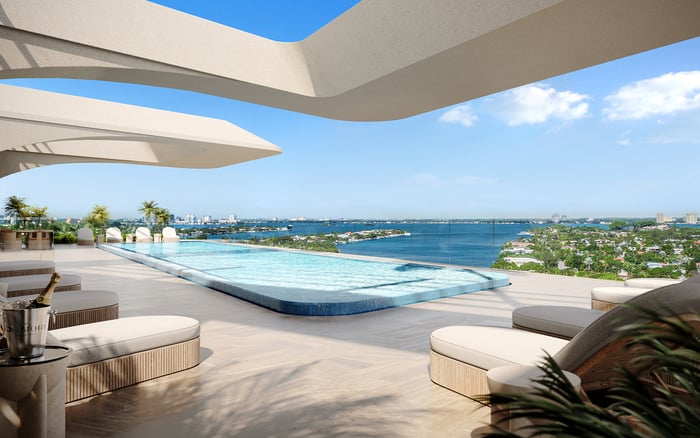
Rivage terraces are advertised as up to 12 feet deep, with ocean and bay views. Terrace dimensions can inform a furnishing concept, but they do not establish delivery-route clearances or authorize an alternative route for oversized outdoor pieces.
For terrace furniture, ask the vendor to document the largest component in its shipping configuration and identify what can be assembled inside the residence. Do not presume terrace depth resolves access questions elsewhere in the building.
Private art deserves equally specific planning. The developer has discretion over developer-installed condominium art, including substitution or removal. That provision does not establish private-residence delivery or installation procedures. An owner’s art handler should seek approval for the proposed route and installation scope rather than infer permission from common-area art provisions.
Rivage is under construction, with estimated delivery in 2027. Treat that estimate as provisional. Confirm the governing contractual date and current move-in instructions before coordinating production completion, shipment, or installation.
The practical file should include a current freight-elevator cut sheet, an approved delivery route, loading instructions, reservation terms, permitted work hours, insurance requirements, protection requirements, and applicable fees. These are recommended requests, not a statement that Rivage has published or adopted particular rules.
Assign one person on the buyer’s team to reconcile the designer’s specifications, the mover’s assessment, and the building’s written approvals. For buyers also reviewing Ocean House Surfside, this document-based approach offers a consistent way to evaluate ownership logistics without assuming identical procedures.
The objective is not to diminish the pleasure of furnishing a substantial residence. It is to protect that pleasure by resolving access, timing, and responsibility before the first crate arrives.
For a discreet perspective on South Florida ownership decisions, explore MILLION.
If branded residences are on your mind — as a home or as an allocation — we would be glad to share what we are seeing, privately.
Begin a quiet conversationRivage is planned at 10245 Collins Avenue, Bal Harbour, Florida 33154.
The project is marketed as 56 residences across 25 floors, with no more than three residences sharing a floor.
No verified freight-elevator cab or door dimensions are established in the reviewed public materials. Weight capacity, diagonal clearance, and turning clearances also remain unverified.
No. Advertised private-elevator entry does not establish permission for movers to use that elevator or suitability for oversized deliveries.
No. The marketed 10-foot ceilings describe the residences, not the clearances along the delivery route.
Request the current loading protocol, vehicle restrictions, unloading and staging arrangements, crate-unpacking permissions, and reservation terms. These details are not established in the reviewed public fact sheet.
The reviewed public fact sheet does not establish lead times, appointment duration, deposits, cancellation policies, or simultaneous-vendor limits. Obtain the current terms in writing before scheduling.
Delivery hours, weekend restrictions, holiday blackouts, and after-hours fees remain unverified. Request written permission for the proposed scope and installation window.
No. The developer’s discretion over developer-installed condominium art does not establish procedures for delivering or installing art in a private residence.
The project is described as under construction with estimated delivery in 2027. Treat that estimate as provisional and confirm the governing contractual date and current move-in instructions.