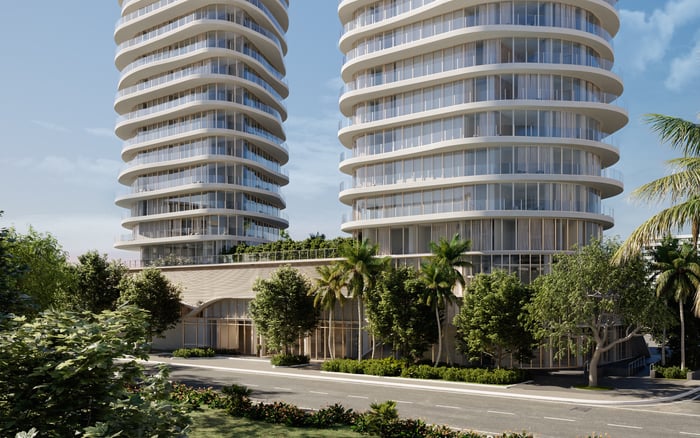
A buyer-focused review of Ocean 580’s advertised ownership costs, the reserve documents worth requesting, and the distinction between capital planning and a confirmed assessment.
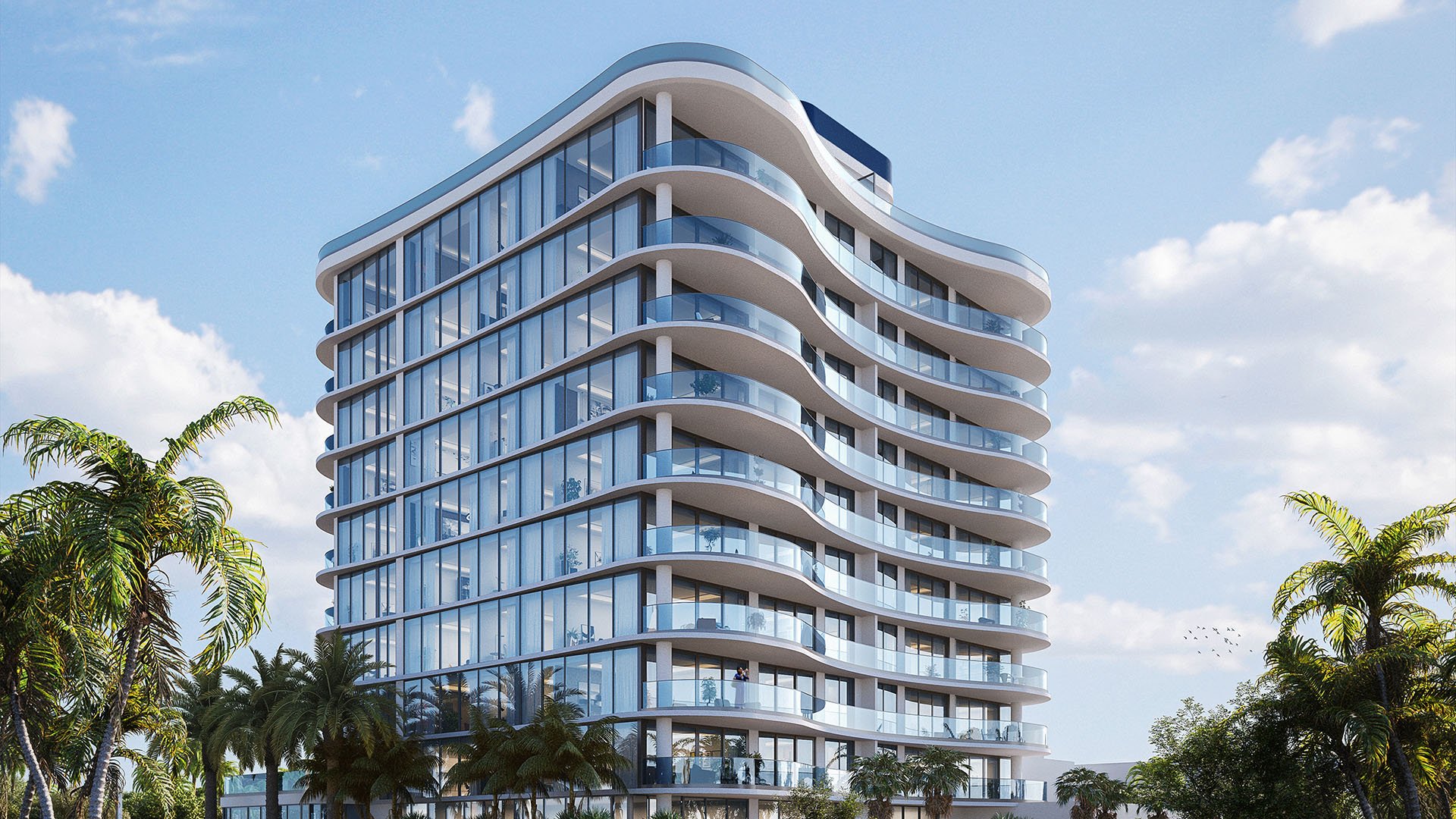
The appeal of Ocean 580 Pompano Beach begins with its intimate scale: 17 residences at 580 Briny Avenue, Pompano Beach, Florida 33062. For buyers seeking an oceanfront address with relatively few neighbors, that scale is part of the proposition. It also makes the allocation of shared costs a consequential part of the purchase review.
Advertised starting prices are approximately $4.35 million. Yet the purchase price answers only the first financial question. The more revealing questions concern how much cash will be available, how it may be invested, and when owners could be asked to contribute beyond regular dues.
Ocean 580’s reserve balances, investment holdings, adopted investment policy, approved special assessments, and capital-call dates are not established here. That supports neither a favorable nor an unfavorable financial verdict. It calls for a document-led purchase decision.
Ocean 580 is marketed as pre-construction, with anticipated delivery in winter 2027. That is an estimate, not a guaranteed completion date. Buyers should distinguish projected operating assumptions from actual association finances and reconfirm pricing, delivery expectations, and charges before committing.
Unit 601 is advertised at $4,479,600, with an association fee of approximately $4,954 per month. Unit 201 also carries an advertised $4,954 monthly fee. These are unit-specific figures, not a verified building-wide fee schedule.
Annualizing $4,954 yields $59,448 in association charges-not a complete annual ownership-cost estimate or an indication of how much reaches reserves. Request a breakdown of operations, insurance, and reserve contributions, together with any exclusions. A substantial monthly fee is not, by itself, evidence of substantial capital protection.
Buyers also considering Armani Casa Residences Pompano Beach should use the same comparison framework: what each charge covers, what it excludes, and what remains a projection. Headline dues alone cannot support a meaningful comparison.
Begin with reserve-account statements, investment holdings, operating cash balances, receivables, the approved budget, and year-to-date financials, where available. Request any completed reserve study or structural integrity reserve study, commonly called a SIRS. For a pre-construction purchase, establish which documents exist and which financial assumptions remain prospective.
Then distinguish the stated balance from the amount available for a particular obligation. Ask whether funds are restricted to designated purposes, already committed to work, subject to reserve loans, or affected by interfund transfers. Identify insurance deductibles and any funding waivers or deferrals rather than assuming the balance is freely deployable.
A useful buyer worksheet should show each account’s balance, permitted use, existing commitments, and access date. Keep receivables distinct from collected cash. The objective is to determine whether the association can meet a payment when it falls due-not simply whether a financial statement shows assets.
Confirm that any reserve study used in this review belongs to Ocean 580, and check its date and scope. Unrelated reserve figures cannot establish this building’s position.
A reserve balance and an investment policy answer different questions. The first concerns resources; the second concerns how those resources are held, protected, and accessed. Request the adopted policy, if one exists, alongside the actual holdings. Neither substitutes for the other.
The review should address permitted instruments, deposit-protection arrangements, maturity limits, concentration limits, and withdrawal authority. It should also identify custody controls and reconciliation procedures: who holds the assets, who can move them, and who checks the records.
Compare investment maturities with anticipated payment dates. Ask what happens if a payment falls due before an investment matures, including any access restrictions or costs. These are diligence questions, not statements about Ocean 580’s investments. The practical standard is a documented connection between the association’s cash needs and the way reserves are held.
Boutique ownership makes shared-cost arithmetic worth examining. An illustrative $1 million project divided equally among 17 residences would represent approximately $58,824 each. A $5 million project on the same basis would represent approximately $294,118 each.
Neither example is an announced or forecast Ocean 580 assessment. Both exclude financing and assume equal shares solely for illustration. Actual responsibility must be checked against the declaration, the unit’s percentage interest, and the treatment of developer-owned or specially classified units.
To evaluate timing, request a written five-year capital schedule and compare it with available reserves and planned annual contributions. Each potential project should have an estimated cost, an expected payment period, a funding source, and supporting engineering or component-life assumptions where available.
The most useful question is not simply whether an assessment exists today, but when a funding gap might emerge under the documented plan. Treat an assurance of “no assessments” as a dated statement about approved charges, not protection against future capital calls.
For a pre-construction purchase, the transition from initial assumptions to owner oversight warrants separate attention. Verify turnover timing, initial budget assumptions, warranties, punch-list obligations, and responsibility for unfinished common elements.
Establish which obligations remain with the developer and which belong to the association, with support from the governing documents and applicable agreements. A projected capital schedule should not assume that a warranty resolves an expense without confirmation of coverage and responsibility.
Buyers comparing Ocean 580 with The Ritz-Carlton Residences® Pompano Beach should apply the same discipline to each property’s documents. Neither positioning nor purchase price substitutes for a clear account of financial responsibility.
Before closing, obtain applicable association documents, assessment notices, insurance information, permits, warranties, and available minutes. Use an appropriate document-review contingency and have qualified advisers confirm the relevant legal obligations rather than inferring deadlines from a reserve-study document.
Bring the review back to three decisions: whether the monthly budget is understandable, whether reserves can be accessed when needed, and whether potential capital contributions fit your own liquidity planning. Identify unresolved items explicitly and establish who is responsible for answering them before the purchase decision becomes binding.
Ocean 580’s 17-residence scale is a defining feature. A disciplined ownership review preserves that appeal by making the financial commitments as clear as the address itself.
For a discreet conversation about your South Florida ownership priorities, connect with MILLION.
If branded residences are on your mind — as a home or as an allocation — we would be glad to share what we are seeing, privately.
Begin a quiet conversationOcean 580 is a 17-residence boutique oceanfront condominium at 580 Briny Avenue in Pompano Beach.
The project is marketed as pre-construction with anticipated delivery in winter 2027. That estimate is not a guaranteed completion date.
Advertised starting prices are approximately $4.35 million. Reconfirm current pricing before committing.
Unit 601 carries an advertised association fee of approximately $4,954 monthly. This is a unit-specific figure, not a verified building-wide schedule.
No. It is the annualized amount of the advertised $4,954 monthly association fee, not a complete annual ownership-cost estimate.
Reserve adequacy is not established here. A determination requires applicable financial statements, reserve holdings, contribution assumptions, and capital-planning documents.
Request the adopted policy, if available, and actual holdings. Review permitted instruments, deposit protection, maturities, concentration limits, withdrawal authority, and custody controls.
No such assessment is established here. That amount is only the approximate equal-share result of dividing a hypothetical $1 million project among 17 residences, before financing or declaration-based allocations.
Compare a written five-year capital schedule with available reserves, planned contributions, investment maturities, and expected payment dates. Confirm actual allocation responsibilities in the governing documents.
No. Treat it as a dated statement about approved charges, not a guarantee against future capital calls.