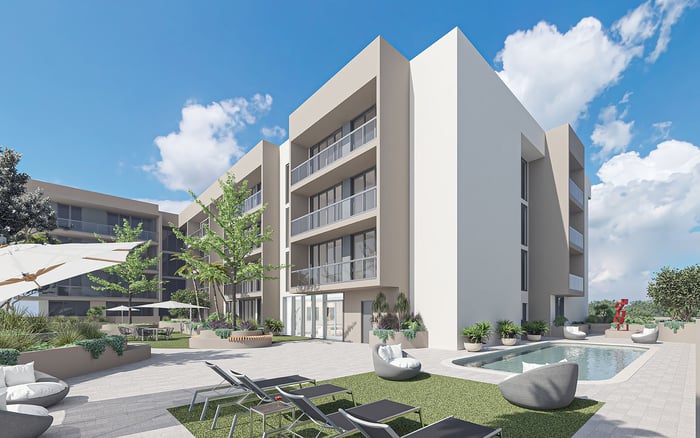
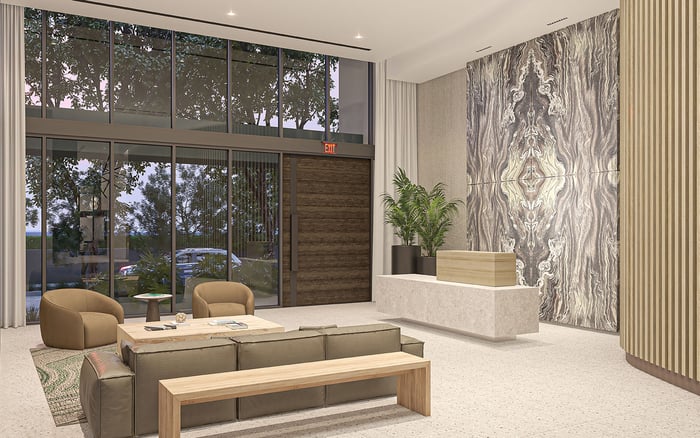
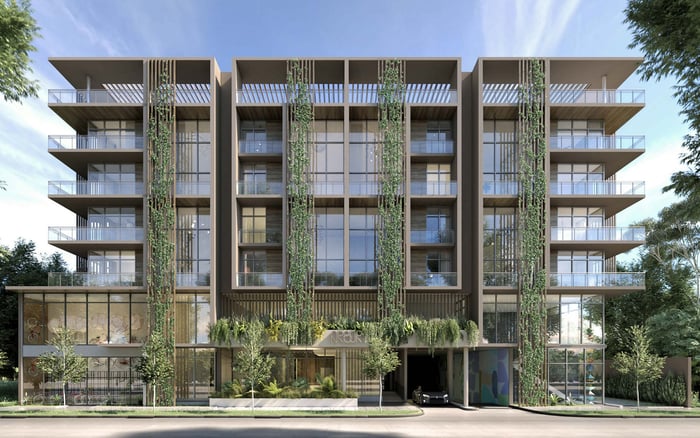
Arbor Coconut Grove’s completion milestones are distinct from the arrangements needed to receive valuable furnishings. A practical ownership review should separate customs clearance, off-site storage, building access, and installation insurance before committing to delivery.
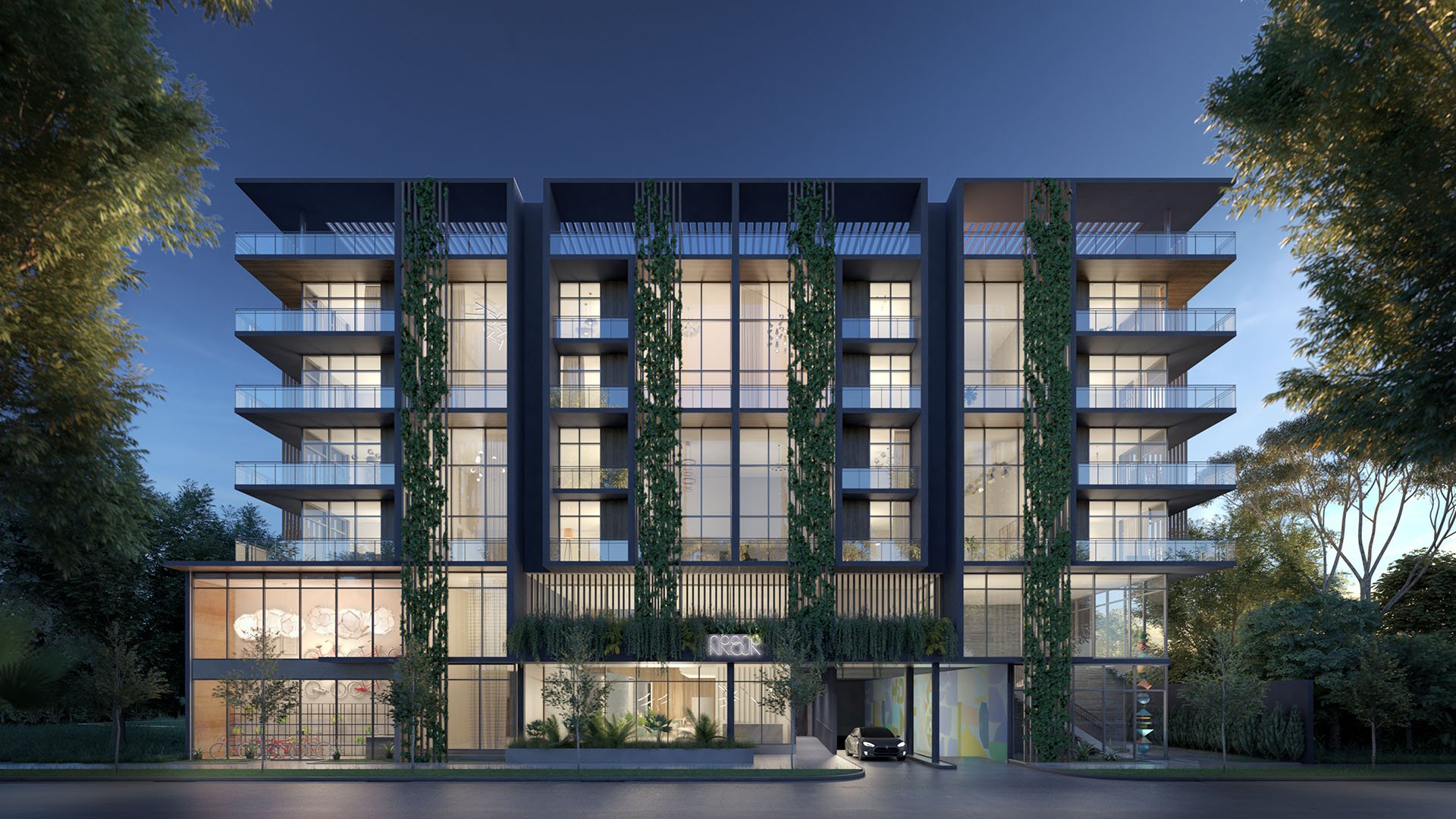
A beautifully resolved interior begins before the first crate reaches the residence. At Arbor Coconut Grove, the practical ownership question is not simply whether the building is complete. It is whether each valuable furnishing has a documented route from origin to final placement, with access, custody, and insurance addressed at every stage.
The boutique condominium at 3034 Oak Avenue, Coconut Grove, Miami, FL 33133 comprises 45 residences across five stories. Residence sizes range from approximately 1,466 to 3,185 square feet, with ceiling heights of 10 feet or more, depending on the layout. Those dimensions inform an interior scheme. They do not establish whether a packed cabinet will fit in an elevator or when an installation team may enter.
The essential distinction is straightforward: occupancy readiness and furnishing readiness are separate decisions. Treat the latter as an owner-managed project unless written arrangements establish otherwise.
Arbor’s stated completion milestones include obtaining a Temporary Certificate of Occupancy in March 2026. Move-ins were scheduled for early spring, with the development presented as newly completed, officially open, and move-in ready by May 27, 2026. These milestones neither confirm an individual owner’s access date nor establish a reserved furnishing-delivery appointment.
A Temporary Certificate of Occupancy should not be relabeled as a final certificate of occupancy. Likewise, the earlier anticipated delivery date of third-quarter 2024 should not anchor a current installation calendar.
Before authorizing shipment, request written confirmation of possession, permitted delivery access, and any outstanding conditions affecting the residence. Obtain current delivery procedures from management rather than treating a completion announcement as permission to dispatch a truck. A complete owner logistics manual covering these steps has not been publicly established for Arbor.
No Arbor-specific customs-clearance duration or guaranteed window for owner-imported furnishings is publicly specified. Nor has a dedicated owner-furnishings import program, preferred customs broker, or bonded warehouse arrangement been identified. Owners should therefore avoid building an installation schedule around an assumed building service.
Ask the vendor and customs broker to separate shipping readiness, departure, arrival, clearance, warehouse receipt, and installation into distinct milestones. For each, request the responsible contact, required documentation, and confirmation of whether the date is an estimate or a firm appointment. A single delivery promise leaves too much ambiguity about where responsibility changes hands.
Before departure, have the broker identify the shipment-specific information required and any unresolved questions about the goods. Establish who will communicate a clearance change, who may authorize onward transport, and which charges would require approval if the schedule shifts. The aim is not to assume a delay, but to define the response before valuable pieces are in motion.
For buyers also considering Park Grove Coconut Grove, the same questions provide a useful comparison framework. Compare written owner-delivery arrangements, not assumptions drawn from a residence’s presentation or address.
Off-site furnishings storage is not identified as an Arbor-provided amenity. That does not settle whether private arrangements are available. It means owners should obtain a specific agreement rather than assume receiving and holding goods are included.
Ask a prospective storage provider to describe environmental controls, monitoring, receiving procedures, and access to stored items. For delicate finishes or valuable upholstered pieces, have the designer or relevant specialist specify appropriate conditions, then confirm that the provider can meet them. A general description is no substitute for agreed requirements.
Receiving instructions should address inventory reconciliation, photographs, visible damage, and authorization to unpack. Clarify how discrepancies will be recorded and communicated before goods leave for the residence. Request written storage, handling, and redelivery charges, including the cost of an extended stay.
Finally, distinguish warehouse receipt from installation readiness. A prudent release instruction would require confirmation of building access, the installation team, and the owner’s insurance review before authorizing onward transport.
Arbor’s ceiling heights and residence sizes are useful design parameters, not substitutes for a delivery survey. Before ordering oversized or difficult-to-disassemble pieces, request loading-access details, elevator dimensions, doorway clearances, and any reservation requirements. Have the team assess both the packed dimensions and the finished object.
Listed finishes include floor-to-ceiling impact glass, porcelain wood-grain flooring, custom cabinetry, natural wood finishes, and premium appliances. Ask the installer to propose protection suited to the actual residence and obtain management’s requirements for common areas. Establish who approves the route and who documents conditions before work begins.
If the search also includes Four Seasons Residences Coconut Grove, apply the same route-and-access review independently. Do not transfer one building’s procedures to another or infer delivery privileges from a project’s positioning.
Installation-insurance limits, required policy language, and a complete documentation checklist have not been publicly established for Arbor. Obtain those requirements directly from the association or management and have the owner’s insurance adviser review them before scheduling work.
Organize the review around transit, storage, handling, and installation. Ask which policy is intended to respond at each stage, whose interests it protects, and what documentation supports that understanding. Have the adviser address the furnishings themselves separately from potential damage to the residence or common areas.
Clarify applicable limits, deductibles, exclusions, valuation, and any conditions relevant to subcontractors or specialist handling. These are questions for the actual policies, not assumed Arbor rules. Ask specifically about unpacking, assembly, placement, and any proposed attachment to walls or ceilings.
Finally, ask whether a certificate alone satisfies the building’s documentation requirements and what additional evidence, if any, the insurance adviser needs. The objective is clarity about coverage, not simply a collection of paperwork.
Before goods leave storage, assemble one release file: shipment status, receiving inventory, condition photographs, delivery-route review, confirmed access appointment, installer details, and insurance documentation. Have a designated owner representative reconcile discrepancies and identify any outstanding approvals. This is a suggested ownership workflow, not a statement of Arbor’s requirements.
The most considered move-in allows logistics to recede from view because responsibilities are already settled. For Arbor owners, that means pairing the residence’s documented completion milestones with separately confirmed customs, storage, access, and insurance arrangements. A precise installation brief deserves the same attention as the interior itself.
For a discreet perspective on South Florida ownership and residential selection, explore MILLION.
If branded residences are on your mind — as a home or as an allocation — we would be glad to share what we are seeing, privately.
Begin a quiet conversationArbor Coconut Grove is at 3034 Oak Avenue, Coconut Grove, Miami, FL 33133. The boutique condominium comprises 45 residences across five stories.
Published residence sizes range from approximately 1,466 to 3,185 square feet. Advertised ceilings are 10 feet or more, with dimensions varying by layout.
Arbor reportedly obtained a Temporary Certificate of Occupancy in March 2026. That milestone should not be described as a final certificate of occupancy.
No. Arbor was described as move-in ready by May 27, 2026, but owners should separately confirm possession, delivery access, and installation appointments.
No Arbor-specific customs-clearance timeline or guaranteed delivery window is publicly specified. Request shipment-specific milestones from the vendor and customs broker.
Publicly disclosed information does not identify a dedicated owner-furnishings import program, preferred customs broker, or bonded warehouse arrangement.
Off-site furnishings storage is not identified as an Arbor-provided amenity. Obtain written confirmation of any proposed private storage arrangement, including conditions and charges.
Request loading-access details, elevator dimensions, doorway clearances, and delivery-reservation requirements. Have the installation team review packed dimensions as well as the finished piece.
Ask an insurance adviser to review protection during transit, storage, handling, and installation. Obtain building-specific documentation requirements directly from management or the association rather than assuming limits or coverage.
A suggested file includes shipment status, inventory, condition photographs, route review, confirmed access, installer details, and insurance documentation. This is an ownership planning recommendation, not a verified Arbor requirement.