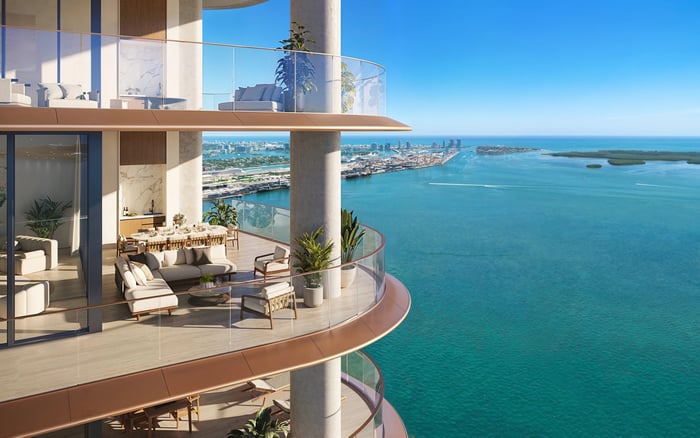
A disciplined framework for evaluating waterfront exposure, building readiness, insurance, reserves and personal storm plans before buying a Brickell residence.

Waterfront ownership in Brickell demands exacting due diligence. The view may begin the conversation, but the decision must also account for the residence, the building’s shared systems, insurance arrangements, financial planning and the household’s own storm procedures.
This practical buyer’s guide is not a market forecast. It neither predicts a particular event nor assigns risk to an individual property. Instead, it presents a disciplined sequence of questions for buyers evaluating a primary home, second home or residence intended for extended seasonal use.
Begin with the specific residence, not a broad neighborhood label. Ask what lies between the building and the water, how residents and vehicles enter the property, where the assigned parking is located, and which shared areas are essential to daily access. The objective is to understand the entire route from the street to the front door.
Orientation warrants equal attention. A balcony can define the experience of a residence, yet buyers should determine how exterior furniture, planters and decorative objects must be secured. Higher floors may offer a different perspective, but elevation alone is no substitute for reviewing access, building systems and post-event operations.
When considering Una Residences Brickell or any other waterfront address, request answers specific to the unit, parking assignment and building plan under review.
A luxury tower is a network of interdependent components. Buyers should investigate how management prepares common areas, communicates with residents and restores normal operations after severe weather. Ask who has authority to make time-sensitive decisions, which vendors are retained, and how residents receive instructions while away.
The inquiry should encompass elevators, access controls, domestic water, fire and life-safety systems, emergency power, mechanical equipment and drainage. Do not assume every circuit, amenity or private residence receives backup service. Request a precise explanation of what emergency power supports and how long operations are intended to continue under the building’s plan.
A comparison involving St. Regis® Residences Brickell should therefore extend beyond finishes and services to documented operating responsibilities and resident protocols.
Storm preparation becomes meaningful when grounded in documentation. Review the condominium declaration, rules, current budget, reserve information, insurance materials, available inspection records, meeting minutes and notices concerning planned work. Have qualified legal, insurance, inspection and financial advisers interpret matters beyond your expertise.
Focus on responsibility. Determine which elements belong to the association and which belong to the owner, including windows, doors, terraces, interior improvements and water-related damage. Ask how deductibles or uncovered costs could be allocated, and whether pending work might affect access, amenities or future owner obligations.
For a buyer comparing Baccarat Residences Brickell with another tower, a consistent document checklist clarifies distinctions and reduces the influence of presentation alone.
Engage an insurance adviser before the diligence period ends, not after closing. Provide details of the proposed unit, intended occupancy, ownership structure and improvement plans. Ask which coverages may be appropriate for interiors, personal property, loss assessment, temporary living arrangements and other owner-specific exposures.
The building’s policy and an owner’s policy serve different purposes. Request the association materials available to buyers, then have an adviser identify potential gaps, exclusions, deductibles and documentation requirements. If the residence will be renovated, confirm how planned work and upgraded contents may affect the proposed coverage.
Insurance availability, terms and premiums can change. Treat every quotation as time-sensitive, verify its underlying assumptions and avoid projecting a current proposal indefinitely into the future.
A property inspection should be tailored to the unit and transaction. Ask the inspector to examine accessible windows and doors, visible sealant conditions, terrace drainage, signs of prior moisture, interior mechanical equipment and any alterations included in the sale. Where questions arise, specialized review may be appropriate.
Walk the parking route and loading areas rather than reviewing the residence alone. Confirm the assigned space, storage arrangements, vehicle-access procedures and any restrictions that could matter during preparations. If the buyer keeps valuable vehicles on-site, the household plan should identify when and where they may be moved, without assuming a last-minute relocation will be practical.
At The Residences at 1428 Brickell, as with every candidate, direct questions to the appropriate representatives and verify the answers in transaction documents.
Even the most refined building plan requires an owner plan. Decide who monitors official instructions, secures exterior items, protects documents and valuables, and communicates with management. Owners who travel should designate a local contact whose access and authority are established in writing before they are needed.
Maintain digital copies of insurance materials, identification, ownership records, inventories and key contacts in a secure location. Photograph interiors and significant contents periodically. Keep supplies appropriate to the household, including provisions for children, older family members and pets, and revise the plan when occupancy or staffing changes.
Do not treat the residence as the default place to remain during every event. Follow applicable official instructions and establish multiple options for departure, accommodations and transportation. The plan should be simple enough to execute without improvisation.
Organize findings in three columns: unit-specific matters, association matters and personal responsibilities. Assign each open question an owner, deadline and required document. This separates issues that can be addressed through maintenance or insurance from those dependent on broader building decisions.
Before removing contingencies, estimate ownership costs using current written information and a prudent allowance for uncertainty. The right conclusion may be to proceed, renegotiate, seek further professional review or select another residence. In luxury real estate, restraint is often as valuable as speed.
Should storm preparation begin before making an offer? Yes. Early questions can identify the documents, inspections and insurance input to request during diligence.
Is a higher-floor residence automatically the safer choice? Do not rely on floor level alone. Evaluate access, glazing, emergency systems and building operations as a complete picture.
What condominium materials should a buyer request? Request the governing documents, budget, reserve information, available insurance materials, relevant minutes, notices and records offered for transaction review.
Does the association’s insurance cover everything inside the unit? Do not assume it does. Ask an insurance adviser to compare the association’s coverage with the proposed owner policy.
Why review parking as part of waterfront diligence? Parking location, vehicle access and relocation procedures can shape a household’s preparation plan and should be verified.
What should absentee owners arrange? Establish a trusted local contact, written access authority, management contacts and clear instructions for securing the residence.
Should buyers ask about emergency power? Yes. Ask precisely which systems and areas it supports rather than inferring coverage from a general description.
How should prior moisture concerns be handled? Engage an appropriate inspector, seek available documentation and obtain specialist advice when the initial review raises questions.
Can a buyer rely on an insurance quotation obtained months earlier? Treat quotations as time-sensitive and reconfirm terms, assumptions and pricing near the relevant transaction date.
Who should review complex condominium obligations? Qualified legal, insurance, inspection and financial advisers should address issues within their respective areas of expertise.
When you're ready to tour or underwrite the options, connect with MILLION.
If branded residences are on your mind — as a home or as an allocation — we would be glad to share what we are seeing, privately.
Begin a quiet conversation