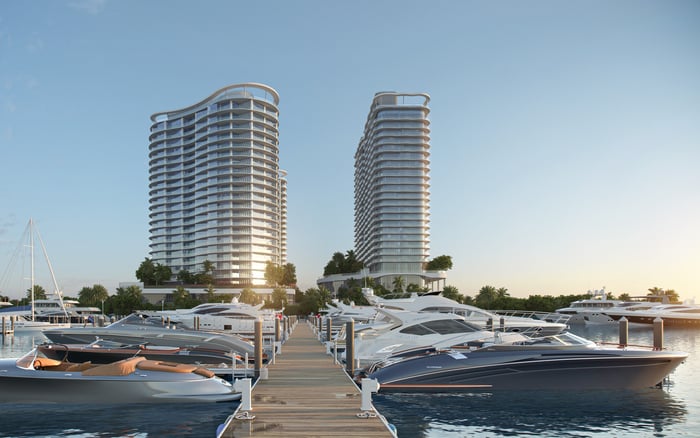
A disciplined framework for evaluating developer history, construction readiness, contract protections, financing exposure, and the practical consequences of delayed delivery in Fort Lauderdale.

For a luxury buyer, a compelling residence is only one part of the acquisition. The more consequential question is whether the development team can deliver the building, amenities, finishes, operating concept, and timing represented during the sales process. In Fort Lauderdale, where buyers may be weighing waterfront living, a second home, or a long-term investment, that assessment should begin before emotional attachment forms around a particular view or floor plan.
Delivery risk is not synonymous with failure. It is the combined possibility that timing, specifications, costs, financing, approvals, or execution may differ from a buyer’s expectations. The appropriate response is neither alarm nor blind confidence, but disciplined underwriting supported by independent legal, financial, construction, insurance, and tax advice.
Begin by identifying every party with a meaningful role: the property-owning entity, developer, equity partners, lender, general contractor, architect, interior designer, sales team, hotel or lifestyle brand, and intended manager. A polished development identity may sit above several distinct legal and operating relationships.
Ask which party is contractually responsible for completion and which parties provide expertise, branding, or management only. Then examine whether the principals have delivered projects of comparable scale, complexity, positioning, and coastal exposure. A smaller urban condominium and a highly serviced waterfront tower do not present the same execution demands.
Completed buildings deserve the greatest weight. Active construction can demonstrate current capability but remains unfinished. Announced proposals provide the least evidence. Buyers considering Four Seasons Hotel & Private Residences Fort Lauderdale can apply this same hierarchy when comparing any branded proposition: distinguish the developer’s obligations from the brand’s role, then verify how that relationship is documented.
A practical diligence file should classify each prior project as completed, under construction, proposed, transferred, or no longer active. For completed properties, compare original representations with the finished result. Consider delivery timing, visible workmanship, amenity completion, common-area quality, resident experience, and whether the building’s operations appear consistent with its positioning.
Speak with owners or board representatives where access is appropriate, but treat individual accounts as context rather than conclusive proof. Request explanations for material delays, contractor changes, disputes, redesigns, or ownership transitions. The objective is not to find a spotless history; complex developments encounter problems. The more revealing issue is how the team responded, communicated, funded corrections, and protected purchasers.
When considering The Ritz-Carlton Residences® Fort Lauderdale, buyers should still investigate the development entity and contractual structure independently. A recognized name can inform the experience being contemplated, but it should not replace a review of responsibility, remedies, and execution.
A pre-construction contract does more than reserve a residence. It allocates uncertainty between buyer and seller. Experienced Florida counsel should review deposit timing, cancellation rights, permitted extensions, completion definitions, change provisions, unit measurement language, finish substitutions, casualty clauses, default remedies, assignment restrictions, closing notice, and the treatment of deposits.
Focus on what the seller is required to deliver, not merely what appears in renderings or conversational descriptions. Ask counsel to identify provisions permitting changes to plans, amenities, materials, views, management arrangements, or completion schedules. Determine which representations are incorporated into binding documents and which are expressly excluded.
When evaluating St. Regis® Residences Bahia Mar Fort Lauderdale or another branded offering, request particular clarity on brand agreements, operating standards, fees, and circumstances that could alter the relationship. The central question is not whether change is possible, but who bears its consequences.
Delivery confidence should rise as objective milestones become visible. Buyers can ask about site control, approvals, financing, contractor engagement, groundbreaking, vertical progress, procurement, and anticipated completion procedures. Evaluate the answers together, since no single milestone establishes full readiness.
Capital structure also matters. Ask how construction is expected to be funded, whether buyer deposits form part of that structure, and what conditions must be satisfied before major work advances. Your advisers can assess whether the disclosed framework appears coherent and whether the contract addresses interruptions or extended delays.
A buyer comparing a boutique proposition such as Sixth & Rio Fort Lauderdale with a larger waterfront concept should not assume that size alone determines safety. Complexity, capitalization, team experience, procurement, and contractual flexibility all shape risk.
Delivery timing is not an abstract scheduling matter. Model the consequences if closing occurs later than expected. Consider interim housing, storage, travel, expiring rate locks, changing loan terms, currency exposure, tax planning, school or employment timing, and the opportunity cost of committed deposits. Even a cash buyer carries liquidity and portfolio-allocation risk.
Prepare at least three scenarios: expected delivery, a moderate delay, and a prolonged delay within the contract’s permitted framework. Decide in advance how much uncertainty your household can absorb. This is especially important for buyers coordinating the sale of another property or expecting immediate rental income.
The same analysis applies when using a completed Fort Lauderdale residence as a reference point against new-construction opportunities. A finished residence may reduce certain delivery uncertainties while introducing a different diligence set involving condition, association governance, reserves, insurance, and resale documentation.
Score each candidate across five categories: team history, contractual protection, construction readiness, capital visibility, and personal timing tolerance. Do not let an exceptional terrace automatically compensate for weak answers elsewhere. In Broward, as in any luxury market, location and design should be assessed alongside execution.
Set written conditions for proceeding. These might include satisfactory counsel review, confirmation of deposit mechanics, acceptable financing assumptions, review of material disclosures, and comfort with a downside timeline. Revisit the file before every major deposit and again before closing. The strongest buyer’s guides ultimately lead to a simple discipline: verify, document, stress-test, and decide without urgency.
What is the best evidence of a developer’s track record? Completed projects of comparable scale and complexity are generally the most useful starting point, followed by direct review of execution and operations.
Does a luxury brand guarantee on-time delivery? No. Buyers should distinguish the brand’s contractual role from the responsibilities of the developer, contractor, and ownership entity.
Should I rely on an advertised completion date? Treat it as a planning reference, then have counsel review contractual definitions, extensions, notices, and remedies.
What should I ask about prior delays? Ask what caused them, how purchasers were informed, who funded corrective action, and whether the completed result changed materially.
How can I assess construction readiness? Review approvals, financing, contractor engagement, site activity, procurement, and visible progress as a connected set of indicators.
Are buyer deposits a form of delivery risk? They can create liquidity and timing exposure, so review deposit mechanics and protections with independent counsel.
What changes should receive special attention? Examine provisions concerning plans, dimensions, finishes, amenities, views, management, branding, fees, and completion timing.
How should a second-home buyer plan for delay? Model alternate housing, travel, storage, financing, tax, and liquidity consequences across several timing scenarios.
Is a completed condominium risk-free? No. Delivery uncertainty may be lower, but condition, governance, reserves, insurance, operations, and resale documents still require review.
When should diligence be refreshed? Recheck material disclosures, construction progress, financing assumptions, contract notices, and personal liquidity before major deposits and closing.
For a discreet conversation and a curated building-by-building shortlist, connect with MILLION.
If branded residences are on your mind — as a home or as an allocation — we would be glad to share what we are seeing, privately.
Begin a quiet conversation