Onda buyers should distinguish title protection from the financial and lifestyle decisions made by a condominium association after closing. This guide identifies the governing documents, budgets, insurance terms, assessment authority and waterfront obligations that deserve separate review.

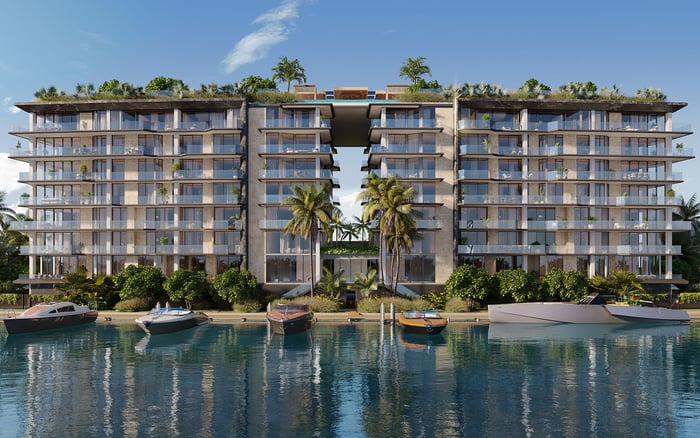
A residence at Onda Bay Harbor combines the intimacy of a 41-unit condominium with a bayfront setting at 1135 103rd Street in Bay Harbor Islands. Developed by CMC Group and Morabito Properties, the seven-story building was completed in 2024. Its boutique scale and waterfront character may feel highly personal, yet ownership remains subject to a condominium association that administers rules, common expenses and owner assessments.
Sophisticated buyers should distinguish between two forms of protection that are often conflated. An owner’s title policy generally addresses covered defects that existed on or before its effective date, such as an undisclosed lien or an error in an earlier deed. It does not guarantee that association costs, policies or service levels will remain unchanged after the purchase.
Title protection does not convert future association decisions into insured title claims.
This distinction is especially relevant in a new-construction or recently completed condominium. A pristine physical presentation does not eliminate the need to examine how the association can raise revenue, allocate expenses and change rules over time.
The closing team should examine the title record, association estoppel, recorded liens and assessments already adopted before closing. Depending on the policy, a condominium endorsement may address certain existing assessment liens or condominium-related title problems. Coverage should never be assumed merely because an endorsement is available. The buyer should obtain the proposed policy, schedules, endorsements and exceptions, then request a written explanation of what is covered and excluded.
Timing matters. An assessment already adopted may require negotiation over payment or allocation under the purchase contract. A recorded lien may raise a title issue. By contrast, an assessment approved after the policy date is generally a post-policy event, not a preexisting title defect. The title professional and closing attorney should explain that boundary before funds are released.
Onda’s condominium association can administer building rules and owner assessments. Post-closing changes to rental restrictions, pet policies, amenity rules or management practices generally concern governance rather than title. Even if a change affects convenience, operating costs or a buyer’s intended use, title insurance ordinarily is not designed to reimburse the owner.
The declaration, bylaws and rules therefore warrant substantive review, not a cursory signature. Counsel should identify the board’s assessment authority, applicable voting thresholds, use restrictions and formula for allocating common expenses. Buyers comparing boutique options such as Alana Bay Harbor Islands and Origin Bay Harbor Islands should apply the same discipline to each association’s documents rather than infer consistency across nearby buildings.
The central governance lesson is straightforward: marketing can describe the present experience, but it cannot guarantee that a future board will retain the same staffing, budget priorities, policies or assessment level.
Regular and special assessments adopted after closing are future association obligations. Title insurance will not pay a roof, concrete, façade, plumbing, seawall or other capital-repair assessment simply because the amount is substantial. The same principle applies when an association faces reserve shortfalls or chooses to undertake capital work.
Before committing, review the current operating budget, reserve funding, active assessments and known capital projects. Ask whether projects have been approved, priced or merely discussed, and confirm how any adopted obligation will be handled in the purchase contract. Minutes and financial records can provide context, showing which expenses have occupied the board’s attention and whether recurring costs align with the stated budget.
This is also why the Bay Harbor market should be evaluated building by building. A buyer may tour La Maré Bay Harbor Islands as part of a broader search, but each condominium’s reserve position, contracts, insurance and allocation provisions require independent analysis.
The association’s master policy, the owner’s HO-6 policy and title insurance address distinct risks. Buyers should obtain the master policy’s limits, along with its windstorm, flood and named-storm deductibles. Gaps can lead to assessments for deductibles, uninsured portions of a loss or repairs outside the master policy’s scope.
Loss-assessment coverage may be available as an optional or separate feature of an HO-6 unit-owner policy. It may reimburse an assessment connected to a covered property loss, subject to limits, exclusions and a deductible. It typically does not fund reserve shortfalls, deferred maintenance, milestone-inspection repairs or Structural Integrity Reserve Study obligations. Routine roofing, concrete restoration, repiping or repainting also ordinarily falls outside coverage unless caused by a peril expressly insured under the applicable policy.
The practical step is to have an insurance adviser compare the HO-6 proposal with the association’s master policy. The review should address covered causes of loss, loss-assessment limits, exclusions and the owner’s potential exposure to large master-policy deductibles.
A waterfront address introduces another layer of inquiry. Buyers seeking boating rights should confirm the precise nature of any dock or slip rights and identify who pays for dock, seawall, dredging and utility costs. Depending on the governing documents and contracts, those obligations may be operating expenses, capital expenses or separately allocated charges.
Do not treat a marina feature as a promise that all related costs are included in ordinary common charges. Ask counsel to trace the relevant rights and responsibilities through the declaration, rules, recorded instruments and any applicable agreements. The answer should address access, assignment, transfer and cost allocation without relying solely on sales materials.
The most effective diligence process assigns each risk to the appropriate professional. The closing attorney and title company address recorded title, liens, estoppel information, adopted assessments and policy language. Condominium counsel interprets governance powers and use restrictions. An insurance adviser evaluates the master policy and HO-6 protection. A financial review focuses on budgets, reserves, contracts, assessments and contemplated work.
Request final documents early enough to resolve inconsistencies in writing. Confirm which obligations remain with the seller, which transfer to the buyer and which future decisions cannot be predicted. The goal is not to eliminate association risk, which is inherent in condominium ownership, but to understand its mechanisms before closing.
For discreet guidance on Onda and other South Florida residences, connect with MILLION.
If branded residences are on your mind — as a home or as an allocation — we would be glad to share what we are seeing, privately.
Begin a quiet conversationIt generally addresses covered title defects existing on or before the policy date, such as undisclosed liens or errors in prior deeds, subject to the policy’s terms and exceptions.
Generally no. A new regular or special assessment adopted after the policy date is typically a post-policy event rather than a preexisting title defect.
It may address certain existing assessment liens or condominium-related title problems. Buyers must verify the actual endorsement, exceptions and effective date with their title professional.
Generally no. Changes to rental restrictions, pet policies, amenity rules or management practices are governance events rather than title defects.
Review the declaration, bylaws, rules, operating budget, reserve information, current assessments, known capital projects and relevant association records.
Large windstorm, flood or named-storm deductibles and other coverage gaps may leave amounts that the association can assess to unit owners.
No. It is an optional or separate feature of a unit-owner insurance policy and has its own limits, exclusions and deductible.
Typically no. It generally does not cover assessments arising from reserve shortfalls, deferred maintenance or structural reserve obligations.
They should confirm the nature of dock or slip rights and who pays for seawall, dredging, dock and utility costs under the governing documents and agreements.
The closing attorney and title company should review the association estoppel, recorded liens and adopted assessments, then explain coverage, exceptions and contract allocation.