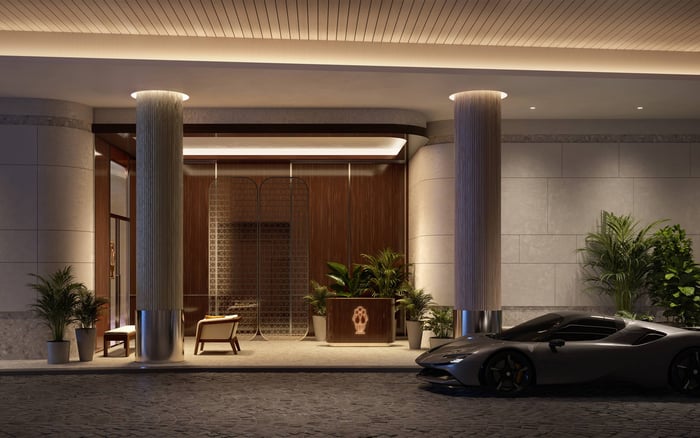
Nora House presents an ambitious pre-construction proposition in West Palm Beach, but discerning buyers should evaluate its association framework, reserve assumptions, insurance structure and amenity economics as carefully as its design credentials.
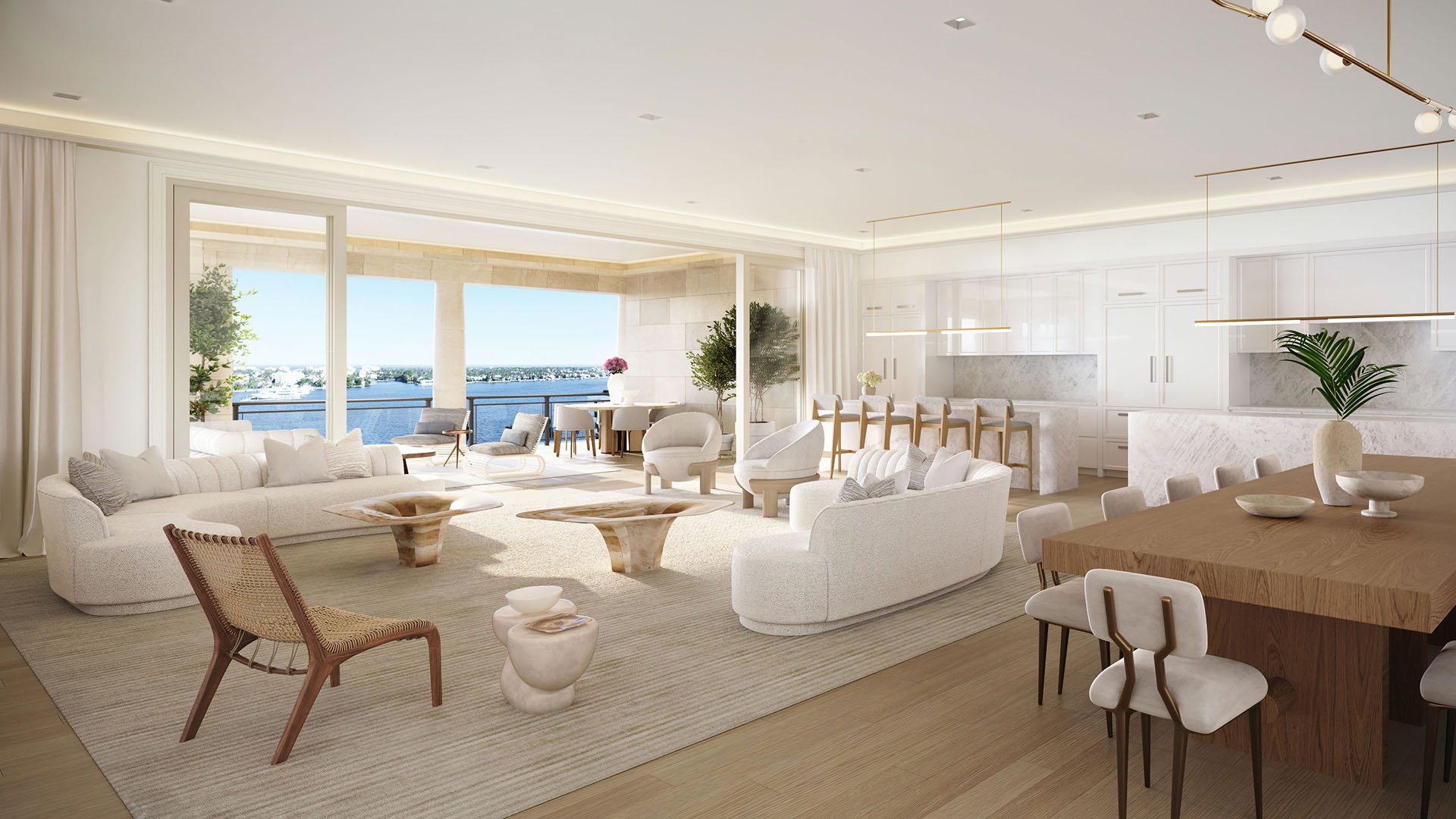
Nora House is a planned luxury condominium at a reported 1105 N. Dixie Highway in West Palm Beach. Marketed as the Nora District’s first for-sale residential launch, it offers buyers an early opportunity to consider ownership in an emerging district rather than an established residential enclave. That positioning has appeal, but it also raises a practical question: what, precisely, will owners be obligated to fund once the building is operating?
The design proposition is polished. Swedroe Architecture is designing the residences, with interiors by Lillian Wu Studio. The two- to three-bedroom homes are described as spanning approximately 1,700 to more than 6,700 square feet of total living area. The planned lifestyle program is similarly expansive, encompassing pools, wellness and fitness facilities, game and sports spaces, pickleball, bowling, a golf simulator, an event room and guest accommodations.
In a highly amenitized condominium, the operating model is part of the luxury product.
Buyers exploring Nora House West Palm Beach should therefore treat the finishes and facilities as the beginning of the conversation, not its conclusion.
Published specifications are not entirely consistent. The residences have been described as offering two to three bedrooms and total living areas exceeding 6,700 square feet, while other details have cited two to four bedrooms and approximately 1,500 to 2,900 square feet. The discrepancy may reflect different measurement conventions, evolving inventory or changing sales materials, but buyers should not infer the explanation.
Request the current floor plan and a written breakdown of interior air-conditioned area, terrace area and any other space included in the quoted total. Confirm ceiling conditions, storage, parking rights and the treatment of limited common elements in the governing documents. Price per square foot is meaningful only when the numerator and denominator use the same definitions.
The pricing narrative has also shifted. Anticipated pricing in March 2026 ranged from approximately $2 million to $6.5 million. By July, the range had broadened to roughly $1.9 million to $7 million. Such fluidity is understandable during a sales rollout, but the executed contract, deposit schedule and attached exhibits must control the analysis. An advertised range provides context; it does not replace unit-specific economics.
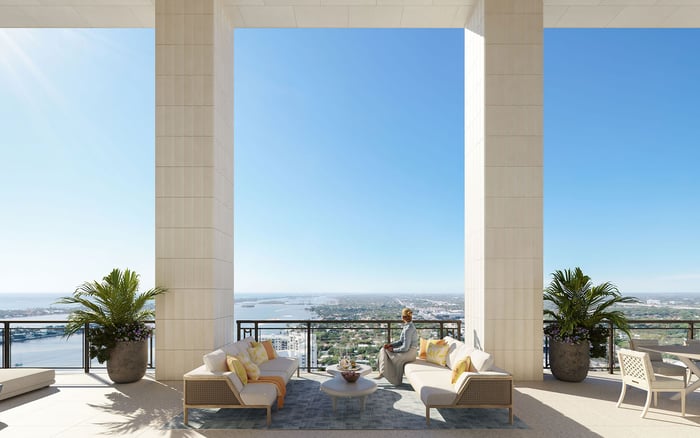
More than 90,000 square feet of amenities across two rooftop levels has been advertised. The program includes two pools, spa and wellness facilities, a fitness center, pickleball courts, a two-lane bowling alley, a golf simulator, a wine bar, boardroom and coworking space, event capacity and six guest suites. It is a notable proposition, yet every staffed, cooled, insured and maintained space carries a recurring cost.
Ask for the first-year operating budget and examine its assumptions line by line. Relevant categories include staffing, security, utilities, pool and spa maintenance, elevator service, landscaping, technology, cleaning, guest-suite operations and repairs to specialized equipment. Buyers should also determine which services are included in common charges and which may carry user fees.
Facility use is subject to regulation by the condominium owners’ association, and services within those facilities are subject to the association’s then-current estimated budget. In practical terms, a marketed amenity does not guarantee an unchanged service level indefinitely. This distinction is central to evaluating a highly programmed condominium.
A detailed reserve schedule, final association budget, insurance structure, maintenance allocation and turnover-governance package are not publicly available. That absence should prompt document review, not speculation. Before signing, request the proposed declaration, articles, bylaws, rules, budget, reserve assumptions, insurance information, developer warranties and turnover provisions.
The maintenance matrix warrants particular scrutiny. It should clearly establish whether the association or the individual owner is responsible for terraces, glazing, doors, waterproofing interfaces, mechanical components and other boundaries defined in the condominium documents. Buyers should also ask how reserve assumptions address pools, roofing, elevators, building systems and specialized amenity equipment.
Insurance analysis belongs alongside the reserve review. Request the proposed association coverage structure, deductibles and allocation of insured responsibilities between the association and owners. Then have appropriate advisers assess whether the anticipated owner policy coordinates with the condominium’s coverage. Trophy finishes cannot remedy an unclear casualty allocation or an underdeveloped capital plan.
This discipline applies across the new-construction market. Buyers comparing Edgeworth West Palm Beach and Forté on Flagler West Palm Beach should evaluate governing documents and operating assumptions, not merely renderings or headline prices.
Nora House remains a pre-construction offering. An early-interest invitation for future floor plans and renderings underscores that the program is still being presented before completion. Plans, pricing, amenities, budgets and delivery details may evolve before contracts are finalized and association control ultimately passes to owners.
Reservations have been characterized as brisk, particularly for larger residences, and buyers have shown interest in pricing positioned below some nearby luxury condominiums. Neither point replaces a unit-specific review. A reservation narrative is not an independently audited absorption analysis, and relative affordability does not establish that projected carrying costs are durable.
For design and architecture enthusiasts, the appropriate posture is not skepticism toward quality, but insistence that design ambition be matched by contractual precision. Compare the proposed documents, amendment rights, developer control period, owner voting rights, warranties and turnover deliverables. Ask which representations are incorporated into the purchase agreement and which remain illustrative marketing.
A useful comparison set should account for location, residence scale, services, governance and total ownership cost. A buyer considering The Ritz-Carlton Residences® West Palm Beach alongside Nora House should request comparable documents from each offering and normalize square-footage definitions, deposits, common charges and anticipated insurance obligations.
The final decision should rest on five aligned elements: a residence suited to the buyer, a contract that accurately captures the offering, a credible operating budget, intelligible governance and a reserve approach proportionate to the physical program. Nora House may offer a distinctive entry into the Nora District, but durable luxury will ultimately depend on how transparently the condominium is funded and governed after the sales presentation ends.
For discreet guidance on evaluating South Florida’s leading residential opportunities, connect with MILLION.
If branded residences are on your mind — as a home or as an allocation — we would be glad to share what we are seeing, privately.
Begin a quiet conversationNora House has a reported address of 1105 N. Dixie Highway in West Palm Beach’s Nora District.
The project is described as offering two- to three-bedroom residences with approximately 1,700 to more than 6,700 square feet of total living area.
Published specifications differ, so buyers should confirm whether quoted area means interior space, terrace area or total living area.
March 2026 pricing was approximately $2 million to $6.5 million, while July materials cited roughly $1.9 million to $7 million.
Plans include pools, wellness and fitness facilities, pickleball, bowling, a golf simulator, event space, coworking facilities and guest suites.
No. Facility use is subject to association regulation, and service levels depend on the association’s then-current estimated budget.
Request the proposed declaration, bylaws, rules, first-year budget, reserve assumptions, insurance details, warranties and turnover provisions.
Pools, elevators, building systems and specialized equipment can create future capital needs that should be addressed through credible reserve assumptions.
No. Characterizations of brisk reservations are not equivalent to a published, independently audited absorption analysis.
Compare square-footage definitions, deposits, common charges, insurance obligations, maintenance allocations, governance rights and reserve assumptions.