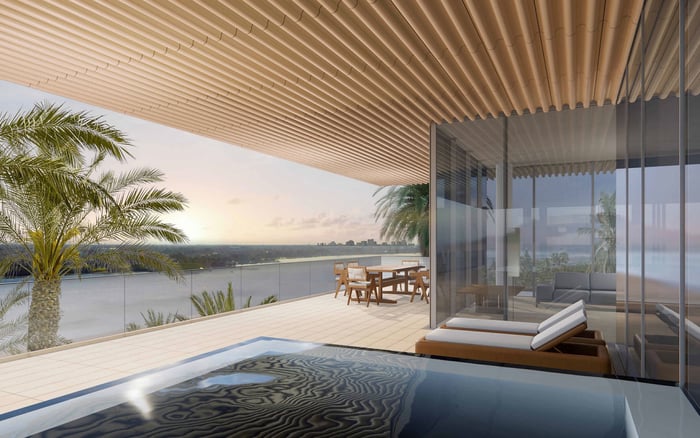
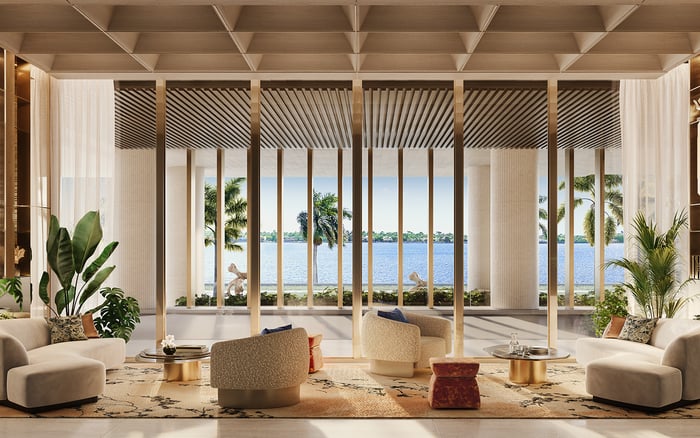
At Mr. C Residences West Palm Beach, the distinction between a hospitality name and an enforceable service obligation deserves careful attention. A practical guide to reviewing licensing, management, amenity access and the provisions that could govern an operator change.

For buyers considering Mr. C Residences West Palm Beach, the appeal extends beyond architecture and interiors. Bellini dining, in-residence service and a concierge suggest a home organized around hospitality. The practical purchase question is whether that experience rests on clear obligations that endure changes in ownership, management or branding.
The planned development combines 146 branded residences with 110 hotel suites. Terra and Sympatico Real Estate are the developers, with Arquitectonica responsible for architecture and Meyer Davis for residential interiors. Those roles establish the development team, but not responsibility for operating residential services over time.
A hospitality name and an enforceable service obligation are not the same thing. A thorough buyer review connects each important lifestyle expectation to a responsible party, a funding mechanism and a provision addressing change.
Lakeview Hospitality Investments, LLC is the legal developer for West Palm Beach. The developer holds a limited right to use Mr. C’s trademarked names and logos. It and its affiliates are separate legal entities from Mr. C.
That distinction matters. Permission to display a name does not, by itself, mean the brand guarantees the developer’s obligations. Mr. C is also not responsible for the content of the marketing materials. Buyers should identify which entity makes each commitment rather than treating every branded statement as a promise from the hospitality brand.
The scope of a trademark license should not be mistaken for a promise that branding will continue indefinitely. Nor does the word “limited” alone reveal the license’s duration or termination conditions. Those questions require review of the West Palm Beach agreements, not inference from the building’s name.
During purchase diligence, treat branding and service delivery as separate questions, even where documents connect them. Licensing concerns authority to use the name and any associated requirements. Management concerns who must operate services, under what standards and at whose expense.
West Palm Beach’s executed license and management agreement terms-including renewal periods, termination rights, fees and replacement-operator provisions-remain to be verified. Do not assume either agreement runs indefinitely or that one automatically preserves the other.
Ask counsel to identify the contracting parties and explain whether obligations rest with the developer, a hotel entity, the condominium association or another party. Clarify how responsibility may transfer and whether residential owners can enforce the service commitments that matter to them.
This distinction also makes comparison shopping more rigorous. A buyer weighing Mr. C against Alba West Palm Beach should compare documented responsibilities and access rights, not assume equivalent operating arrangements.
Advertised offerings at Mr. C include a Bellini restaurant and café, in-residence dining, 24-hour concierge service, a spa and rooftop pool access. Advertised amenities are not evidence of perpetual contractual access.
Translate the amenity descriptions into a written service schedule. For each feature, ask who owns or controls the relevant space, who operates it, who may use it and what charges apply. Distinguish access from included service: the ability to order dining is separate from whether its cost forms part of an owner’s regular assessments.
For concierge service, seek a definition of the promised coverage and responsibilities. For the spa and rooftop pool, request the provisions governing resident access, restrictions and authority to change the rules. For dining, ask what obligation, if any, requires a particular venue or service to continue.
Second-home buyers should be especially precise about the services they expect while absent. Do not assume an advertised concierge service includes property monitoring, maintenance coordination or other owner-specific tasks unless those duties are documented.
Before purchase, request the condominium documents, brand-license and management agreements or available summaries, operating budgets, and provisions allocating responsibility for shared services and amenities. If a summary is supplied, ask counsel what remains unresolved without the underlying agreement.
The review should answer five practical questions:
Duration: What are the initial terms, renewal conditions and relevant notice periods?
Responsibility: Which entity must maintain each agreement, and can that obligation transfer?
Cost: Who pays licensing, management and service charges, and how may they change?
Control: Who can alter service standards, operating hours, resident access or providers?
Continuity: What happens after expiration, termination or a change of operator?
Read the budget alongside the service obligations. Ask which expenses belong to residential owners, which belong to hotel operations and how shared costs are allocated. A headline maintenance estimate is no substitute for understanding its billing basis, inclusions and potential changes.
The separate project Mr. C Residences Boca Raton offers a useful comparison. There, the condominium association must maintain a brand license and/or management agreement to use the Mr. C names and logos and offer the described Mr. C amenities. There is no assurance that such agreements will be entered into or perpetually maintained.
Those are Boca Raton’s terms. They do not establish that West Palm Beach has the same obligations, renewal structure or consequences of termination.
Their value lies in sharpening the request for West Palm Beach’s own documents. Ask whether comparable dependencies exist, who must maintain the relevant agreements and which owner rights would survive their expiration.
A brand change does not automatically mean every amenity disappears. Conversely, retaining the name is not proof that staffing, access or service levels cannot change. The relevant documents must explain those relationships.
Ask counsel to review three scenarios: the brand remains but the operator changes; a license ends while some services continue; and a management agreement ends before a replacement is appointed. These are diligence scenarios, not predictions about the project.
For each, clarify interim service responsibility, replacement authority, funding and required approvals. The goal is not simply to preserve signage. It is to understand how the residential experience would be maintained and what owners could require if expectations were not met.
The purchase decision is strongest when the desired lifestyle has a documented operating structure behind it. Have Florida condominium counsel distinguish enforceable commitments from discretionary offerings before you rely on either.
For a discreet conversation about your West Palm Beach residential search, connect with MILLION.
If branded residences are on your mind — as a home or as an allocation — we would be glad to share what we are seeing, privately.
Begin a quiet conversationThe planned development combines 146 branded residences with 110 hotel suites, with architecture by Arquitectonica and residential interiors by Meyer Davis.
Terra and Sympatico Real Estate are the developers. The West Palm Beach legal disclosures identify Lakeview Hospitality Investments, LLC as the legal developer.
The disclosures establish limited trademark rights and legal separation between the developer and Mr. C. They do not establish a brand guarantee of the developer’s obligations.
The public disclosures do not establish a permanent brand commitment. Buyers should have counsel review the West Palm Beach license’s duration, renewal conditions and termination provisions.
Review licensing for the right to use the brand name and management for responsibility to deliver services. The West Palm Beach agreements must establish how those responsibilities interact.
Advertised offerings include a Bellini restaurant and café, in-residence dining, 24-hour concierge service, a spa and rooftop pool access. Advertising alone does not establish perpetual access or unchanged service levels.
Boca Raton’s disclosures concern a separate project and do not establish West Palm Beach’s contractual terms. They illustrate why buyers should request project-specific agreements.
Request condominium documents, brand-license and management agreements or available summaries, operating budgets, and provisions governing service responsibilities and amenity access.
That outcome should not be assumed. The governing agreements must establish which services and access rights survive a license termination or operator change.
Ask who pays licensing and management charges, how shared hotel and residential costs are allocated, and how charges may change. Review the budget alongside the actual service obligations.