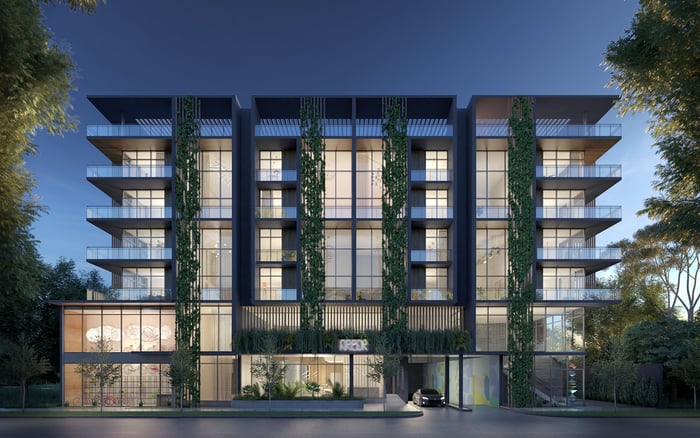
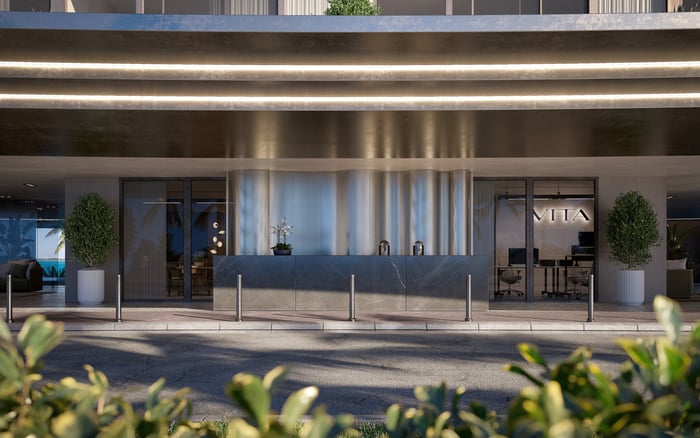
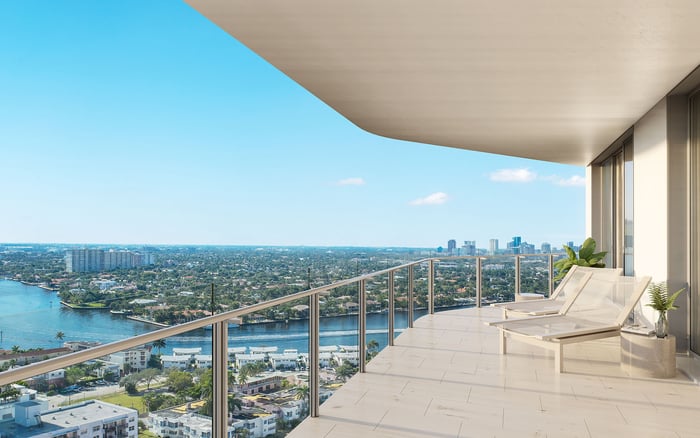
A closed $323.8 million construction loan and the start of vertical construction are meaningful signs of progress at Four Seasons Private Residences Coconut Grove. For buyers, however, the decisive review extends beyond headline financing to the loan’s practical limits, the developers’ capital position, contract protections, construction milestones, and the distinction between a targeted move-in date and a binding outside completion date.
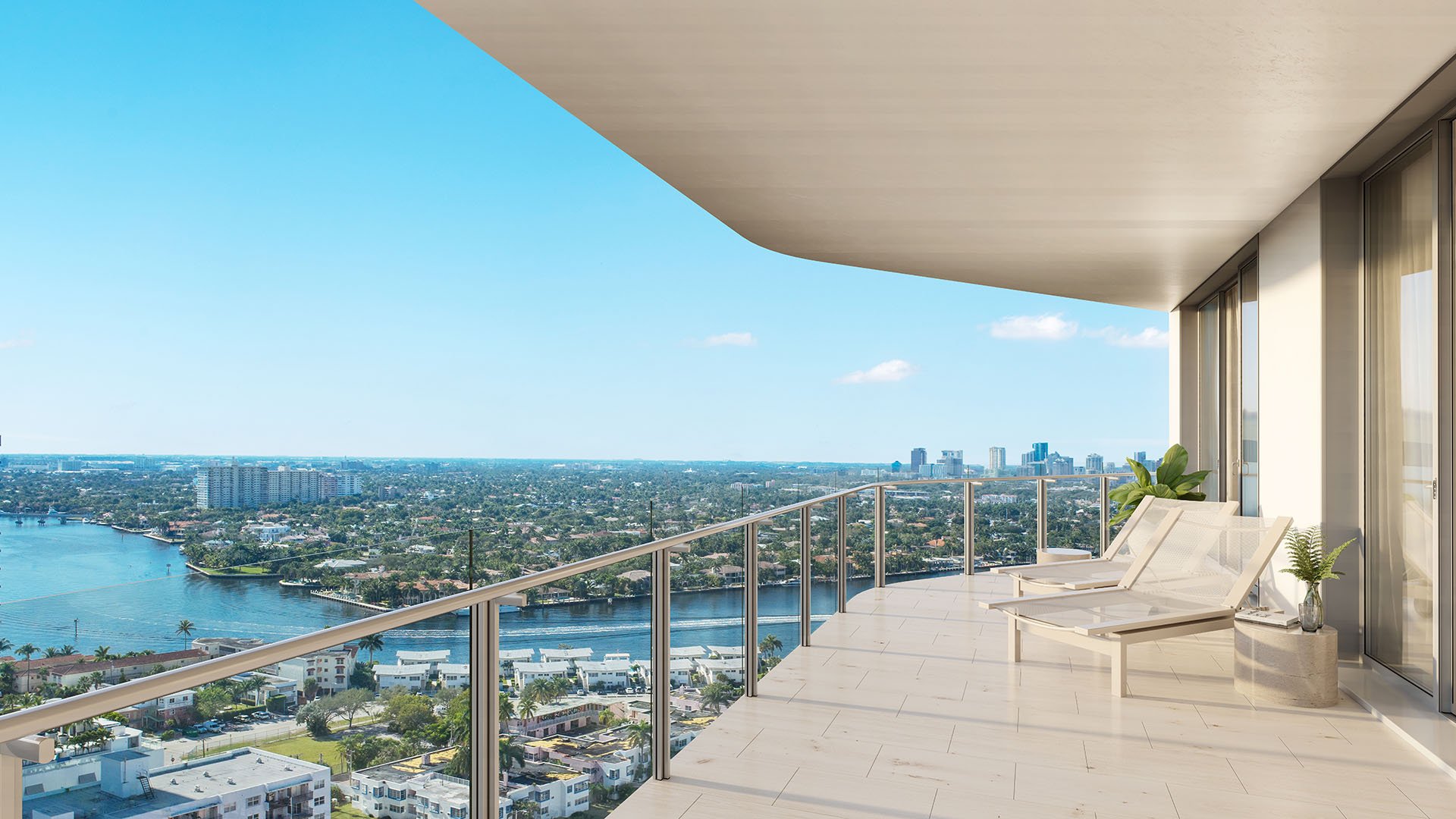
For a purchaser considering Four Seasons Residences Coconut Grove, the most consequential question is not whether the project has a compelling identity. It is whether the capital stack, development team, construction progress, and purchase contract collectively support a credible path to closing.
The planned 20-story, 70-residence waterfront condominium at 2699 South Bayshore Drive is being developed by CMC Group and Fort Partners in partnership with Four Seasons. Billed as Florida’s first standalone Four Seasons-branded residential project, it has no attached Four Seasons hotel. Luis Revuelta leads the architecture, while Michele Bönan is responsible for the interiors.
That profile gives buyers several recognizable pillars: established South Florida developers, a global hospitality brand, a limited residence count, and a prime Coconut Grove waterfront address. Yet brand strength and design pedigree are no substitute for delivery analysis. Within MILLION’s Buyer's Guides, the relevant lenses are Pre-Construction, Waterfront, and Branded Residences-each demanding scrutiny of execution as well as aspiration.
CMC Group and Fort Partners closed a $323.8 million construction loan from Bank OZK in January 2026. Also characterized in rounded terms as approximately $324 million, the financing is intended to fund construction of the tower. More than 10 lenders competed for the financing, indicating meaningful institutional interest at the time of closing.
For buyers, a closed senior construction facility is materially different from a project still seeking its principal financing. It indicates that a lender completed underwriting and was prepared to advance capital subject to the loan documents and draw conditions. This reduces a major category of pre-construction uncertainty: the risk that construction cannot proceed because senior financing never closes.
It does not mean the full loan amount was delivered to the developer on day one. Construction loans are ordinarily funded through draws tied to conditions and progress, and the complete covenants, draw requirements, completion tests, and remedies have not been disclosed. A lender’s commitment is therefore a positive indicator, not a completion guarantee.
A sophisticated capital review asks how much sponsor equity has been committed, when that equity must be funded, what presale requirements apply, and whether cost overruns or delays could require additional capital. The complete developer equity contribution, presale percentage, loan covenants, and buyer-deposit escrow structure have not been disclosed.
That absence should be interpreted neither negatively nor positively. It simply defines the boundary between what a buyer can infer from headline financing and what counsel should verify in the offering documents and contract. The critical questions concern the sequence of equity and debt funding, responsibility for overruns, conditions governing future loan draws, and the treatment of deposits before closing.
The developer roster matters, but it should be assessed within the full structure. CMC Group and Fort Partners bring established South Florida experience, while Four Seasons may reinforce buyer confidence and presales. Still, neither reputation nor branding eliminates contractor coordination, permitting, cost-control, inspection, or schedule risk.
The project broke ground in October 2025. By July 2026, vertical construction had begun, establishing a more meaningful measure of physical progress than financing or a ceremonial groundbreaking alone. The stated completion target remained 2028, with move-in expected in mid-2028.
A buyer should read those milestones sequentially. Groundbreaking marks commencement, the loan closing addresses a central funding question, and vertical work confirms that construction has moved upward. Together, they support the view that the project is funded and progressing. They do not establish that every future milestone will arrive on schedule.
The mid-2028 expectation should also be distinguished from any contractual outside completion date. Marketing schedules are targets. The purchase agreement governs extension rights, cancellation rights, permitted changes, force majeure treatment, closing notices, and buyer remedies. Those provisions determine how delay risk is allocated.
Coconut Grove offers several useful reference points, although every development has its own financing, contract, construction stage, and operating model. Completed or established residences such as Park Grove Coconut Grove can help a buyer assess the neighborhood’s finished waterfront experience, while Mr. C Tigertail Coconut Grove offers another perspective on hospitality-influenced residential positioning.
A buyer comparing island and mainland waterfront living might also consider Vita at Grove Isle. These comparisons are most useful for assessing setting, privacy, service expectations, and resale context. They should not be used to transfer assumptions about delivery risk from one project to another.
The most valuable review is documentary. Buyers and counsel should request the current construction schedule and identify the next meaningful milestones, including structural progress, enclosure, major inspections, closing readiness, and temporary or final certificate-of-occupancy status. Periodic site updates can then be measured against that baseline.
The contract review should isolate the promised delivery framework: the outside completion date, all extension rights, deposit schedule, escrow terms, cancellation provisions, remedies for material changes, and the developer’s authority to modify plans or specifications. Buyers should also understand what must occur before a closing notice may be issued, as well as how much time they will have to fund and inspect.
Financing diligence should remain carefully bounded. The loan closing is strong evidence that a central capital hurdle has been cleared, and competitive lender interest adds context. But without the full loan and equity documents, a purchaser should not assume that every draw condition, contingency, or cost exposure has disappeared.
The balanced conclusion is favorable but disciplined. The strongest indicators are the closed Bank OZK facility, lender competition, and the transition into vertical construction. The remaining risk lies primarily in execution, trade coordination, permitting, cost management, inspections, and adherence to the targeted schedule. Delivery confidence should rise as those physical and legal milestones are achieved.
Is Four Seasons Private Residences Coconut Grove fully financed? A $323.8 million senior construction loan closed in January 2026, materially reducing financing uncertainty. The complete equity and loan terms have not been disclosed.
Does the construction loan guarantee completion? No. It supports construction funding subject to loan conditions, but it does not eliminate execution, cost, permitting, or schedule risk.
Who is developing the project? CMC Group and Fort Partners are developing it in partnership with Four Seasons.
Is there a Four Seasons hotel attached? No. The project is positioned as a standalone Four Seasons-branded residential development without an on-site hotel.
How large is the development? It is planned as a 20-story waterfront condominium with 70 residences at 2699 South Bayshore Drive.
Has vertical construction started? Yes. Vertical construction had begun by July 2026, following the October 2025 groundbreaking.
When is move-in expected? The stated expectation was mid-2028, with 2028 remaining the completion target. Buyers should distinguish that target from the contract’s outside date.
What capital details remain undisclosed? Complete sponsor equity, presale percentages, loan covenants, and buyer-deposit escrow mechanics have not been disclosed.
Which contract provisions matter most for delay risk? Focus on the outside completion date, extension rights, cancellation provisions, escrow terms, closing conditions, and remedies for material changes.
What should buyers monitor next? Track structural progress, enclosure, permits, inspections, closing readiness, and temporary or final certificate-of-occupancy milestones.
If you'd like a private walkthrough and a curated shortlist, connect with MILLION.
If branded residences are on your mind — as a home or as an allocation — we would be glad to share what we are seeing, privately.
Begin a quiet conversation