A family-office framework for evaluating Sunny Isles Beach residences through three distinct tests: control of private-elevator access, authentication of visitors, and separation of service circulation. Written rules, unit-specific plans, and authorized walkthroughs should shape the purchase decision.
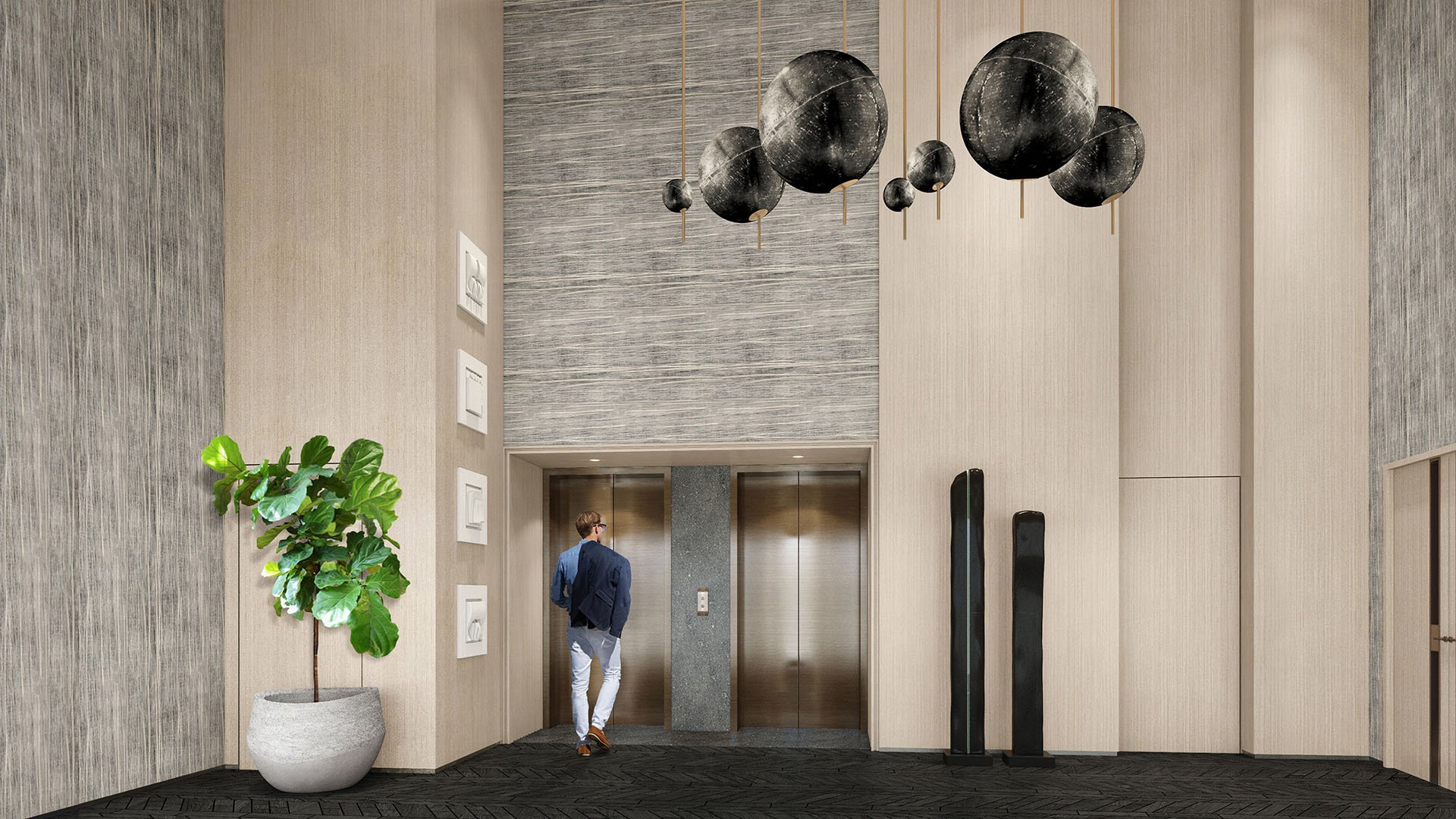
For a family office acquiring a residence in Sunny Isles Beach, privacy is an operating requirement, not simply an architectural feature. A beautiful private foyer can offer discretion on arrival, but the purchase question is more exacting: who can reach that foyer, under whose authority, and by which route?
The strongest acquisition brief separates three issues that marketing language can blur: elevator control, visitor authentication, and service circulation. Each warrants written confirmation. An advertised feature is a starting point for diligence, not proof of how access works in practice.
Define the household’s requirements before comparing buildings. Consider family arrivals, visiting guests, household employees, deliveries, and periods when the residence is unoccupied. Identify who may authorize entry on the family’s behalf. The goal is a home whose daily operation supports discretion without improvised instructions at every arrival.
“Private elevator” should prompt a unit-specific inquiry. At Ocean Three, 18911 Collins Avenue, private elevator access is described for most residences, with arrival into a private foyer or directly into the home. That distinction matters: a building-level description does not establish the arrangement for every residence. The elevators are described as security controlled, but credential types and resident-authorization rules still require confirmation from management.
Ocean Four, at 17201 Collins Avenue, presents a different configuration: secure semi-private elevator lobbies and computerized secure elevator access. Neither description establishes how many residences share each landing. Request the relevant floor plan and written confirmation of who may access the proposed residence’s landing.
For Muse Residences Sunny Isles Beach, the advertised feature is private elevators with biometric security. That is a specific technology claim, not a complete access policy. Ask how authorized users are enrolled and removed, what alternative credentials exist, and how staff overrides are governed. Do not assume biometric access eliminates exceptions.
The elevator review should establish landing exclusivity, credential permissions, resident-controlled authorization, staff access, and access-log retention. Ask management to demonstrate ordinary access during an authorized walkthrough, without requesting sensitive credentials or unrestricted security records.
An attended lobby is valuable hospitality infrastructure. It does not, by itself, establish that every visitor must verify their identity and receive resident approval before proceeding upstairs.
Ocean One, at 19333 Collins Avenue, is described as having an attended lobby, 24-hour concierge service, and around-the-clock security. The described guest process includes a concierge greeting and check-in before visitors are directed to elevators. It does not establish identification requirements or resident-approval procedures.
Translate that distinction into a practical visitor brief. Request written procedures for pre-registration, identification checks, confirmation with the resident or designated representative, temporary credentials, and escort requirements. Ask separately about deliveries and unexpected arrivals. For a family office, the identity of the person authorized to approve a visitor deserves as much attention as the visitor’s identity.
Ocean II’s advertised features include a staffed guardhouse, around-the-clock on-site security, private elevator access for residents, and concierge service. These features are relevant, but the same operating questions remain. Ask what happens when a guest arrives without advance notice and no authorized household representative can be reached.
A service elevator and a separate service route are not interchangeable. The test is whether vendors, household staff, deliveries, and waste movements can travel between designated entry points and the residence without crossing resident lobbies or amenities.
St. Regis® Residences Sunny Isles is marketed with a private elevator and entry foyer in every residence. Service elevators and 24-hour security guards are also identified. These descriptions do not establish complete separation between resident and service circulation. Request plans showing how those paths connect to the specific home under consideration.
At Regalia Sunny Isles Beach, high-speed elevators and a separate service elevator are advertised. Trace the full service route, including the loading area, intermediate corridors, landing, and unit entry. A separate elevator is evidence of infrastructure, not confirmation that every service movement stays separate.
Obtain permission to walk the route with management. Ask where deliveries wait, how vendors are admitted, whether household staff use a different entrance, and how waste leaves the residence. Record shared segments and assess them against the household’s requirements rather than assuming every crossing is unacceptable.
A purchase plan must also address exceptions. Request written explanations of elevator-outage procedures, alternative access routes, generator coverage, security-system continuity, and on-site versus remote monitoring. Ask whether an outage changes the routes guests or service personnel would normally use.
Keep these questions specific to the proposed residence. Which alternative route would the household take? Who authorizes access during a disruption? How are temporary arrangements communicated? These are requests for confirmation, not assumptions about any building’s capabilities.
Where a system is proposed rather than operating, distinguish its specification from demonstrated function. Have counsel identify which commitments appear in the applicable purchase documents and which remain subject to confirmation. A future feature should not appear in the acquisition memo as operationally verified.
Whether reviewing a resale residence or another purchase opportunity, maintain a single decision record. For each requirement, distinguish the advertised feature, the written rule, the plan or authorized demonstration, and any unresolved point. This prevents an appealing presentation from becoming an unsupported conclusion.
Assign clear responsibilities. The family office should define acceptable household procedures; management should confirm building rules; counsel should address contractual protections. Where appropriate, a qualified adviser can assess whether the documented arrangements satisfy the family’s requirements.
Before the relevant diligence deadline, ask counsel to make satisfactory written confirmation of elevator access rules, visitor approval, and service routing a purchase condition where negotiable. Treat unresolved items as decisions to make, not details presumed to resolve after closing.
The objective is not to select the building with the most elaborate security vocabulary. It is to acquire a residence where architecture, permissions, and service operations fit the household’s actual life. Private arrival matters most when the rules supporting it are equally clear.
A disciplined family-office recommendation should explain what the residence offers, what management has confirmed, and what the family must administer itself. That is a more useful measure of discretion than an amenity label alone.
For a discreet conversation about your Sunny Isles Beach acquisition priorities, connect with MILLION.
If branded residences are on your mind — as a home or as an allocation — we would be glad to share what we are seeing, privately.
Begin a quiet conversationDo not assume it does. Obtain unit-specific plans and written confirmation of landing exclusivity and access permissions.
Ocean Three is described as offering private elevator access to most residences, not necessarily every unit. Confirm the arrangement for the exact residence.
Ocean Four advertises secure semi-private elevator lobbies and computerized secure elevator access. The number of residences sharing each landing is not specified in that description.
Muse is described as offering private elevators with biometric security. Buyers should confirm enrollment, removal of users, alternative credentials, and staff-override rules.
No. Its described guest process includes greeting and check-in, but does not specify identification requirements or resident-approval procedures.
Ocean II advertises a live-guard guardhouse, around-the-clock on-site security, private elevator access for residents, and concierge service. Visitor authorization rules still require confirmation.
Its marketing identifies private elevators and entry foyers in every residence, along with service elevators. Those features do not establish complete separation of resident and service circulation.
Regalia advertises high-speed elevators and a separate service elevator. Buyers should still trace the complete loading-to-unit route for shared segments.
Ask about elevator outages, alternative routes, generator coverage, security-system continuity, and on-site versus remote monitoring. Confirm how access authorization works during disruptions.
Keep them explicit in the purchase decision and ask counsel about negotiated diligence conditions. Seek satisfactory written confirmation of elevator rules, visitor approval, and service routing before the relevant deadline.