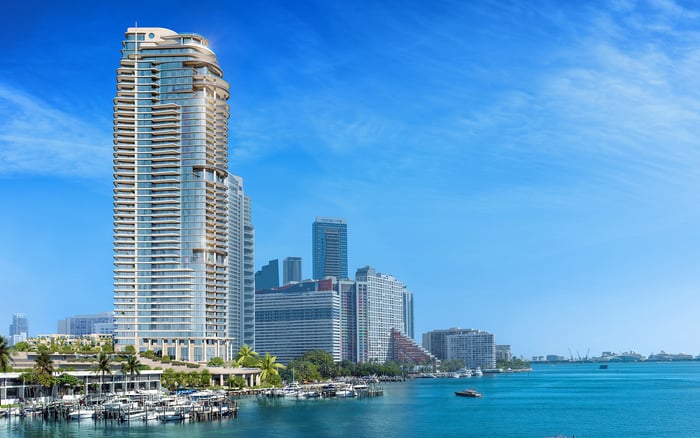
A disciplined Downtown Miami acquisition review separates material suitability, code compliance, warranty coverage, and maintenance evidence, giving family offices a clearer view of exterior-condition risk before purchase.
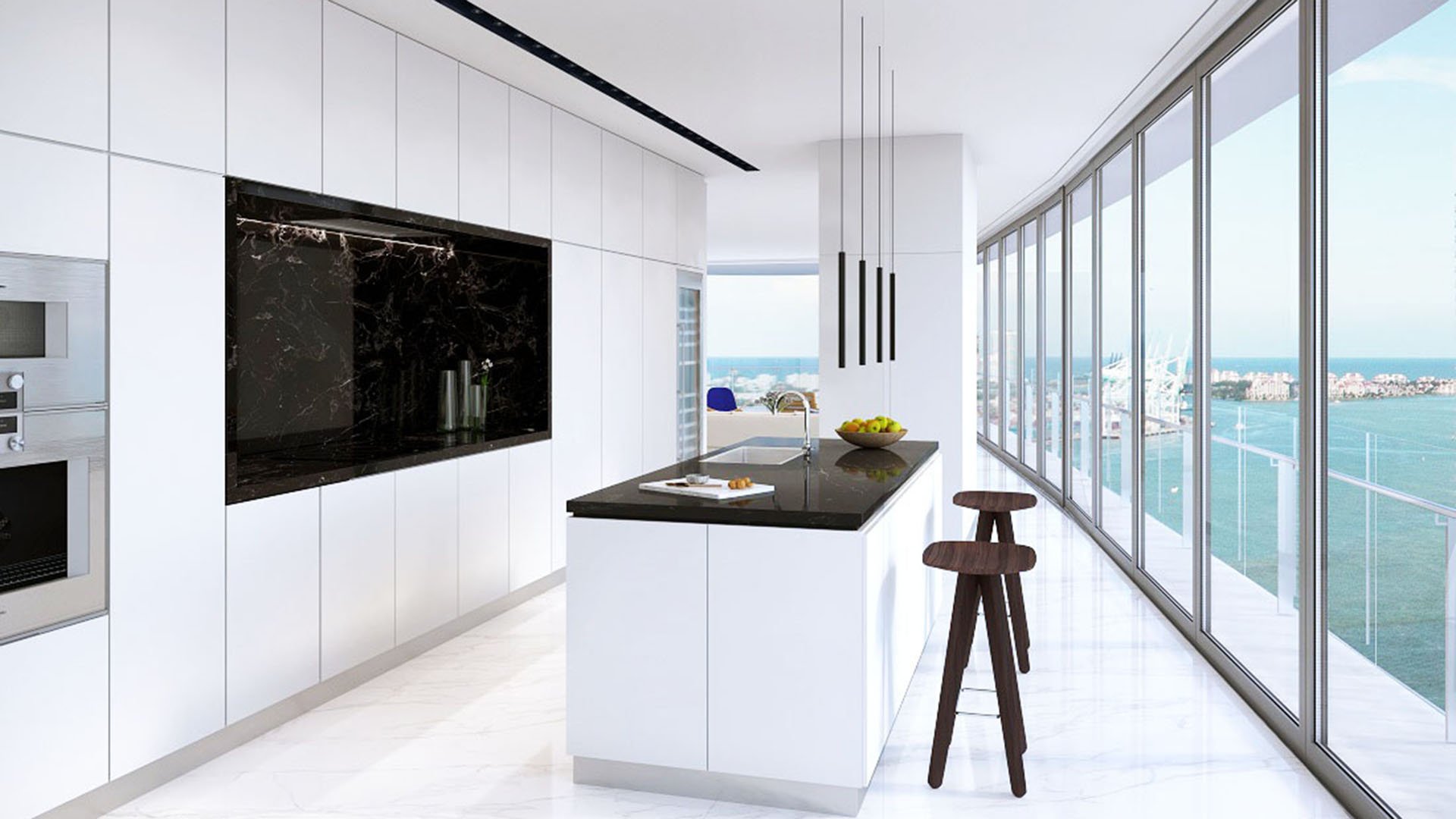
For a family office considering Downtown Miami, the purchase review should extend beyond interior finishes to the exterior systems that require ongoing care. Railings, window hardware, roof metals, sealants, and exposed mechanical equipment belong in the acquisition file alongside the architectural and lifestyle considerations that first attract the buyer.
The essential distinction is between material suitability, code compliance, warranty coverage, and documented maintenance. Evidence of one does not establish the others. A specified alloy does not prove it was installed; a warranty does not establish that corrosion is covered; a recent building inspection does not resolve every component-level question.
For a residence under consideration at Aston Martin Residences Downtown Miami, as elsewhere, use this framework to organize questions-not to infer performance from the project name. The objective is a documented ownership plan, not a generalized judgment about a building.
Begin with an exposure profile for the residence and the systems serving it. Distance to Biscayne Bay or other saltwater matters, but elevation, orientation, wind, and shelter also influence corrosion risk. Two components at the same address can face different conditions.
Ask the reviewing professional to distinguish sheltered hardware from exposed railings, rooftop equipment, and open-air mounting assemblies. Upper-level and bay-facing components may need shorter cleaning and inspection intervals than protected ones. A map measurement alone cannot establish the appropriate maintenance cycle.
When evaluating One Thousand Museum Downtown Miami, bring the same questions to the unit-specific review: which components are exposed, which are protected, and what documentation supports their treatment? A consistent checklist makes alternatives easier to compare without implying identical exposure or construction.
Request permit drawings, product approvals, specifications, and inspection records. Descriptions such as coastal-ready are no substitute for identifying the installed product, its material grade, and its protective finish.
For exposed stainless-steel railings, fasteners, and hardware, request the alloy designation and ask the reviewing professional whether 316 or 316L is appropriate for the exposure. For aluminum, seek documentation of the factory coating and ask whether AAMA 2604 or AAMA 2605 is appropriate to the product and exposure. Neither designation is a universal answer for every assembly.
Ask the reviewing professional to reconcile specified products with installation and replacement records where available. Any unresolved discrepancy should remain an open diligence item, not be obscured by a broad assurance that the exterior is corrosion-resistant.
Whether the shortlist includes Casa Bella by B&B Italia Downtown Miami or another residence, request this evidence without assuming a particular alloy, coating, or maintenance standard from its design identity.
Code review should establish the applicable edition, effective date, component scope, and exposure classification with a licensed Florida professional. Treat coastline measurements as inputs to that review, not as standalone compliance conclusions.
Before applying any distance-based requirement, ask the reviewing professional to identify the governing provision and explain its applicability to the component under review. Keep the physical exposure assessment separate from the legal compliance determination.
Exterior inspection should focus on places where moisture and salt accumulate. Roof copings, edge metals, drains, fastener penetrations, and material interfaces warrant attention, even when the principal surfaces appear well maintained.
Around windows, railings, balcony edges, and penetrations, cracks, sealant separation, staining, or rust bleed warrant investigation for moisture entry. Ask that findings specify the affected location and recommended follow-up rather than rely on an overall visual impression.
The review must also extend beyond visible hardware. Chlorides and moisture can initiate corrosion of reinforcing steel. Obtain engineering assessments and corrective-work documentation addressing balconies, columns, beams, garages, water intrusion, spalling, and exposed reinforcement. Structural and life-safety inspections remain important, but do not replace a component-level exterior assessment.
Build a component-by-component warranty schedule rather than accepting a single assurance that the building is under warranty. Request the actual documents and identify what each covers, excludes, and requires of the owner or maintenance provider. Have counsel clarify responsibility where the documents are ambiguous.
Do not assume a roof-membrane warranty covers corrosion of coping, edge metal, drains, or installation hardware. Manufacturing defects in a membrane and deterioration of associated metal components are distinct issues.
For exposed HVAC equipment, examine exclusions involving coastal proximity, corrosion, coil deterioration, cabinet rust, and unmet cleaning requirements. Request documentation of coil and cabinet materials, protective coatings, fastener grades, mounting-hardware specifications, and manufacturer-prescribed cleaning schedules.
Apply the same document-led approach when considering Waldorf Astoria Residences Downtown Miami. Do not assign a standard hardware-warranty period across the shortlist; establish coverage from the relevant product documents.
Discuss quarterly freshwater rinsing of exposed stainless hardware and window tracks, together with sealant-joint inspections, as a possible coastal-maintenance planning baseline. It is not a universal legal requirement, and manufacturer instructions should govern cleaning methods and frequency.
An annual exterior-condition review offers another planning baseline. Include drains, waterproofing, sealants, fasteners, railings, and window and door operation. More exposed locations may justify shorter intervals, particularly for rooftop, upper-level, bay-facing, and open-air equipment.
For family-office oversight, translate these tasks into a calendar identifying each component, the responsible party, the prescribed procedure, and the completion record. Ask management and the relevant professionals to resolve responsibility before relying on the schedule. A proposed calendar is useful; dated evidence of completed work is more informative.
Before purchase, consolidate the exposure assessment, material records, warranty terms, inspection findings, and maintenance history into one decision file. Separate confirmed conditions from questions awaiting professional review, and identify who will resolve each open item.
Avoid assigning a generic salt-air maintenance cost. Obtain property-specific scopes and pricing for any recommended work. The purchase decision should reflect both the residence’s appeal and the practical obligations supported by its records. For a family office, that is the more useful expression of long-term stewardship.
Explore Downtown Miami residences with MILLION to shape a shortlist for a disciplined acquisition review.
If branded residences are on your mind — as a home or as an allocation — we would be glad to share what we are seeing, privately.
Begin a quiet conversationNo. Elevation, orientation, wind, and shelter also affect exposure, so the review should address individual components and the residence itself.
Request permit drawings, product approvals, specifications, and inspection records. Installation and replacement records can help reconcile specified products with what is present.
For exposed railings, fasteners, and hardware, ask the reviewing professional whether 316 or 316L is appropriate. An unspecified stainless-steel designation does not establish suitability for the particular exposure.
Request factory-coating documentation and ask whether AAMA 2604 or AAMA 2605 is appropriate for the product and exposure. The designation should be reviewed in the context of the actual assembly.
Have a licensed Florida professional verify the applicable code edition, effective date, component scope, and exposure classification. A coastline measurement alone does not establish compliance.
Not necessarily. Membrane manufacturing defects and corrosion of coping, edge metal, drains, or installation hardware are distinct coverage questions.
Review terms concerning coastal proximity, corrosion, coil deterioration, cabinet rust, and required cleaning. Coverage must be established from the actual warranty documents.
Discuss quarterly freshwater rinsing as a possible planning baseline for exposed stainless hardware and window tracks, not a universal requirement. Manufacturer instructions and actual exposure should determine the schedule.
Include drains, waterproofing, sealants, fasteners, railings, and window and door operation. More exposed components may need more frequent attention.
No. Structural and life-safety reviews do not replace component-level evaluation of exterior finishes, hardware, and maintenance history.