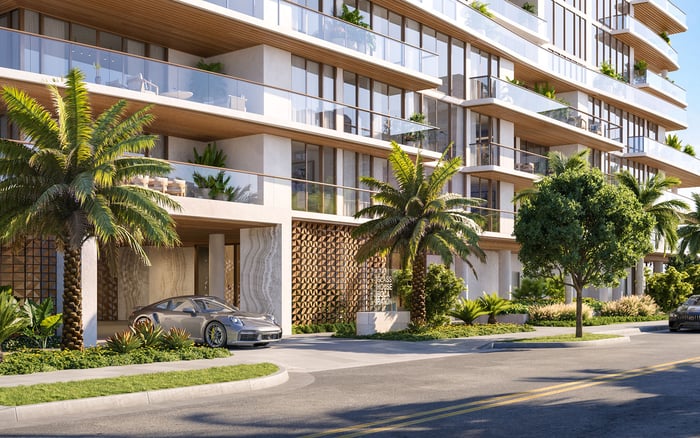
A family-office framework for clarifying hurricane-protection duties, balcony-clearance requirements, and owner-absence authorization at Faena Residences Miami, with an emphasis on written, property-specific instructions.

For a family office evaluating Faena Residences Miami Downtown Miami, hurricane preparation belongs alongside the declaration and household operating instructions. The essential question is not simply whether a residence has hurricane protection, but who maintains it, who may operate it, and who can act when the owner is elsewhere.
A well-prepared file should separate three matters: the association’s responsibilities, the owner’s obligations, and the authority delegated to representatives. None should be inferred from a residential brand or an expectation of attentive service. Treat each operational detail as a question requiring a property-specific written answer-not as a confirmed Faena service or access right.
The objective is discreet continuity: a residence that can be prepared without hurried permissions, improvised storage, or uncertainty over who makes the next decision.
Request the declaration, rules and regulations, hurricane policy, balcony or terrace policy, emergency-access authorization form, vendor-access protocol, and hurricane-protection maintenance schedule. Ask which documents govern the particular residence and whether the supplied versions are operative or proposed. Keep unresolved questions visible rather than resolving them through assumptions.
Before considering owner-installed or replacement hurricane protection, request the board’s specifications and clarify the approval process. Ask counsel to confirm applicable requirements concerning color, style, and building-code compliance rather than assuming a proposed system is permitted.
Review the declaration to establish responsibility for existing hurricane protection. Ask which components the association must maintain and whether owner approval is required for maintenance, repair, or replacement. Do not infer Faena’s allocation of responsibility from a general description of condominium practice.
Have condominium counsel confirm the applicable statutory text and governing documents before drawing legal conclusions. The practical result should be a responsibility schedule identifying each protection component, the responsible party, and the document supporting that assignment.
Ask whether the residence uses impact glass, shutters, another protection system, or a combination. Do not assume a particular installation, operating procedure, or maintenance arrangement. Request written preparation instructions for the actual system.
Separate maintenance from storm activation. A component may require periodic attention even if it needs no operation during a storm; an operable system raises separate questions about who deploys it and records completion. Ask management to distinguish those tasks in writing rather than treating hurricane protection as a single service.
For a Downtown Miami comparison that includes Aston Martin Residences Downtown Miami, use the same questions but maintain a separate file. A useful comparison measures clarity of responsibility, not presumed equivalence between buildings.
Balcony clearance is a safety matter, not merely housekeeping. Loose outdoor objects can become projectiles, threatening people and property. Ask counsel and management to identify restrictions on owner actions that could affect common elements or association-maintained property.
Ask management to specify what must be removed, where it may be stored, and when clearance must be complete. Do not assume a public storm watch or warning establishes the building’s deadline. Confirm whether rules require outdoor areas to be prepared before an extended summer absence, independently of an approaching storm.
For the household team, consider an inventory of movable outdoor belongings and a proposed indoor storage plan for management’s review. Identify who will perform the work and request any relevant handling or access restrictions. These are planning recommendations, not statements of Faena’s requirements.
Ask what evidence of completion management will accept. A dated checklist or photographs may help the family office document the work, but the building should confirm its own procedure. The file should distinguish the completion deadline from the earlier point at which the owner’s representative must authorize the work.
Written owner-absence authorization should identify who may access the residence and who may approve storm-preparation work when the owner is unavailable. These are separate permissions. Authority to communicate with management should not automatically be treated as authority to admit vendors or approve spending.
Ask counsel and management to align the authorization with the governing documents. A proposed instruction should identify the residence, primary representative, alternate contact, permitted tasks, and approval limits. Confirm how credentials or keys are handled and whether management must approve each vendor separately.
Ask counsel to clarify whether, and under what conditions, the board may operate hurricane protection without owner permission. Separately confirm the authority required for vendor entry and any work beyond operating that protection.
Define discretionary authority precisely. Ask how urgent protective action is distinguished from elective repair, who receives completion notices, and what happens if neither representative responds. Written authorization should reduce ambiguity without promising access or services the building has not agreed to provide.
For families also considering Waldorf Astoria Residences Downtown Miami, apply the same documentation standard. Branding is not a substitute for a hurricane protocol, and neither property’s procedures should be assumed to establish the other’s.
Request a single written protocol connecting balcony clearance, operation of applicable window protection, vendor access, and owner communications. Ask who coordinates each step and what alternative the owner must arrange if a requested service is unavailable.
A concise responsibility matrix can turn those answers into usable instructions: task, responsible party, authorization required, completion trigger, and confirmation method. Keep it subordinate to the governing documents. Its purpose is to translate agreed obligations into instructions, not to create new rights.
Post-storm arrangements deserve their own authorization review. Ask whether procedures allow authorized management personnel or vendors to inspect an absent owner’s residence, document damage, and address hazards. Confirm the conditions for entry rather than assuming preparation access continues after the event.
Request a clear distinction between documenting conditions, taking permitted protective measures, and commissioning repairs. Identify who receives photographs or inspection findings, who approves further work, and how access is coordinated while the owner remains away.
Before departure, review the file with the owner’s representative and management. Confirm that contact details, delegated permissions, clearance instructions, and maintenance responsibilities remain aligned. For a family office, the strongest preparation is not an expansive promise of service. It is a narrowly defined, actionable set of responsibilities with no uncertainty about who may act.
For a discreet conversation about South Florida ownership priorities, connect with MILLION.
If branded residences are on your mind — as a home or as an allocation — we would be glad to share what we are seeing, privately.
Begin a quiet conversationRequest the declaration, rules and regulations, hurricane policy, balcony or terrace policy, emergency-access form, vendor-access protocol, and hurricane-protection maintenance schedule.
Review the declaration to determine which duties belong to the association and which belong to the owner. Do not assume the allocation for a particular residence.
Ask condominium counsel to confirm whether owner approval is required under applicable law and the governing documents. Establish which protection components are assigned to the association before authorizing work.
Request the board’s specifications and approval process before planning installation or replacement. Ask counsel to confirm applicable requirements concerning color, style, and building-code compliance.
No; verify whether the residence uses impact glass, shutters, another system, or a combination. Confirm the associated maintenance and operating responsibilities.
Loose outdoor objects can become projectiles during a storm and threaten people and property. Confirm the building’s clearance requirements and permitted storage arrangements.
Do not assume it does. Ask management for the building-specific deadline and whether preparation is required before an extended summer absence.
It should identify who may access the residence and who may approve storm-preparation work when the owner is unavailable. Clarify permitted tasks, approval limits, and vendor-access requirements with management and counsel.
Ask counsel to confirm whether, and under what conditions, the board has that authority. Separately verify permissions for vendor entry and unrelated work.
Ask whether authorized management personnel or vendors may inspect the residence, document damage, and address hazards. Separately clarify who can approve repairs and the conditions governing access.