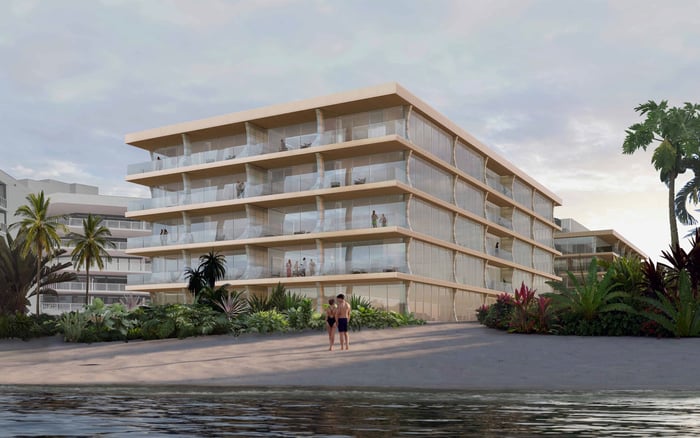
A family-office framework for evaluating Edgeworth’s unconfirmed access arrangements, with document requests covering biometric consent, non-biometric credentials, household permissions, and operational resilience.

For a family office, residential security is not simply a question of who can enter. It is also a question of who controls identity data, how household permissions change, and whether an owner can arrive without a functioning phone. At Edgeworth West Palm Beach, those questions belong in the acquisition file-not on a post-closing checklist.
Biometric access should not be treated as a confirmed Edgeworth amenity on the basis of the material provided. A biometric vendor, modality, and resident credential-management platform remain unverified here, as do enrollment requirements, consent procedures, and fallback access. The appropriate response is neither endorsement nor alarm, but a precise request for enforceable answers.
A description such as “secure access controlled building” does not establish how access would work. It could describe several credential arrangements; none should be assumed here. A family office should distinguish among the proposed technology, the resident’s choices, and the operator’s authority to change those choices later.
Request condominium documents, purchase-contract exhibits, access-control specifications, security addenda, and relevant vendor agreements. Ask counsel to identify which provisions are binding, which remain preliminary, and which management or a future association can revise. A presentation is no substitute for a documented access entitlement.
For households also considering Alba West Palm Beach, use the same questionnaire rather than assuming comparable credential systems. The useful comparison is whether each property can document resident choice, everyday convenience, and continuity when its preferred entry method is unavailable. This is a diligence standard, not a statement about either project’s equipment.
If biometrics are proposed, request an enrollment package explaining what is collected, why it is needed, and how it will be used. Ask whether the system retains raw images, derived templates, or both; where those records reside; and which parties can receive or access them.
The proposed notice should address retention periods, withdrawal, deletion, and the consequences of declining enrollment. Request separate treatment of biometric consent rather than allowing it to be buried in general building terms. For a multigenerational household, ask how each resident would enroll and what arrangements would apply to minors, caregivers, and authorized representatives.
Ask Florida counsel to assess the applicable privacy and consent requirements and the relevant entities’ roles. Keep requested contractual safeguards distinct from verified legal obligations; neither should be inferred from a general security description.
Evaluate a non-biometric alternative as an everyday credential, not merely an emergency exception. Ask whether individually issued fobs or cards would provide access to the same authorized destinations and operating hours as any biometric option. Confirm issuance procedures, replacement costs, identity checks, and whether choosing an alternative would introduce routine delays.
Phone-based access warrants separate scrutiny. Ask what happens when a device is lost, its battery fails, or an owner changes phones. A mobile credential is not proof that the household has a practical phone-independent route.
If Forté on Flagler West Palm Beach is also on the shortlist, apply the same functional test there. Do not infer its access arrangements from Edgeworth’s, or vice versa. The comparison should rest on written procedures and demonstrated operation, not the vocabulary used to describe security.
Request a demonstration plan covering phone loss, dead batteries, power failure, internet failure, and vendor outages. Each scenario should identify the available entry route, the person authorized to intervene, and the identity-verification procedure. These are requested tests, not confirmed Edgeworth capabilities.
The file should seek clear answers on four operational points:
Lost credentials: Can an authorized administrator deactivate an individual credential immediately, and how is the request authenticated?
Emergency verification: Is staffed assistance available, and what is the escalation path if the first contact cannot resolve entry?
System outages: Which functions remain available without external connectivity or normal power, and how will they be tested?
Recovery: How are temporary permissions removed and access records reviewed after normal service resumes?
Request written test results when the system is ready. For a household arriving after travel, a rehearsed procedure offers more meaningful assurance than an informal promise that someone will help.
A principal, a visiting relative, and a contractor should not have to share one credential. Request individually assigned, role-based permissions with defined expiration dates for employees, caregivers, contractors, and deliveries. Ask who can approve access, modify its scope, and revoke it when an engagement ends.
Confirm whether guests can enter without biometric enrollment and how recurring visitors would be handled. The proposed process should be clear to the household without reliance on discretionary exceptions.
Vendor diligence should run alongside household planning. Request administrator-permission rules, audit-log access, breach-notification terms, subcontractor information, cyber-insurance details, and deletion provisions at contract termination. Ask who remains responsible if the vendor changes. If biometric enrollment is contemplated, seek a documented transition to alternative credentials before withdrawal or deletion affects entry.
Organize the acquisition file around three categories: confirmed project facts, unresolved access questions, and requested contractual protections. Keep the development timetable separate from the security specification. A projected completion date does not establish when access rules will be finalized or which system will ultimately be selected.
Ask the legal and household teams to identify issues requiring resolution before purchase, matters counsel recommends addressing through contractual protections, and operational tests to complete before occupancy. Assign each open question an owner and a required document or demonstration.
The aim is not to demand a particular technology. It is to preserve informed choice, proportionate permissions, and reliable access. For a family office, discretion should extend beyond the arrival experience to the data and authority behind it.
For a discreet conversation about West Palm Beach ownership and buyer priorities, connect with MILLION.
If branded residences are on your mind — as a home or as an allocation — we would be glad to share what we are seeing, privately.
Begin a quiet conversationThe material provided does not confirm biometric access at Edgeworth. Request written specifications and enrollment procedures before treating it as an amenity.
No vendor or platform is verified here. Request the proposed specifications and identify which selections remain preliminary.
Apply the same written questionnaire to each property without assuming comparable equipment. Compare documented resident choice, alternative credentials, and outage procedures.
No; a projected completion date alone does not establish when access rules will be finalized. Ask for a separate schedule for specifications, resident procedures, and operational testing.
No; a controlled-access description alone does not specify fobs, mobile credentials, biometrics, staffed verification, or a combination.
Request condominium documents, purchase-contract exhibits, access-control specifications, security addenda, and relevant vendor agreements. Counsel should distinguish binding provisions from preliminary descriptions.
It should explain collection, purpose, storage, recipients, retention, withdrawal, and deletion. Buyers should also ask about raw-image retention and equivalent non-biometric access.
Ask Florida counsel to determine which privacy and consent requirements apply to the proposed arrangement. Keep requested contractual safeguards separate from verified legal obligations.
Ask about individually issued fobs or cards, staffed emergency verification, and immediate lost-credential deactivation. Request tests covering phone loss, dead batteries, power failure, internet failure, and vendor outages.
Request non-biometric visitor options and individually assigned, role-based, expiring credentials for staff and service providers. Confirm who can approve, modify, and revoke those permissions.