A discreet arrival is only the beginning. This Palm Beach buyer checklist examines parking rights, visitor controls, service access and neighboring venue approvals to help assess residential privacy under peak seasonal demand.
For a Palm Beach winter residence, privacy means more than an elegant entrance. The practical question is whether an owner can arrive, receive guests and use the property discreetly when nearby public areas, hotels or retail spaces are busiest. A quiet showing cannot answer that question alone.
Treat capacity as a scenario to test, not a condition to assume. A venue’s occupancy limit does not establish the privacy of a neighboring residence. The more useful distinction is between what the owner controls, what building management controls and what remains public.
A sound purchase decision connects three things: a workable arrival route, documented operating procedures and a clear understanding of neighboring activity.
Begin at the street, not the reception desk. Follow the intended route from vehicle arrival to the residence, noting where an owner becomes visible to pedestrians, waiting guests or neighboring businesses. Ask management to demonstrate resident access, not merely describe it.
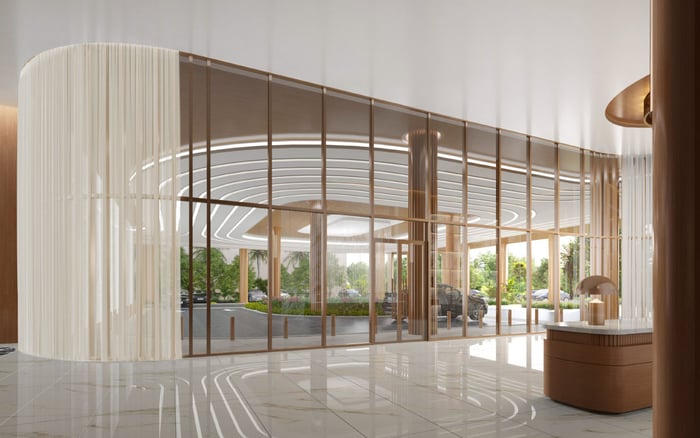
Inspect sightlines into the garage, lobby and elevator waiting area.
Identify where valet queues and rideshare passengers would wait.
Ask whether residents can bypass visitor queues without using a service route.
Test elevator access controls and ask how temporary credentials are withdrawn.
These are inspection requests, not assumed building features. A second entrance matters only if residents can use it under the circumstances that concern them.
If the search includes Alba West Palm Beach, apply the same arrival test while keeping jurisdictions separate. Do not assume that Town of Palm Beach parking provisions apply to a West Palm Beach address.
A residential purchase should not depend on an informal promise that there is usually space outside. Check applicable parking restrictions and session limits. Establish the residence’s own parking arrangements first: the spaces available to the buyer, guest access and what happens when the garage is full.
If municipal parking privileges form part of the proposed arrangement, verify eligibility for the specific address directly with the municipality. Request current requirements for residency and vehicle documentation, and ask whether the intended ownership or occupancy arrangement qualifies.
Request written answers on visiting family, replacement vehicles and overflow arrangements. Do not assume a permit reserves a space. Resolve these distinctions before counting nearby curb space toward the residence’s practical parking capacity.
Request current approvals for nearby hotels, retail spaces and event venues where available. Look for any conditions addressing occupancy, event attendance, operating hours, valet queues, employee parking and traffic management. Ask how those arrangements intersect with the residential entrance.
Distinguish a condition governing one venue from a restriction covering a wider area. A venue-specific attendance limit should not be treated as a neighborhood-wide crowd ceiling or a guarantee of unobstructed resident access.
Confirm that the documents being reviewed are current and applicable to the use under consideration. Where their meaning is unclear, seek clarification before relying on them in a purchase decision.
Routine operations can compromise privacy as readily as a busy evening outside. Request written procedures for visitor registration, deliveries, contractors, package storage and service entrances. Ask who authorizes access, where visitors wait and how staff handle an unannounced arrival.
For a comparison involving Forté on Flagler West Palm Beach, use the same questions rather than inferring a service arrangement from the project’s presentation. Establish what is documented for the property under consideration.
Data handling deserves a separate conversation. Ask management what visitor and vehicle information it collects, who can access it and how long it is retained. Physical discretion and information privacy require separate answers; neither should be inferred from municipal parking procedures.
Request a peak-demand operating plan covering seasonal staffing, garage capacity, guest limits, amenity reservations and backup arrangements when nearby parking is unavailable. Ask who has authority to resolve a blocked resident entrance or a queue extending beyond its intended waiting area.
A buyer considering Mr. C Residences West Palm Beach should request property-specific answers on these points, without assuming Town rules apply or any particular operating feature is included.
Where residential and public-facing uses share a site, establish which entrances, elevators and amenities are shared. Ask whether event visitors can cross residential circulation areas and whether owners retain access during private functions. Require governing documents or written procedures to support any claimed resident priority.
Return on a weekday, a weekend and an evening. Where feasible, arrange a visit during a major nearby event. Observe from lawful public vantage points and authorized building areas. Compare queues, visibility and access with the assurances given during the initial showing.
Review association rules, relevant board minutes, security contracts and incident records where available. Look for unresolved access complaints, repeated operating exceptions and who is responsible for corrective action. Request neighboring venues’ current approvals as well.
If Shorecrest Flagler Drive West Palm Beach is also on the shortlist, keep a separate evidence file for that property. A consistent checklist supports comparison; it does not imply equivalent privacy or operations.
Before committing, distinguish documented arrangements from verbal assurances and unanswered questions. The objective is not an empty street. It is a residence whose arrival, service and guest procedures remain workable when the surrounding neighborhood is active.
Explore residences with these privacy priorities in mind at MILLION.
If branded residences are on your mind — as a home or as an allocation — we would be glad to share what we are seeing, privately.
Begin a quiet conversationTrace the full route from street arrival to the residence. Inspect garage and lobby visibility, waiting areas, resident bypass routes and elevator access controls.
No. An occupancy cap governs that venue, not the visibility, access arrangements or operating procedures of a neighboring residence.
Do not assume a permit reserves a space. Verify its current terms and the residence’s private parking arrangements before relying on nearby curb parking.
Confirm eligibility for the specific address and intended occupancy arrangement directly with the municipality. Request current residency and vehicle-documentation requirements.
Request written details on guest access, visiting family, replacement vehicles and overflow arrangements. Ask what happens when the residence’s garage is full.
No. Verify the scope of each approval rather than assuming a condition for one venue limits all surrounding activity.
Request current approvals where available and look for conditions covering occupancy, events, operating hours, valet queues and traffic management. Confirm that the documents apply to the use being evaluated.
Request procedures for visitor registration, deliveries, contractor access, package handling and service entrances. Also ask how unannounced visitors are handled and who authorizes entry.
Ask what information management collects, who can access it and how long it is retained. Do not infer residential data protections from municipal parking procedures.
Do not assume they do. Keep the jurisdictions separate and verify the parking rules and private arrangements applicable to each property’s address.