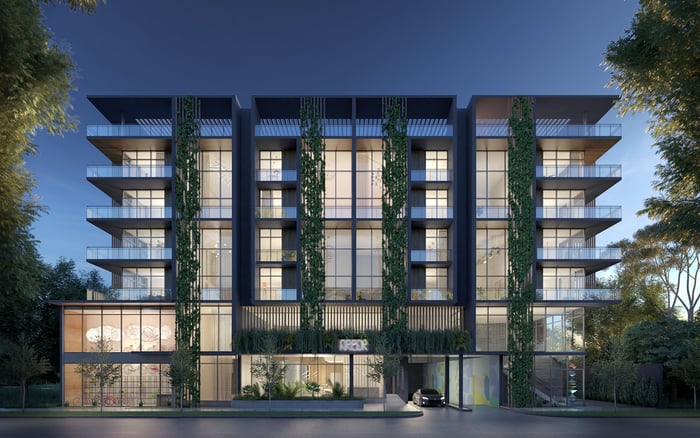
Arbor Coconut Grove’s proximity to CocoWalk invites a precise family-office review of curb activity, parking rights, vendor circulation, and unit-specific arrival privacy. The essential distinction is between advertised service and documented operational control.
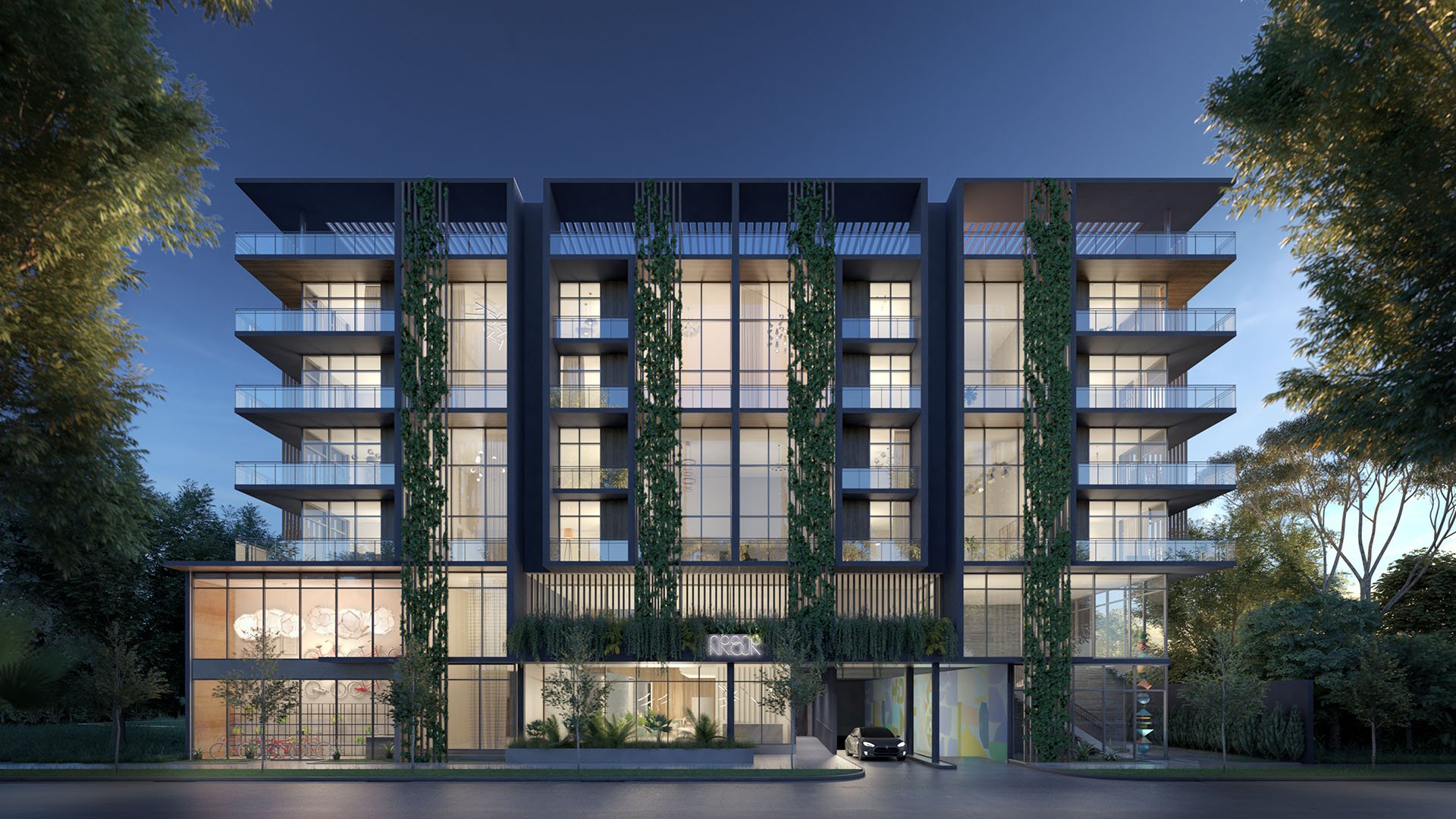
For a family office evaluating Arbor Coconut Grove, the central question is not whether village life is close. It is whether that proximity can coexist with the household’s expectations for discreet, predictable arrivals. The five-story, 45-residence condominium at 3034 Oak Avenue puts that question in a compact residential setting near Coconut Grove’s commercial district.
Arbor is described as approximately one block behind CocoWalk-an appealing premise, with dining, shopping, and entertainment close to home. Yet a low residence count and advertised 24-hour concierge and valet services do not establish a private route from vehicle to residence. Privacy is an operational condition, not an amenity label.
A useful diligence file separates three things: what is advertised, what the governing documents authorize, and what the household can observe under ordinary operating conditions.
Nearby destinations include CocoWalk, the Shoppes at Mayfair, Greenstreet Cafe, Ariete, and Sadelle’s Miami. For residents who value spontaneous dinners and neighborhood errands, that proximity is part of Arbor’s appeal. It is not, however, evidence that Arbor itself contains retail premises.
The distinction matters when evaluating deliveries. Neighborhood commercial servicing and a condominium’s own package, grocery, furniture, and maintenance arrivals are separate questions. Neither should be assigned a traffic volume without evidence.
Begin with a site plan identifying the resident entrance, garage access, any designated loading area, and their relationship to the public sidewalk. Ask management which spaces it controls and which depend on public curb availability. Nearby activity may be convenient, noticeable, or operationally irrelevant to a particular residence. The plan and an inspection should establish which interpretation is justified.
Delivery-vehicle counts, a traffic-impact analysis, loading arrangements, and curb-management rules are not established here. Neither chronic congestion nor separated service circulation should therefore be treated as a fact about Arbor.
Arrange observations during weekday lunch and dinner, Friday evening, and weekend brunch. Focus each visit on practical questions: where vehicles stop, how long they remain, whether entrances stay accessible, and whether valet handoffs overlap with deliveries. Record conditions rather than impressions. Do not extrapolate a single busy or quiet interval into a permanent pattern.
Ask for written procedures governing couriers, food deliveries, furniture moves, and maintenance vendors. Determine whether these arrivals are scheduled, where recipients meet them, and what happens when several occur together. A designated loading space, if confirmed, still needs an operating protocol; a policy needs a workable physical location.
Advertised concierge and valet services are relevant conveniences, but their privacy value depends on execution. Request a walkthrough from the actual vehicle handoff point to the selected residence. Repeat it from the proposed parking space rather than relying solely on a presentation of the lobby.
Identify shared waiting points, visitor-registration locations, and intersections with vendor routes. Ask how elevator access is controlled, how unexpected visitors are handled, and whether household staff and recurring vendors receive different permissions. These are diligence questions, not descriptions of systems already confirmed at Arbor.
For a household also considering Four Seasons Residences Coconut Grove, apply the same arrival test rather than letting a service description stand in for evidence. The meaningful comparison is the documented route and access protocol for each candidate residence, not an assumed hierarchy of discretion.
Parking and storage are advertised, but the selected residence’s allocation requires documentary confirmation. References to deeded or assigned parking should prompt a precise inquiry: which arrangement applies, how the space is identified, and what rights accompany it.
Have counsel reconcile the purchase documents with the recorded condominium declaration and parking plan. Confirm whether the proposed arrangement supports the household’s intended vehicle use. Ask about guest parking and valet staging without assuming either is unrestricted. Apply the same scrutiny to storage: location, allocation, access, and applicable restrictions.
EV charging requires particular care. A mention associated with unit 508 does not establish charging rights for every residence. Obtain written confirmation for the actual unit under consideration, including any applicable approval, installation, or use conditions. Do not treat a building-level marketing reference as a transferable unit entitlement.
Ground-floor townhomes are marketed with private gardens, and direct street access is described for some layouts. That can offer a different relationship to the neighborhood, but private outdoor space does not automatically mean visual seclusion or controlled entry.
Inspect garden and street-entry sightlines from lawful public vantage points and from inside the residence. Review the relationship between gates, windows, landscaping, and the route used by visitors. Ask which screening or entry alterations would require approval rather than assuming the owner can modify them freely.
For an upper-floor residence, concentrate on the full parking-to-door route and any points shared with guests or vendors. If Opus Coconut Grove is also on the shortlist, carry the same unit-specific questions into that review. Evaluate privacy residence by residence, without presuming that a floor level or project name resolves it.
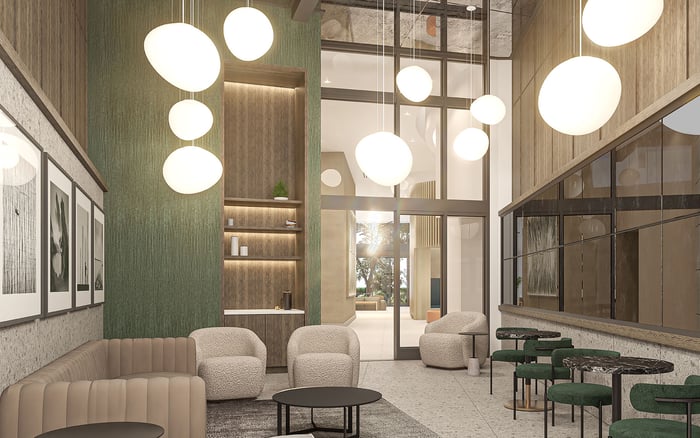
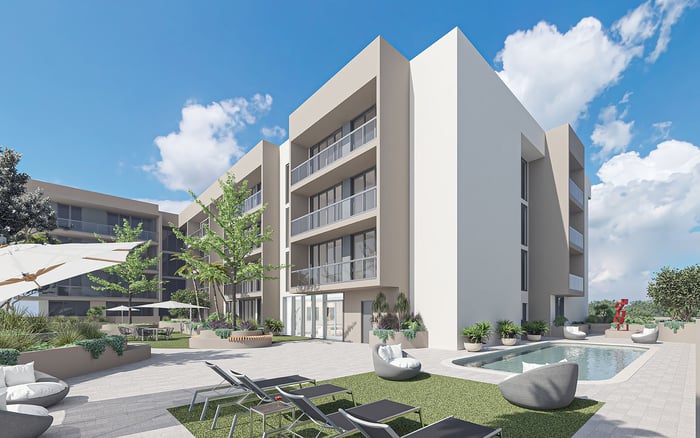
Arbor’s advertised shared amenities include a courtyard pool, fitness center, and social lounge. Coworking spaces, a dedicated event room, and a rooftop terrace with a barbecue area have also been described. Confirm availability, access, and operating rules rather than treating every description as a complete amenity schedule.
For arrival privacy, the relevant issue is how guests reach those spaces. Request rules covering reservations, event attendance, visitor registration, operating hours, and vendor access for gatherings. Ask whether amenity visitors pass through the same areas used by residents returning home.
A social setting and discreet residential circulation need not be incompatible. The diligence task is to establish how the building intends to accommodate both-and who is responsible for enforcing the rules.
The core file should contain the recorded condominium declaration, site and parking plans, loading arrangements, house rules, and official Certificate of Occupancy. Obtain written operating procedures alongside the legal documents so counsel and the household can evaluate rights and daily practice together.
Confirm current delivery and occupancy status through the official Certificate of Occupancy and transaction documents rather than treating an anticipated delivery date as closing evidence.
The decision standard is straightforward: establish the unit’s rights, walk its arrival routes, observe the curb at relevant times, and reconcile any discrepancy in writing. Arbor’s neighborhood proximity can remain a compelling attribute without substituting for proof of privacy.
For a discreet conversation about your Coconut Grove residential priorities, connect with MILLION.
If branded residences are on your mind — as a home or as an allocation — we would be glad to share what we are seeing, privately.
Begin a quiet conversationArbor is at 3034 Oak Avenue, near central Coconut Grove’s commercial district and approximately one block behind CocoWalk.
Arbor is a five-story, 45-residence condominium. Its residence count alone does not establish private arrivals or separated service circulation.
The available facts establish nearby shopping and dining, not retail premises within Arbor itself. Buyers should distinguish neighborhood activity from the building’s own operations.
Advertised 24-hour concierge and valet services do not guarantee a private resident-arrival route. Buyers should inspect the route and request written access procedures.
No verified delivery counts or traffic-impact analysis establish congestion here. Observe weekday lunch and dinner, Friday evening, and weekend brunch before drawing conclusions.
Parking descriptions include deeded or assigned arrangements. Confirm the arrangement and allocation for the selected residence in its governing and purchase documents.
A charging reference associated with unit 508 does not establish rights for every residence. Obtain unit-specific written confirmation.
Private gardens are marketed for ground-floor townhomes, while direct street access is described for some layouts. Verify the selected floor plan and inspect its entry sightlines.
Amenity guests and event vendors may affect arrival patterns depending on their permitted routes. Request visitor-registration, reservation, and access rules rather than assuming circulation is separate.
Obtain the official Certificate of Occupancy and relevant transaction documents. An anticipated delivery date should not substitute for that documentary confirmation.