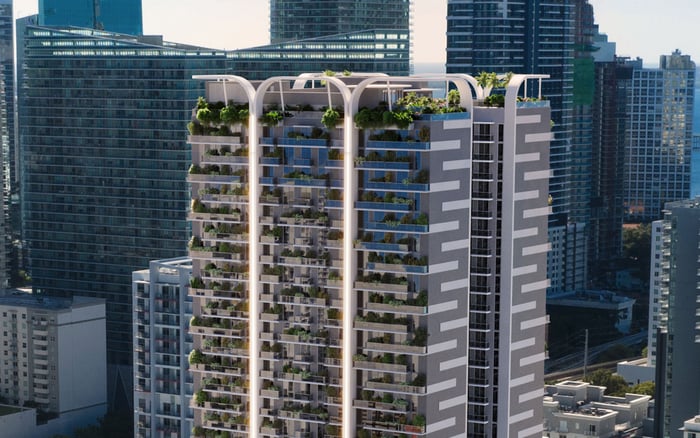
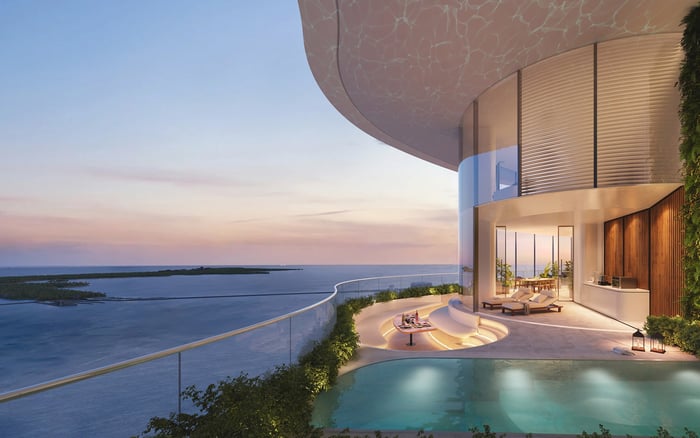
A family-office framework for evaluating glazing warranties, replacement logistics and special-order obligations at 619 Residences, separating architectural appeal from documented ownership protections.

For a family office evaluating 619 Residences by Foster + Partners + Nobu Hospitality in Brickell, the acquisition question extends beyond the view: what documentation supports the long-term care, repair and replacement of the residence’s glazing?
The materials supplied for this review do not establish whether the enclosure is window-wall, curtain-wall, unitized curtain-wall or a hybrid. The title’s window-wall terminology should therefore be treated as a diligence question, not a confirmed specification.
Project-specific warranty periods and glass-replacement lead times are likewise not established here. That does not mean protections or procurement arrangements are absent. It means they should be obtained in writing before a purchaser relies on them.
Begin with an enclosure identification schedule. Ask the seller for the manufacturer, product series, glass processor, installer, sealant supplier and specialty hardware suppliers. Request the glass composition, technical performance specifications, approved drawings and applicable product approval numbers. These details require documentary verification.
Have the technical adviser reconcile the proposed assembly with the applicable product approval records, including configurations and installation limitations. Treat approval as a technical verification task, separate from warranty review. An approval record does not establish what a purchaser can claim, against whom or for how long.
The file should distinguish fixed glazing from sliding doors, seals, hardware, finishes and water-infiltration obligations. A single reference to a façade warranty should not be assumed to answer every component question.
For a shortlist that also includes The Residences at 1428 Brickell, apply the same document requests independently. A useful comparison measures contractual clarity, not presumed equivalence between architectural expressions.
Architectural authorship and hospitality affiliation should remain separate from the warranty responsibility chart. Neither Foster + Partners nor Nobu Hospitality should be treated as a direct owner warrantor without contractual evidence. Identify the purchaser’s contractual counterparty from the transaction documents rather than the project name.
Request a written warranty matrix identifying the responsible legal entity for each component. For every undertaking, record its duration, commencement event, exclusions, notice deadline, transferability and remedy. Establish whether the remedy is repair, replacement, reimbursement or another defined response-and who decides which applies.
The matrix should also identify who receives a claim and who has authority to pursue it. A purchaser should not have to infer whether a concern belongs with the seller, an installer, a manufacturer or the association.
Buyers also considering St. Regis® Residences Brickell should apply the same separation of brand and contractual obligation, without assuming the projects share warranty terms.
The supplied materials do not establish a project-specific glass-replacement lead time, local reserve inventory or special-order procurement commitment. Avoid underwriting a particular number of weeks or months without a written, assembly-specific estimate.
Request separate schedules for emergency weatherproofing, measurement, engineering, fabrication, shipping, installation, testing and interior repairs. Ask which stages can proceed together and which require prior approval. Each schedule should identify the party responsible for advancing the work and the assumptions behind its timing.
Require separate provisions for emergency protection and permanent replacement. A plan to secure an opening temporarily is not a commitment to deliver the finished replacement assembly.
Ask whether reserve glass or other components will be held, where they will be stored, who owns them and how access is authorized. Request a written explanation of how a replacement order would be placed if no reserve stock is available. For a family office, a named procurement contact and a documented sequence are more useful than an informal assurance that replacements can be arranged.
Special-order availability and warranty coverage are different questions. Post-warranty coverage for custom glass, mullions, door panels, gaskets or hardware is not established by the supplied materials. The ability to order a component does not imply an obligation to provide it without charge.
Ask for a component-by-component statement of availability and payment responsibility, both during the warranty period and after it expires. Clarify whether coverage includes labor, access equipment, permits, removal, disposal, testing and replacement-part freight. Address consequential damage and interior repairs expressly; do not assume they receive the same treatment as the replacement pane.
The aesthetic question deserves equal attention. Request written terms specifying whether replacement glass must match the original, whether substitutions are permitted and who approves them. Ask how discontinued products would be handled, including any required engineering or changes to adjoining components.
For any terrace doors included in the assembly, list panels, seals and hardware as separate entries in the schedule. The goal is a usable repair obligation with defined cost boundaries, not a broad label that leaves expensive details unresolved.
Assemble the purchase agreement, offering documents, warranty package, specifications and available turnover documents in one controlled file. Request the purchaser warranty booklet, construction specification package, turnover manual and window-maintenance manual directly from the seller as they become available. Have counsel identify what must be resolved before a contractual commitment.
Review the condominium declaration and any maintenance matrix alongside the technical documents. Establish component ownership, maintenance duties, replacement-cost allocation and authority to pursue envelope claims. Keep these as open questions until the governing documents supply the answers.
Preserve glazing inspection findings, punch-list items, water-test results, approved drawings and maintenance requirements through closing and turnover. Record applicable notice dates and responsible contacts in the family office’s property-management calendar.
The final acquisition memorandum should distinguish confirmed terms, pending requests and unresolved exposure. An unknown replacement interval should remain unknown in the ownership budget, not become an assumed service commitment. Likewise, an unconfirmed warranty should not be valued as a contractual benefit.
The objective is not to diminish the architecture. It is to protect the experience it promises by understanding who responds, what is covered and how the residence is restored when a component needs attention.
For a discreet perspective on South Florida residential acquisitions, explore MILLION.
If branded residences are on your mind — as a home or as an allocation — we would be glad to share what we are seeing, privately.
Begin a quiet conversationIt provides a framework for reviewing glazing warranties, replacement logistics and special-order obligations at 619 Residences in Brickell. It does not verify project-specific contractual protections.
The supplied materials do not establish whether the enclosure is window-wall, curtain-wall, unitized curtain-wall or a hybrid. Treat the terminology as a question for technical verification.
Request the manufacturer, product series, glass processor, installer and relevant component suppliers. Include glass composition, performance specifications, approved drawings and applicable product approval numbers.
The supplied materials do not establish project-specific warranty durations for glazing, sliding doors, seals, hardware, finishes or water-infiltration performance. Buyers should obtain written terms directly from the seller.
No direct owner warranty from either should be assumed without contractual evidence. Architectural authorship and hospitality affiliation do not establish purchaser warranty coverage.
No project-specific replacement interval is established in the supplied materials. Request separate written estimates for emergency protection, measurement, engineering, fabrication, shipping, installation, testing and interior repairs.
Product approval records can help identify approved assemblies and installation limitations. Warranty rights require separate contractual review.
No supplied warranty establishes that coverage. Ask separately about continued availability, payment responsibility and discontinued-product provisions.
Clarify coverage for labor, access equipment, permits, removal, disposal, testing, freight, consequential damage and interior repairs. Do not assume that coverage for a component includes all related costs.
Review the condominium declaration and any maintenance matrix for ownership, maintenance duties, replacement costs and authority to pursue envelope claims. Read them alongside the purchase agreement and warranty package.