A practical buyer’s framework for documenting inspection authority, controlled unit access, restoration work, and unresolved closing obligations at South Flagler House in West Palm Beach.

For a buyer considering South Flagler House West Palm Beach, post-storm diligence turns on three distinct questions: who may authorize an inspection, who can admit the inspection team, and what evidence confirms that any necessary restoration has been performed. A service key answers none of those questions on its own.
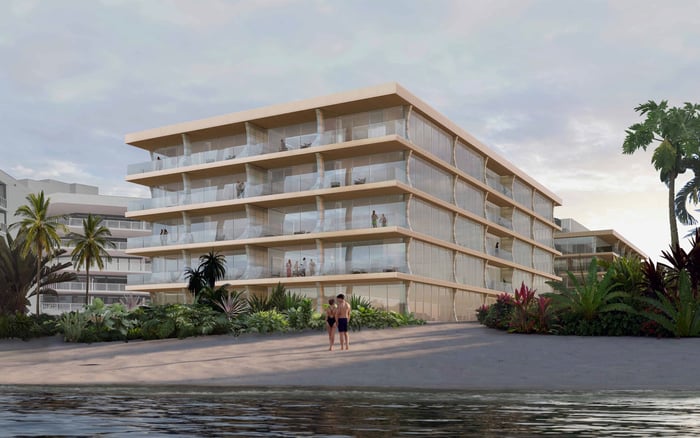
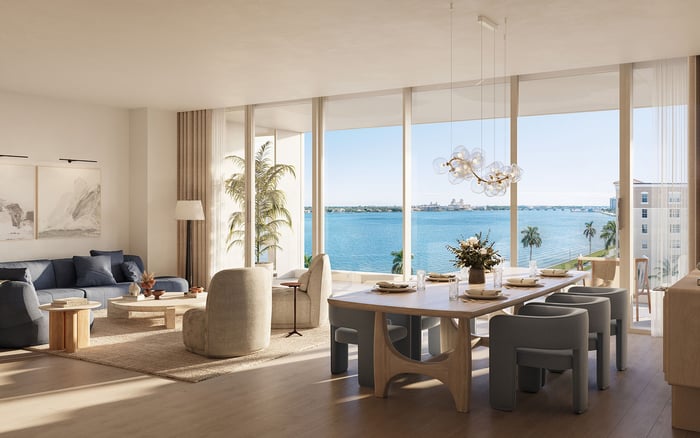
South Flagler House is a new-construction luxury condominium project with two- to five-bedroom residences, penthouses, and guest suites. Secure key access to service entrances and common spaces is a specified feature. It does not establish a detailed post-storm vendor-entry protocol or unrestricted access to an individual residence.
Treat this checklist as a framework for a potential purchase, not a statement that the project has sustained storm damage. The objective is a documented path from authorization through inspection, any required work, and closing.
Before scheduling specialists, request written seller authorization and management’s inspection protocol. Confirm who is authorized to approve entry to the particular residence and which rules govern access to relevant common spaces. Keep permission to enter separate from permission to test.
The written scope should specify approved photography, moisture testing, access limitations, and any proposed destructive investigation. If finishes must be opened, establish who may approve the work and who must restore them. Ask the inspecting professional to distinguish completed observations from areas that could not be examined.
Where entry is restricted, request the written basis, the scope of the restriction, and the process for obtaining clearance. Apply the same discipline to an evacuation, remediation boundary, or government-ordered limitation. Do not assume seller consent overrides another valid restriction. Have transaction counsel assess disputed authority before an access issue puts a contractual inspection deadline at risk.
Florida condominium associations have an irrevocable right to access units during reasonable hours when necessary for association-responsible maintenance, repair, or replacement, or to prevent damage to common elements or another unit. That qualifying right is distinct from a prospective buyer’s authorization to conduct diligence.
Florida law does not specifically require every owner to provide an association key. The absence of a key does not eliminate qualifying access rights; possession of one does not establish unlimited inspection authority. Entry into an abandoned unit is also subject to statutory conditions. An owner’s temporary absence should not be treated as sufficient proof of abandonment.
Second-home buyers should request a clear contact and authorization arrangement for periods away. Ask who controls service keys, approves vendors, escorts contractors, records entry and exit, and retains those records. Confirm how the buyer’s inspection team will be admitted rather than relying on an informal assurance that access can be arranged.
If a storm incident is relevant to the purchase, organize the evidence chronologically. Request dated photographs, water-intrusion logs, engineering assessments, moisture readings, drying and mold records, utility interruptions, and owner notices. Preserve pre-remediation evidence where possible without delaying necessary protective work.
Ask that each record identify its date, location, author, and subject. An observation about one space should not become an unexamined conclusion about another. Assess photographs of restored finishes alongside the underlying findings and repair scope, not as a substitute for them.
For buyers also considering Alba West Palm Beach, a useful comparison applies the same evidence request separately to each prospective purchase. It does not assume shared conditions or procedures. A disciplined comparison asks what was inspected, what remained inaccessible, and what documentation supports the stated condition.
A vendor’s availability, appointment, and completed work are distinct stages. If restoration is represented as underway or finished, request evidence for each relevant stage rather than accepting a single status description.
Authorization: Signed contracts and scopes identifying the hiring party, affected locations, and work to be performed.
Qualification: Licenses, insurance certificates, and permits applicable to the work.
Attendance and activity: Entry records, daily logs, equipment records, and dated documentation connecting the vendor to the residence or affected common area.
Payment and closeout: Invoices, payment evidence, lien releases, and completion records tied to the contracted scope.
Read these documents together. A contract establishes an engagement, not attendance; an invoice does not replace completion evidence. Ask the appropriate professional to reconcile discrepancies among recommended work, documented activity, and the finished condition. Where access was unavailable, retain that limitation in the inspection record and arrange a follow-up when appropriate.
For each affected component, request its ownership and maintenance classification under the governing documents. Then identify who engaged the vendor and which insurance policy or warranty, if any, is being relied upon. Do not assume responsibility follows the location of a stain or rests with the party who first arranged an inspection.
A practical issue schedule should connect each finding to the responsible party, proposed remedy, funding basis, and supporting completion evidence. Ask counsel to address any unresolved division of responsibility in the purchase documents.
The same request can accompany consideration of Forté on Flagler West Palm Beach. Compare the clarity of each transaction’s answers without importing one condominium’s obligations or access arrangements into another.
Florida’s milestone-inspection requirements cover residential condominium and cooperative buildings of three or more habitable stories. The ordinary initial deadline is December 31 of the year the building reaches 30 years from its certificate-of-occupancy date, with inspections every 10 years thereafter. A local enforcement agency may require the initial inspection at 25 years when local circumstances warrant.
These age-triggered requirements do not replace unit-specific post-storm inspection. Do not infer that South Flagler House currently requires a milestone inspection or calculate a deadline without the certificate-of-occupancy date.
Ask transaction counsel to confirm any applicable owner-notification and repair deadlines with the local enforcement agency. Distinguish a requirement to commence repairs from a deadline to complete them, and do not treat the milestone process as a general post-storm timetable.
Before closing, match each repair recommendation to its responsible party and completion records. Reinspect where appropriate, especially when earlier access was limited. Have counsel document unresolved repair, access, escrow, warranty, and disclosure obligations in the transaction documents rather than leaving them in correspondence.
For project representations, review the brochure and required developer-furnished disclosure documents with counsel. For condition questions, retain the inspection and restoration evidence specific to the contemplated purchase. The goal is not a larger file, but an intelligible one: clear authority, traceable work, and explicit remaining obligations.
For a considered approach to South Florida luxury ownership, explore MILLION.
If branded residences are on your mind — as a home or as an allocation — we would be glad to share what we are seeing, privately.
Begin a quiet conversationNo. Secure key access to service entrances and common spaces does not establish who may approve a vendor, authorize testing, or admit a buyer’s inspection team to a residence.
Request written seller authorization, management’s inspection protocol, and confirmation of permitted entry and testing. Identify any restrictions and who can authorize clearance.
Florida associations have an irrevocable right of access during reasonable hours for qualifying association-responsible work or to prevent damage to common elements or another unit. This is distinct from a prospective buyer’s inspection permission.
Florida law does not specifically require every owner to provide a key. Qualifying association maintenance and damage-prevention access rights nevertheless remain.
Temporary absence should not be treated as sufficient proof of abandonment. A board’s authority to enter an abandoned unit is subject to statutory conditions.
Request dated photographs, water-intrusion logs, engineering assessments, moisture readings, drying and mold records, utility interruptions, and owner notices. Connect each record to its location and date.
Request signed contracts and scopes alongside entry records, daily logs, and equipment records. An engagement alone does not establish attendance or completed work.
Compare the recommended repairs with the contracted scope, completion records, invoices, payment evidence, and lien releases. Arrange reinspection where appropriate and retain any unresolved limitations.
No. The age-triggered milestone process is not a substitute for a unit-specific post-storm inspection, and it should not be assumed currently required at South Flagler House.
Have transaction counsel document unresolved repair, access, escrow, warranty, and disclosure obligations in the transaction documents. Identify responsible parties and the evidence needed to establish completion.