A disciplined buyer’s checklist for 619 Residences, connecting flood-loss records, garage and equipment elevations, insurance terms and service-restoration obligations to the ownership experience.
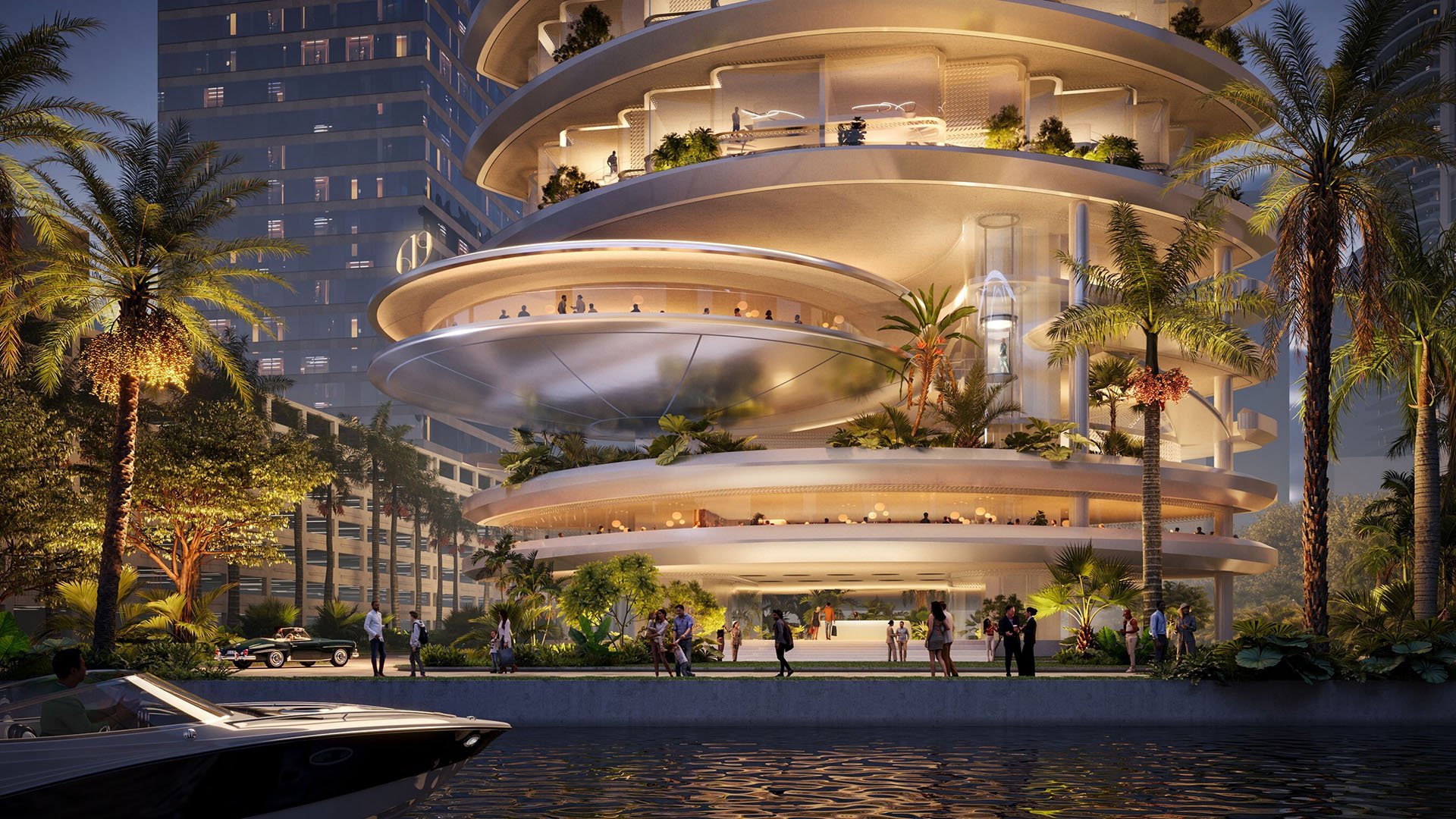
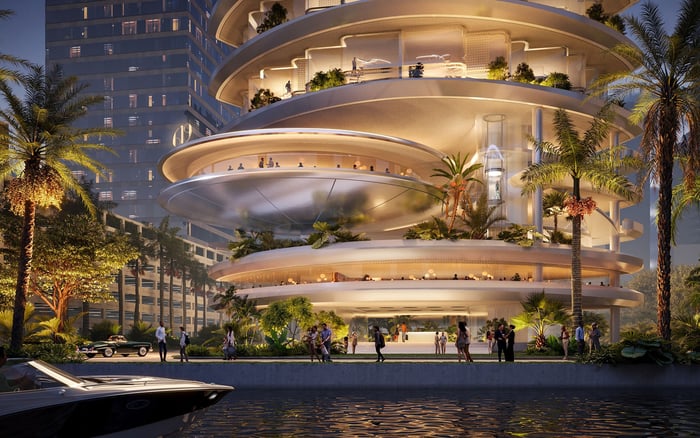
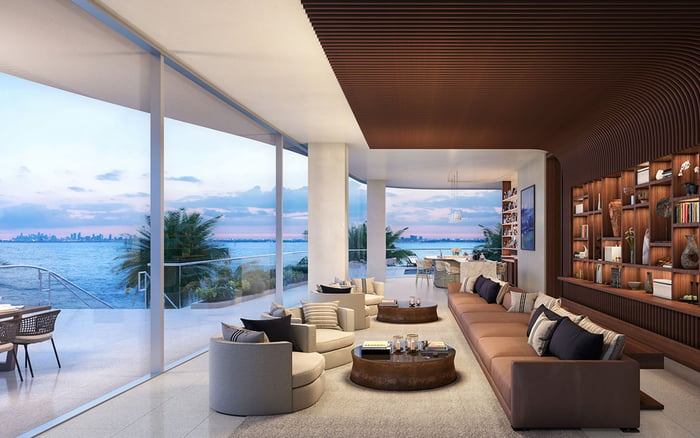
At 619 Residences by Foster + Partners + Nobu Hospitality, the advertised offering combines a planned 75-story waterfront tower with approximately 300 residences and approximately 90,000 square feet of amenities. Foster + Partners and Sieger Suarez Architects are identified as the architectural team; the project is envisioned in collaboration with Nobu Hospitality. The listed address is 619 Brickell Avenue, Miami, FL 33131.
For a buyer, architectural distinction begins the diligence process; it does not conclude it. The more revealing questions concern what happens when water interrupts access, power or hospitality services. A refined ownership experience warrants records that connect design intent to operating responsibility.
Project-specific flood-claim history, official flood designation, garage elevations and critical-equipment locations remain to be established through documentation. A project-specific continuity plan must also be obtained. These are open diligence questions, not findings of damage or deficient planning. Advertised plans should not be treated as completed construction or contractual commitments.
Start by separating the proposed tower from the property's earlier identities. Request prior-site addresses, folio numbers, owners and structures, then ask for available insurance loss runs and written loss-history disclosures covering clearly defined periods.
The distinction is essential: an unavailable record is not a clean record. Nor does a statement about the proposed building automatically answer questions about predecessor structures or site conditions.
Ask the seller or development team to identify:
Which properties, insured entities and dates each disclosure covers.
Whether available records identify flood or other water-related claims.
What documentation exists for disclosed losses, repairs and claim resolution.
Which periods or prior ownerships remain undocumented.
Keep the answers in writing. If access to older records is restricted or unavailable, document that limitation rather than replace it with an assumption. The objective is a traceable account, not an unsupported claim-free label.
Request the Elevation Certificate, floodplain approvals, applicable floodproofing certifications and a survey showing grade, garage, finished-floor and equipment elevations. Ask the design team to identify the applicable design flood elevation and explain how each relevant level relates to it.
An address-based flood-zone map is a starting point, not a substitute for confirmation of the official designation. An Elevation Certificate helps evaluate compliance with elevation requirements; it is not a blanket assurance of uninterrupted service.
Review the property, permit and inspection records for this address. General guidance for unincorporated county areas does not establish approval for this property.
For a buyer also considering Una Residences Brickell, the same document categories provide a consistent basis for comparison. They do not establish equivalent exposure or protection at the two properties.
The advertised arrival program includes a private porte-cochère, valet and self-parking. Private garages are advertised for select residences, not every residence. None of these descriptions establishes the elevation or flood protection of parking areas or building systems.
Request approved parking and mechanical, electrical and plumbing plans. Have the relevant design professionals locate generators, transformers, switchgear, pumps, fire pumps, elevator pits, drainage and backflow protection. For each critical component, request its elevation and its relationship to the design flood elevation.
The useful question is not simply whether a garage could take on water, but which services could be interrupted if a particular space or component became unavailable.
Ask for documentation addressing:
Critical systems below the design flood elevation and their protective measures.
Backup-power loads, operating duration and dependencies.
Raised controls, flood barriers and responsibility for deployment.
Drainage, backflow protection and inspection or testing procedures.
Ask the engineers whether measures such as elevating and securing electrical appliances, placing low-lying electrical fixtures on separate circuits and using appropriate flood-resistant materials apply here, and where they appear in the approved documents. Do not assume their inclusion.
The advertised amenity program includes spa, fitness, pool and food-and-beverage facilities. Restoring those services is a separate question from restoring essential building functions.
Request hurricane and flood-response plans that identify decision-makers, emergency vendors, resident communications and restoration targets. Ask the team to distinguish targets from binding obligations and identify conditions that could delay reopening.
For valet, request procedures for vehicle relocation, access restrictions and restarting operations. For spa, fitness, pools and food service, ask who authorizes reopening, what inspections or repairs are contemplated and which operator must act.
A purchaser comparing Cipriani Residences Brickell can apply the same discipline: evaluate written operator obligations rather than infer continuity from a hospitality name. This is a standard of inquiry, not a statement about either project's preparedness.
No project-specific continuity plan is established here. That does not mean none exists; it means the buyer should obtain the applicable documents before relying on service-restoration assurances.
Request the master property and flood policies, available builder's-risk history, deductibles, exclusions and coverage allocations. Where operating policies are not yet available, ask which proposed terms remain subject to placement and when updated documents will be provided.
Have an insurance adviser review the allocation between building, unit and personal-property coverage. Do not assume a master policy covers personal belongings, alternative accommodation or interruption losses.
Then connect insurance to governance. Review the condominium declaration, budget, available reserve documentation and Nobu or other operator agreements. Ask who funds emergency work, who authorizes repairs, how uninsured costs are allocated and who is responsible for restoring each service.
The development's association with Nobu Hospitality, 13th Floor Investments and Key International is no substitute for identifying the entity responsible under each agreement.
Before committing to a purchase, organize the file around four deliverables: a defined loss-history record, an elevation and equipment schedule, an insurance allocation review and a written continuity-responsibility matrix.
For each unanswered item, record the responsible party, requested document and expected delivery point. Ask counsel which representations or delivery obligations belong in the transaction documents, and have technical specialists assess the plans rather than rely on verbal assurances.
The strongest conclusion is neither automatic reassurance nor automatic rejection. It is a purchase decision grounded in what is documented, what remains conditional and who must act when services are disrupted.
For a considered approach to South Florida luxury ownership, explore MILLION.
If branded residences are on your mind — as a home or as an allocation — we would be glad to share what we are seeing, privately.
Begin a quiet conversationThe listed project address is 619 Brickell Avenue, Miami, FL 33131.
The project is advertised as a planned 75-story waterfront tower with approximately 300 residences and approximately 90,000 square feet of amenities. These descriptions are plans, not confirmation of completed construction.
No project-specific claim-free history is established. Request available loss runs and written disclosures, with clear identification of covered properties, entities and dates.
The proposed tower's records may not answer questions about earlier structures or ownership periods. Prior addresses, folios, owners and structures help define the scope of the loss-history inquiry.
The official project-specific designation is not established here. Confirm it rather than relying solely on an address-based mapping result.
Request the Elevation Certificate, floodplain approvals, applicable floodproofing certifications and a survey showing grade, garage, finished-floor and equipment elevations.
Private garages are advertised for select residences only. The advertised parking program also includes a private porte-cochère, valet and self-parking.
Request plans locating generators, transformers, switchgear, pumps, fire pumps, elevator pits, drainage and backflow protection. Ask design professionals to relate critical-equipment elevations to the design flood elevation.
Request decision-making responsibilities, emergency vendors, resident communications and restoration targets. Written obligations should distinguish essential building functions from valet, spa, fitness, pool and food-service operations.
Responsibility should be established through insurance policies, the condominium declaration, financial documents and operator agreements. Do not assume master coverage includes personal property or interruption losses.