Arrival privacy is a sequence, not an amenity. A Fort Lauderdale buyer’s framework for testing street exposure, garage access, waterfront rights, and service circulation against plans, documents, and daily operations.

A discreet arrival depends on more than a handsome gate or an elegant lobby. It rests on the entire passage from public space to private rooms: where a vehicle pauses, who can see an opened door, and whether deliveries intersect with family life. For a Fort Lauderdale buyer, curb, garage, dock, and service access each deserve a separate inspection.
Across a broader Broward search, ask the same questions at every property. Who can observe the route? Who can enter it? Who controls the next threshold? A visually sheltered entrance may still share circulation; a controlled entrance may remain exposed to neighboring windows. Privacy demands scrutiny of both visibility and access.
These are buyer checks, not municipal privacy standards. Treat every claimed advantage as something to demonstrate, document, and compare.
Before evaluating finishes, establish the property’s zoning and surrounding uses. Ask the appropriate municipal staff or your land-use adviser to confirm applicable requirements. Resolve property-specific questions before assuming nearby activity will remain unchanged.
For waterfront purchases, look beyond the subject parcel. Identify neighboring marinas, commercial activity, and any public waterway access. Distinguish private boundaries from surrounding waterfront functions rather than assuming either exclusivity or public access.
Request approved plans, permit records, title easements, shared-access agreements, and association rules. Compare them with the physical routes you expect to use. A marketing plan can introduce the layout; it should not settle the access question.
Approach from both directions, at both busy and quiet times. Note the views from sidewalks, neighboring windows, shared drives, and vehicle waiting areas. Pay particular attention to the pause between stepping out of a car and reaching a controlled entrance.
Ask where a driver waits, where guests gather, and what becomes visible when the front door opens. Walk the departure sequence, too: the place where you wait for a vehicle may be more or less exposed than the place where you arrive.
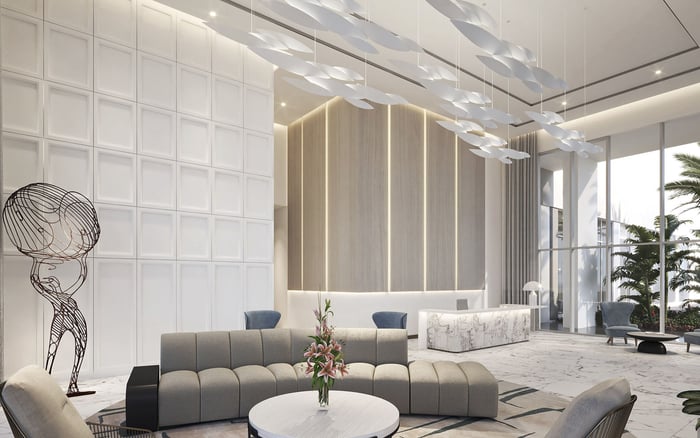
When considering Four Seasons Hotel & Private Residences Fort Lauderdale, include the actual resident approach in your viewing request. Seek a route-specific explanation rather than treating the project name as evidence of privacy.
Return after dark. Test whether lighting clarifies the route without unnecessarily revealing occupants or interiors. Observe the result from lawful public viewpoints and authorized areas, not just from inside the entrance.
Begin the garage review with an actual maneuver, not a glance at a parking diagram. Test turning space, the unloading position, and door closure. Establish whether passengers and luggage can reach the interior without returning to an exposed area.
Then follow the complete garage-to-residence route. Identify each gate, pedestrian door, intercom, and elevator threshold. Ask who administers access permissions, who controls cameras, and how visitor or contractor access is managed. Distinguish installed equipment from demonstrated procedures.
For a comparison involving Sixth & Rio Fort Lauderdale, request the relevant parking-to-residence circulation plans and access rules. Where a route cannot yet be walked, leave its performance as an open diligence item rather than a confirmed benefit.
The question is not simply whether parking is secured. It is whether the entire transition from vehicle to private interior is appropriately controlled.
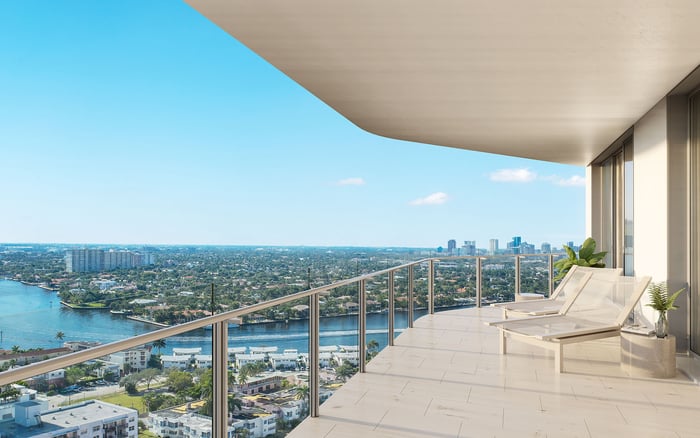
Inspect the dock from the water where safely and lawfully possible, then walk the dock-to-residence route. Check the exposure of terraces, pools, living rooms, and private rooms. Note what becomes visible when someone disembarks, pauses at a gate, or enters the residence.
Next, establish the legal basis for dock use. Do not treat a representation of private use as proof of ownership of the underlying land. Have counsel reconcile the claimed rights with title documents, permits, and any applicable agreements.
Neighboring marina activity deserves a separate review. Ask which uses are authorized, whether vessel habitation is allowed, and what operating restrictions apply. Do not mistake an apparently quiet berth for an assurance that neighboring vessels will always be unoccupied.
Check relevant permissions and observed activity rather than assuming all nearby docks function alike. Include questions about charter, rental, or other commercial operations where relevant to the surrounding waterfront.
If St. Regis® Residences Bahia Mar Fort Lauderdale is on your shortlist, apply these same questions to any waterfront access represented as part of the purchase. Verify the specific rights and route without presuming exclusivity.
Shoreline work can affect the arrival layout. Ask a qualified professional to confirm applicable seawall and dock requirements, any exceptions, and the status of proposed or permitted work.
Before predicting changes to gates, ramps, or dock access, review property-specific records. If plans use an elevation datum, ask the design team to explain how that elevation relates to the yard and arrival route rather than interpreting it as wall height above the ground.
Ask the design team to explain how any proposed shoreline work relates to the route you inspected. Do not assume today’s transitions will remain unchanged after future work.
Trace deliveries, staff, contractors, trash removal, and catering from arrival to destination. A door labeled service is not enough if its route immediately rejoins the household’s principal circulation inside.
Ask who admits each visitor, where deliveries wait, and which interior doors must open. Verify whether separation is physical, depends on scheduling, or relies on staff procedures. Each arrangement warrants a different level of confidence.
When reviewing Auberge Beach Residences & Spa Fort Lauderdale, request the applicable service-circulation explanation and association rules. Evaluate the proposed routine for your residence rather than assuming how the building operates.
Walk curb-to-door, curb-to-garage, dock-to-residence where applicable, and service-entry-to-interior. Include a nighttime demonstration of lighting and access controls. Record each unresolved point alongside the document, demonstration, or professional review needed to resolve it.
The strongest decision rests on alignment between what you see, what the documents allow, and how access is managed. Choose the arrival sequence that supports your daily life, not merely the entrance that photographs best.
For a considered Fort Lauderdale property search, connect with MILLION.
If branded residences are on your mind — as a home or as an allocation — we would be glad to share what we are seeing, privately.
Begin a quiet conversationIt includes visibility and access control along the entire journey from curb, garage, dock, or service entrance to private interiors. A gate or lobby alone does not establish it.
Inspect both approach directions at busy and quiet times, then return after dark. Watch the places where vehicles pause, passengers unload, and occupants wait.
Test turning space, unloading, door closure, and the full route into the residence. Establish who controls gates, cameras, intercoms, and elevator permissions.
Request approved plans, permit records, title easements, shared-access agreements, and association rules. Compare their provisions with the routes and controls demonstrated during the inspection.
Have counsel reconcile any claim of private use with title documents, permits, and applicable agreements. Do not assume a right to use the dock establishes ownership of the underlying land.
No; verify property boundaries, easements, shared access, and any nearby public waterway access. Evaluate the specific documents rather than relying on the waterfront setting alone.
Nearby activity may affect sightlines and the dock-to-residence experience. Ask about authorized uses, vessel habitation, and operating restrictions rather than assuming neighboring boats remain unoccupied.
Ask the design team to explain the elevation datum and its relationship to the yard and arrival route. Do not read a stated elevation as wall height above the ground.
Follow deliveries, staff, contractors, trash removal, and catering through to their destinations. Verify whether separation from household circulation is physical or depends on scheduling and procedures.
No; they are buyer diligence checks, not a municipal privacy rating. Confirm applicable zoning, shoreline requirements, and access arrangements separately for the property.